Tag Archives: 12 Tribes

Masei, Numbers 33:1-36:13

Link to Parsha: http://www.hebcal.com/sedrot/masei


12 Tribes


Living Your Own Narrative

By Mark Kirschbaum

Perashat Massai begins by stating:

‘These are the journeys of the Children of Israel who left the land of Egypt and Moshe listed their goings and comings, by the word of God, and these are their comings and goings’.

After this is a long list of where the people camped and where they moved on to, all beginning ‘…and they left place X, and encamped in place Y…

There are several textual peculiarities that are noted by the Midrashim and commentators:

  1. the first word, eleh ‘these’,  is not preceded by the usual ‘and’, meaning, by Midrashic convention, that this section is set off from the texts preceding it (as opposed to it being written ‘v’eleh’).
  2. The odd word appearing later, motzaeihem ‘the place they left’’ provokes comments, as does its chiastic use in the verse, first mostzaeihem l’mas’eihem ‘where they came from and where they went’, later maseihem l’motza’eihem ‘where they went and where they came from.’
  3. The dangling clause, al pi Hashem, ‘by the word of God’, is ambiguous- is it that the Israelites traveled by the word of God, or listing by Moshe of these stations that was commanded by God?
  4. The obvious question: Who cares what places were traveled past? Is there any purpose whatsoever to this list of transient camp sites the people passed through on their way from Egypt to the Land of Israel?

As is frequently the case, the Midrash offers several alternate possible purposes imparted by this itinerary review, so as we are discussing lists, here’s another list:

1. To commemorate God’s miracles which were performed at these places, so that the events that transpired at these locations would not be forgotten. This theme is picked up by the Ramban as well, but one would have to say this approach is at best problematic, as we have, indeed, forgotten what happened at most of these places.

2. The Midrash quoted by Rashi grants this passage a message related to healing and growth; on their way home, a father might point out to his now healed son all the stops along the way to the hospital where the son had crises- so too Moshe is instructed to record all the places where the people angered God. Thus, this approach is meant to recall the actions of the people as they matured, at these places, so the list serves as a growth chart.

3. The Midrash states that these places are recalled in order to, as it were, thank the places themselves for their hospitality in letting the Israelites camp on them.

These approaches are repeated by the medieval commentators, and appear in the Hasidic writings in a transformed manner. For example, the Mei Hashiloach, in Perashat Devarim, cites midrashic approach number 3, but ‘in reverse’. Rather than thanking the places, as in the Midrash, it is to exonerate the people by placing the blame for any problems upon the place itself, that is to say, if the people sinned in a certain place, it was the fault of an inhospitable environment, not the people. Their sins were the result of a bad “situation”, so to speak.

Still, the critical question remains, why does the contemporary reader need this list of place names?

The Baal Shem Tov is quoted by the Degel Mahane Ephraim as teaching that the 42 journeys enumerated here, which correspond to the 42 letter name of God, represent the development of spiritual stages along the way of each and every individual, and could be decoded if one only knew how to interpret the place names properly.

Following the Baal Shem Tov’s lead, other thinkers try to pinpoint exactly what it is at these places that correspond to our lives. The Degel Mahane Ephraim, and the Kedushat Levi, for example, both suggest that there were spiritual challenges faced and won by the Israelites at these sites, which explains the odd word ‘motza’eihem‘ as being derived from the term ‘nitzotzot‘, spiritual sparks or quanta, which were transformed and assimilated by the people at each of these places.

The Degel adds that these sites had to be enumerated by Moshe because the people themselves were unaware at the time that they had brought about this spiritual sublation, as is so frequently the case. However, Moshe, being in a superior spiritual situation, was aware of these spiritual victories, and therefore could detail them, and this information is what is being transmitted to the people, that in these places something of importance was accomplished.

The Arvei Nahal is bothered by this approach, however- he is bothered by what is now a standard sci-fi trope:  if these journeys and stations were necessary fulfillments of a 42 stage development of holiness, then how could this spiritual journey have been accomplished in God’s original plan, whereby the people go straight from Egypt to Israel? After all, we are taught that it was the sins of the people that led to this prolonged itinerary…

The Arvei Nahal answers that in different spiritual states different amounts of physical actualization are required. Had they not sinned, ‘all these journeys would have been rectified without needing any journeying at all’…

(I do suggest reading the actual answer of the Arvei Nahal in the original text; he sets this answer in the context of the difference between spiritual imagining of martyrdom vs. the actual act of  dying as a martyr, and presents a sensitive bit of consolation to victims of crisis,  claiming that those who give their lives ‘al Kiddush Hashem’, who are martyred as victims of spiritual persecution, do not suffer. Were that were true. In the last few weeks my sleep has been frequently disturbed in thinking of all the  children that were killed in the recent weeks, as well as a NY Times Book Review article regarding the SS death squads; there was a story cited of one Nazi soldier who marched on proudly carrying a still sighing one year old on his bayonet. I pray that the Arvei Nahal is correct).

To the Sefat Emet, it is the journey that is the message. This repeated clause, ‘comings and goings’, is to remind us that in every person’s life, every step towards something is also a step away from something (… you’re sick of hangin’ around and you’d like to travel; get tired of travelin’ and you want to settle down, I guess they can’t revoke your soul for tryin’…); in this textual instance the 42 journeys forward plus the 7 sites reached in retreat (see Rashi in Bamidbar 26:13) correspond to the 49 levels of impurity traversed by the people en route from Egypt (lowest rung) to Israel (highest rung).

Every step towards a goal is a step away from past failures, but how do we become conscious of this process in our own everyday life? After all, we see ourselves every moment of the day, it is hard to notice change in our weary busy lives… The Sefat Emet answers, it is in the review, in the act of each person looking back at their own life journey, it is looking at the big picture of where you’ve been, where you are going, and what you’ve learned from all those moments that effects the transformation and elevation of each of these episodes in retrospect into a spiritual journey.

To the Tiferet Shelomo, this kind of consciousness is not only about a big picture, but even from moment to moment, with every interaction, every time one speaks.  He sees the odd term motza’eihem as not being derived only from ‘nitzotzot‘, as we saw earlier, rather he sources it to the phrase ‘motza’ot hapeh’, literally translated as ‘speech outputs’to teach that our utterances, our words, can travel farther than we know, have ramifications way beyond our intentions, sometimes the right word at the right time in the right place can be utterly transformative.

A theme of these reading on the ‘comings and goings’ of the human journey is that we are not always aware of the monumentality of seemingly trivial events in our life; sometimes an unplanned random episode or chance conversation might affect the whole world…

So let’s return to the first textual problem noted earlier.  The verse opens with the word eleh, ‘these are the journeys’ vs. v’eleh, ‘And these are the journeys’. As we noted earlier, it is a midrashic principle that if there is no ‘and’ at the beginning, it signifies that this passage represents a break from what was transpiring previously, that something new is occurring, that a new story is about to happen.

This break from the previous text suggests that the listing of place names is in some way a novel event, a new episode. What new episode can we find in a seemingly formulaic recapitulation of places visited?

I submit that this listing of place names signals a transformative moment in the people’s consciousness, the crucial first recognition of shared history.  Previously they were a band of freed slaves who seemed to wander from one place to another, things simply happened as they do in nature.  The wandering freed slaves are about to enter the land, and become a free people, with their own independent story. The people will now have a History, a collective narrative. By virtue of this narrative, by recounting the places the people have journeyed and thus engraving into collective memory ‘places where things happened’, the wandering freed slaves become transformed into a People with an epic saga. By listing these places, Moshe has constructed the ‘narrative’ of the early history of the Jewish People. As Paul Ricoeur explains:

…the activity of narrating does not consist simply in adding episodes to one another; it also constructs meaningful totalities out of scattered events. This aspect of the art of narrating is reflected, on the side of following a story, in the attempt to ‘grasp together’ successive events. The art of narrating, as well as the corresponding art of following a story, therefore require that we are able to extract a configuration from a succession…

Thus, in the simple act of listing all the places where the people have been, which in other contexts may simply be the result of chance, Moshe has transformed a group of people into the People, with a story, a history, a narrative, with all that it implies in terms of a ‘living project’ for the future. The Netivot Shalom adds that even if we don’t understand how to decode the specific names listed here into corresponding moments of our personal spiritual bildungsroman, the mere encounter with this perasha, and the idea of a meaningful sequence in our lives, is in a sense already transformative of how we think of our own personal evolution.

Recognizing the transformative nature of the personal narrative, realizing that our life story is in fact a story, is already a step towards attributing meaning to our existence. A critical component of the Jewish concept of teshuva, ‘repentance’, involves a review of where the events of our lives have taken us, how we have responded, and how we might act differently faced with a similar challenge. It is worthwhile to recognize the centrality of the narrative function in our own self estimation; it is not in vain that the Rabbis, in discussing the acts of repentance and reconciliation used the metaphor of a ‘Book of Life’. Our lives are not unlike a text, a book, a book we ourselves author with a text made up of each and every life choice we make, a volume in which every individual is their own dramatist, “and what a long strange trip it’s been”…

Kirschbaum, Mark. "Living Your Own Narrative." Tikkun Daily Blog. (Viewed on July 26, 2014). http://www.tikkun.org/tikkundaily/2012/07/20/weekly-torah-commentary-matot-massei-2-essays/

Va-yechi, Genesis 47:28-50:26

Link to Parsha: http://www.hebcal.com/sedrot/vayechi

12 Tribes, 12 Paths in Life

By Rabbi Simon Jacobson

In this week’s Torah portion – which closes the book of Genesis – we read how Jacob, in his last days, blesses his children, the twelve tribes. In these blessings lie many secrets foretelling events to come. As the verse tells us: And Jacob called to his sons, and said: “Gather together, that I may tell you what will happen with you in the end of days.”

As a blueprint for life these blessings have much to teach us. Each of the twelve tribes reflects a unique path in life. As the verse tells us at the conclusion of the blessings: All these are the twelve tribes of Israel… every one according to his blessing he blessed them (Vayechi 49:28). What is the meaning of the words “every one according to his blessing?” “Blessing” in Hebrew also means to ‘draw down’ (‘hamshocho’), from the root ‘mavrich.’ Every one of the tribes has his particular journey, his specific energy which he must manifest in this world.

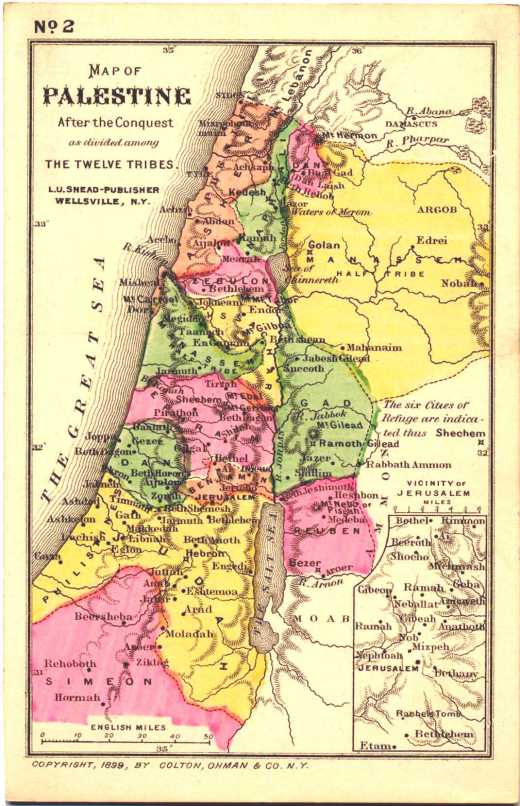
Indeed, our sages teach that the Re(e)d sea split into twelve paths, providing a separate path for each of the twelve tribes.

To understand these twelve paths we must study the different ways that the tribes are described in the Torah. We find three descriptions for the tribes. First, when they are named by their mothers (Vayeitzei – Genesis 29-30; 35:18), each child/tribe is given a name with a particular meaning for a specific reason. Second, when Jacob blesses them (in this week’s portion). And finally, when Moses blesses them at the end of the Torah (Deuteronomy 33:6-25).

In addition the tribes are named and specified many times in the Torah – when they enter Egypt, when they leave Egypt, during their 40 year journey through the Sinai wilderness they travel and camp as tribes, their Temple dedication offerings are repeated twelve times (though they brought the same offerings) to emphasize the twelve unique paths.

Here is one of many applications of these twelve paths, based primarily on this week’s blessings.

Reuven – The First
Shimeon – The Aggressor
Levi – The Cleric
Judah – The Leader
Dan – The Judge
Naftali – The Free Spirit
Gad – The Warrior
Asher – The Prosperous One
Issachar – The Scholar
Zevulun – The Businessperson
Joseph – The Sufferer
Menashe – Reconnection
Efraim – Transformation
Benjamin – The Ravenous Consumer

Reuven – the first-born (‘bechor’) – represents the powerful energy of everything that comes first. The first fruit, the first moments of the day, the beginning of every creation – has enormous amount of energy. “Unstable like water,’ this power can go either way: If harnessed properly, the ‘bechor’/Reuven energy can change worlds; if abused it can destroy. Like water, it can be the source of life, but if left unchanneled it erodes its environment and can flood its surroundings.

Shimeon is aggressive gevurah – the antithesis of Reuven’schesed/water. The fierce anger and cruel wrath that can result from unbridled gevurah must be eliminated lest it turns into weapons of violence that consume the person and all those he comes in contact with. [The lesson of this today is self understood].

Levi is the tribe chosen to serve in the Temple. “Levi” also means ‘attached’ or ‘joined’. Levi is the personality of dedicating your life to serving a higher calling. Of freeing yourself from your bounds to material survival and attaching yourself to Divine service (see Rambam, end of Hilchot Shemittah v’Yovel).

Judah means acknowledgement (‘hodaah,’ as in ‘modeh ani’). Judah’s name also includes the four letters of the Divine name Havaya. Judah is the leader; his descendants would be the kings of Israel, beginning with King David and concluding with Moshiach. Judah is the path of selflessness (‘bittul’) – the most vital ingredient in true leadership.

Dan is the path of law and order (‘dan’ means to judge). Objective justice is the heart of any civilization.

Naftali is the free spirit personality. Like a ‘deer running free’ – breaking out of the status quo – independence is a necessary component in growth. Yet, this free spiritedness must always take care to ‘deliver words of beauty.’

Gad is the warrior archetype. Expanding on the justice of  Dan, Gad is ready to fight for his beliefs. The warrior is necessary to both defend our cherished values and to protect our freedoms.

Asher is both prosperity and pleasure. Asher is the dimension of blessing beyond the norm – to be given more than what is necessary for survival. Asher is the personality of not just getting what you need, but also enjoying it.

Issachar is the scholar. Scholarship provides wisdom, clarity and direction. It is the foundation of any system. Issachar is the dedication to immerse in study and education.

Zevulun is the merchant, the businessperson personality. His role is to enter the marketplace and redeem the Divine sparks within the material world (the ‘secret treasure hidden in the sand’ – Deuteronomy 33:19). Zevulun complements Issachar; they forge a partnership: Zevulun supports the scholar, he funds houses of scholarship, which earns him a right to partake in the reward of Issachar’s studies.

Joseph is the element of suffering in life. Yet, he not only survives; he thrives. He achieves greatness through his challenges. He overcomes all adversary and becomes a great leader, saving his entire generation. Despite his corrupt environment, he maintains his spiritual integrity. The powerful light that emerges from darkness in Joseph divides into two dimensions – his two sons: Menashe and Efraim:

Menashe represents the ability to not succumb to the powers of the ‘mitzraim-constraints’ that want to make you forget your spiritual roots. To remain connected regardless of the challenges.

Efraim takes it even further. It is not enough to just survive in an alien environment, but to thrive – to ‘be fruitful in the land of my affliction.’ Efraim is the power to transform the difficulties into Divine power.

Benjamin is hungry, hungry for the Divine sparks in all of existence. So, like a ‘ravenous wolf’ Benjamin recognizes that his mission is to passionately seek out the Divine energy embedded in matter, devour it, consume and elevate it.

Twelve tribes. Twelve paths. All necessary to reach our destination.

Which personality are you? What part do you need to develop?

May we discover our path and live up to it. And may that help us reach the time — at the end of days – when we will gain clarity as to who belongs to what tribe (see Rambam Hilchot Melochim 12:3). Perhaps the significance of this revelation is the crystallization that will come in the time when the ‘world will be filled with Divine knowledge as the waters cover the sea.’

Jacobson, Simon. "12 Paths in Life." Meaningful Life Center. (Viewed on December 14, 2013). http://meaningfullife.com/oped/2002/12.19.02$VayechiCOLON_The_Twelve_Tribes.php

Generations Forget and Remember

– By Rabbi Lord Jonathon Sacks

The drama of younger and older brothers, which haunts the book of Bereishit from Cain and Abel onwards, reaches a strange climax in the story of Joseph’s children. Jacob/Israel is nearing the end of his life. Joseph visits him, bringing with him his two sons, Manasseh and Ephraim. It is the only scene of grandfather and grandchildren in the book. Jacob asks Joseph to bring them near so that he can bless them. What follows next is described in painstaking detail:

Joseph took them both, Ephraim in his right hand toward Israel’s left, and Manasseh in his left hand towards Israel’s right, and brought them near him. But Israel reached out his right hand and put it on Ephraim’s head, though he was the younger, and crossing his arms, he put his left hand on Manasseh’s head, even though Manasseh was the firstborn. . . . . When Joseph saw his father placing his right hand on Ephraim’s head he was displeased; so he took hold of his father’s hand to move it from Ephraim’s head to Manasseh’s head. Joseph said to him, “No, my father, this one is the firstborn; put your right hand on his head.” But his father refused and said, “I know, my son, I know. He too will become a people, and he too will become great. Nevertheless, his younger brother will be greater than he, and his descendants will become a group of nations.” He blessed them that day, saying: “In your name will Israel pronounce this blessing: ‘May G-d make you like Ephraim and Manasseh.’” So he put Ephraim ahead of Manasseh. (48: 13-14, 17-20).

It is not difficult to understand the care Joseph took to ensure that Jacob would bless the firstborn first. Three times his father had set the younger before the elder, and each time it had resulted in tragedy. He, the younger, had sought to supplant his elder brother Esau. He favoured the younger sister Rachel over Leah. And he favoured the youngest of his children, Joseph and Benjamin, over the elder Reuben, Shimon and Levi. The consequences were catastrophic: estrangement from Esau, tension between the two sisters, and hostility among his sons. Joseph himself bore the scars: thrown into a well by his brothers, who initially planned to kill him and eventually sold him into Egypt as a slave. Had his father not learned? Or did he think that Ephraim – whom Joseph held in his right hand – was the elder? Did Jacob know what he was doing? Did he not realise that he was risking extending the family feuds into the next generation? Besides which, what possible reason could he have for favouring the younger of his grandchildren over the elder? He had not seen them before. He knew nothing about them. None of the factors that led to the earlier episodes were operative here. Why did Jacob favour Ephraim over Manasseh?

Jacob knew two things, and it is here that the explanation lies. He knew that the stay of his family in Egypt would not be a short one. Before leaving Canaan to see Joseph, G-d had appeared to him in a vision:

Do not be afraid to go down to Egypt, for I will make you into a great nation there. I will go down to Egypt with you, and I will surely bring you back again. And Joseph’s own hand will close your eyes. (46: 3-4)

This was, in other words, the start of the long exile which G-d had told Abraham would be the fate of his children (a vision the Torah describes as accompanied by “a deep and dreadful darkness” – 15: 12). The other thing Jacob knew was his grandsons’ names, Manasseh and Ephraim. The combination of these two facts was enough.

When Joseph finally emerged from prison to become prime minister of Egypt, he married and had two sons. This is how the Torah describes their birth:

Before the years of the famine came, two sons were born to Joseph by Asenath, daughter of Potiphera, priest of On. Joseph named his firstborn Manasseh, saying, “It is because G-d has made me forget all my trouble and all my father’s household.” The second son he named Ephraim, saying, “It is because G-d has made me fruitful in the land of my affliction.” (41: 50-52)

With the utmost brevity the Torah intimates an experience of exile that was to be repeated many times across the centuries. At first, Joseph felt relief. The years as a slave, then a prisoner, were over. He had risen to greatness. In Canaan, he had been the youngest of eleven brothers in a nomadic family of shepherds. Now, in Egypt, he was at the centre of the greatest civilization of the ancient world, second only to Pharaoh in rank and power. No one reminded him of his background. With his royal robes and ring and chariot, he was an Egyptian prince (as Moses was later to be). The past was a bitter memory he sought to remove from his mind. Manasseh means “forgetting.”

But as time passed, Joseph began to feel quite different emotions. Yes, he had arrived. But this people was not his; nor was its culture. To be sure, his family was, in any worldly terms, undistinguished, unsophisticated. Yet they remained his family. They were the matrix of who he was. Though they were no more than shepherds (a class the Egyptians despised), they had been spoken to by G-d – not the gods of the sun, the river and death, the Egyptian pantheon – but G-d, the creator of heaven and earth, who did not make His home in temples and pyramids and panoplies of power, but who spoke in the human heart as a voice, lifting a simple family to moral greatness. By the time his second son was born, Joseph had undergone a profound change of heart. To be sure, he had all the trappings of earthly success – “G-d has made me fruitful” – but Egypt had become “the land of my affliction.” Why? Because it was exile. There is a sociological observation about immigrant groups, known as Hansen’s Law: “The second generation seeks to remember what the first generation sought to forget.” Joseph went through this transformation very quickly. It was already complete by the time his second son was born. By calling him Ephraim, he was remembering what, when Manasseh was born, he was trying to forget: who he was, where he came from, where he belonged.

Jacob’s blessing of Ephraim over Manasseh had nothing to do with their ages and everything to do with their names. Knowing that these were the first two children of his family to be born in exile, knowing too that the exile would be prolonged and at times difficult and dark, Jacob sought to signal to all future generations that there would be a constant tension between the desire to forget (to assimilate, acculturate, anaesthetise the hope of a return) and the promptings of memory (the knowledge that this is “exile,” that we are part of another story, that ultimate home is somewhere else). The child of forgetting (Manasseh) may have blessings. But greater are the blessings of a child (Ephraim) who remembers the past and future of which he is a part.

Sacks, Jonathon. "Generations Forget and Remember." OU Torah. (Viewed on December 14, 2013). http://www.ou.org/torah/article/generations_forget_and_remember#.UrAFXNJdWSo