A beautiful story, set in Jerusalem, where trials become miracles and guests become family.
Category Archives: Reflection and Opinion
Kol Nidrei
Avinu Malkeinu
The Incomparable Barbra Streisand and the Haunting Supplication of High Holy Days
Avinu malkeinu sh’ma kolenu
Avinu malkeinu chatanu l’faneycha
Avinu malkeinu alkenu chamol aleynu
V’al olaleynu v’tapenu
Avinu malkeinu
Kaleh dever v’cherev v’raav mealeynu
Avinu malkeinu kalehchol tsar
Umastin mealeynu
Avinu malkeinu
Avinu malkeinu
Kotvenu b’sefer chayim tovim
Avinu malkeinu chadesh aleynu
Chadesh a leynu shanah tovah
Sh’ma kolenu
Sh’ma kolenu
Sh’ma kolenu
Avinu malkeinu
Avinu malkeinu
Chadesh a leynu
Shanah tovah
Avinu malkeinu
Sh’ma kolenu
Sh’ma kolenu
Sh’ma kolenu
Sh’ma kolenu
Learning to Pray
This year has been an extremely difficult one for me. My 13 year-old son, the love of my life, returning from a summer visit with his father, announced to me that he wanted to go and live with him at the end of the school year. He said this with no anger, no malice, no hurtfulness. He reassured me that he loved me, that he knew I loved him , that no-one knew his heart better, and that the lessons I had taught him would carry him through this monumental transition. I was not as composed. Panic, fear, loss, grief, anger, sadness, resentment, desperation. It felt like I was drowning while everyone around me was watching, helplessly.
Passover and Personal Liberation
The Passover narrative: the seder, the retelling of the Exodus – the story of liberation and freedom. Liberation can be understood in a myriad of ways: in its broadest sense, liberation recognizes that all human beings are born free and equal in dignity and rights, that they are endowed with reason and conscience and should act towards one another in a spirit of unity. In a more narrow sense, liberation can be understood to refer to one’s ability to fulfill his or her potential and affective needs. At Passover, we are all required to feel as if we have personally left Egypt: the Exodus story is not only about the freedom of the Jewish people, it is also the archetype through which we can examine what binds and enslaves us in our own lives and consider what liberation might look like and require. We do not ‘commemorate’ the Exodus at Passover; instead, we consider the possibilities that arise from its remembrance. Continue reading Passover and Personal Liberation
Would I Risk My Life?
Purim: a fun holiday marking a serious moment, the moment a woman put her life at risk to save her people. Would I be as brave as Esther? For what would I be willing to risk my life? I would like to say that I would be willing to risk my life for my principles and my core beliefs. I have certainly taken important personal and professional risks to stand-up for what I believe in and consider myself to be a person of strong ideals, motivated by ethical considerations. My colleagues, friends and family would attest to the fact that values and ethics play a central role in my life. I have been very committed to speaking-out on issues of social injustice, racism, and gender discrimination. I have questioned my thinking and examined the privileged place from which I come, complete with its particular worldview and all of its biases. I have tried hard to recognise that I have not earned all of have in my life, but have instead been randomly lucky to be born where I was, to a particular family in a particular age.
Is Jewish Critique Possible?
Is it possible to be a Jewish intellectual?
How do concepts such as ‘ahavat Israel’ and ‘solidarity for the Jewish people’ square with the need for intellectuals to remain detached from their national or religious group to retain their moral integrity?
By Professor Eva Illouz
In a famous exchange between Gershom Scholem and Hannah Arendt, the scholar of Jewish mysticism accused the political theorist of not having enough “ahavat Israel” (love for the Jewish nation and people). What did Arendt do to deserve such a supreme insult? She had written a series of articles for The New Yorker on the Eichmann trial, published in 1963 as a short book called “Eichmann in Jerusalem.”
A Tichel, a Mechitza, and My People
As a Reform Jew, I was nervous before attending my first service at an Orthodox synagogue. I had to travel to Cape Town, South Africa, for business. The city is home to a sizeable Jewish community with a long and interesting history. There is a Reform community in Cape Town, but they had no events planned during the brief time I would be visiting. Arriving on a Sunday afternoon, with limited time to explore the city, I decided to attend Ma’ariv service at one of the oldest and most beautiful Orthodox synagogues in South Africa.
WITH MY GRANDFATHER
Like our father Abraham
who counted stars at night,
who called out to his Creator
from the furnace,
who bound his son
on the altar –
so was my grandfather.
The same perfect faith
in the midst of the flames,
the same dewy gaze
and soft-curling beard.
Outside, it snowed;
outside, they roared:
“There is no justice,
no judge.”
And in the shambles of his room,
cherubs sang
of the Heavenly Jerusalem.
– Zelda
(translated by Marcia Falk)
Hasidic Life
Christmas as a Jew
Christmas as Jew. There are no signs of Christmas in my Jewish home; Christmas is a holiday I do not celebrate because I am Jewish. I do not pretend Christmas is a secular holiday to embrace universal values. I honour the fact it is a deeply meaningful holy day for many of my Christian friends. Of course, there are secular Christmas celebrants. But this I find to be something I cannot embrace.
Chanukah Lights

Chanukah is a holiday of community in which we rededicate ourselves to each other and to the things that are truly important to us. A time in which we honour and acknowledge difficult times we have gone through, but remember that it is through acts of loving kindness that give light to those around us that we are able to transcend those times.
Continue reading Chanukah Lights
Peoplehood Activities: Connecting to the Tribe
As I began to think about the question of what activities connect the Jewish People, it seemed quite straightforward to me. Then I made the mistake of doing a little more research into the concept of “Peoplehood.” Suddenly, things weren’t quite so simple.
Continue reading Peoplehood Activities: Connecting to the Tribe
The Holocaust
The Values and Responsibilities That Arise From Holocaust Study
I learned about the Holocaust in school. I then had much of what I learned reinforced in a very visual way when I traveled through Europe. In university, as a student of political theory, many of the theoretical concepts I studied grew out of the aftermath of the Holocaust. I have watched many documentaries related to the Holocaust and, most recently, have watched much of the Eichmann trial that took place in Jerusalem. I found the trial particularly fascinating in its references to international legal instruments that were implemented in response to the horrors of the Holocaust and destruction of World War II: the Charter of the United Nations, the Geneva Convention, the Universal Declaration of Human Rights, and the United Nations Convention Relating to the Status of Refugees, for example.
Continue reading The Holocaust
Strictly Kosher
Kiddushin and The Sacred
What makes a relationship “sacred?” In what ways can you enhance the holiness of your relationship?
Understanding the Jewish conception of marriage, Kiddushin, was an important aspect of my Jewish journey and required me to answer some significant questions. How is my relationship made sacred? How do I make it holy? Even beginning to address such questions was difficult: for some reason, I felt as if I was required to be in a “sacred” place with my spouse it order to begin the process of considering such things, which brought me around in a circle, of course, trying to determine what “sacred” actually looks like.
Continue reading Kiddushin and The Sacred
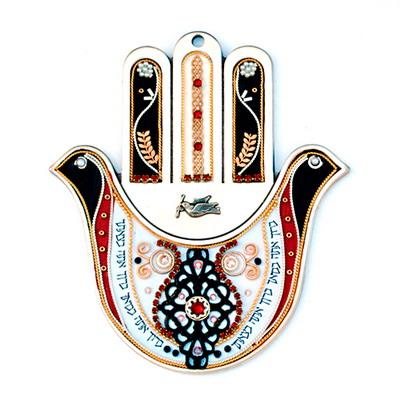
Blessing for the Home
Let no sadness come through this gate,
Let no trouble come to this dwelling,
Let no fear come through this door,
Let no conflict be in this place,
Let this home be filled with the blessing of joy and peace.
Shalom Aleichem
When God Blinks
Shabbat requires bravery and daring.
It challenges the very notion of consistency, of constancy. It is an affront to normalcy. It threatens reality, sanity, of waking in the morning to see the sun arise each day.
It flouts planning. Steps. Control of the world, ourselves. Of believing there is a self that is ours.
Shabbat is unknown. A turning left. The untrod path. The creative life in-utero
It precludes tomorrow’s monotony. Questions our next breath.
Shabbat reveals a world beyond. Of dreams. Where other forces rule. Where elephants climb through needles’ eyes.
It is the pause between, the no-man’s land, the dark of light, the in of out, the light of dark, the in-between.
Shabbat is vibration. The proof in rest of endless movement; the comma in perpetual
motion,
motion,
motion.
Shabbat takes planning, preparation for submission, a yielding to the unknown, the irrepressible. A readiness, as best we can, for that which is beyond, wild, in the hands of the Other.
It is an expedition, with tools of civilization discarded, of gadgets and comfort left behind. It leads, with faith, forward, leaving behind reality’s rhythm, groping without light in a world not of our making, illusion laid bare for a day, as we journey into nothingness, the world left on its own to breathe, to rest, to linger in the void.
What will be? What will be?
Shabbat is Kabbalah’s proof. G-d’s hidden habit revealed of recreating every moment the world anew. The affirmation of nothingness and some other force behind.
The place where artists live. From where inspiration sprouts. To where dreams head.
From this void all things emerge. The blind fare best. And those who love to leap fly with closed eyes and held breath, anticipating their destination with uncertainty and thrill.
What will be?
Who will I be?
Will there be me?
This pulse is always there, everywhere. But on Shabbat it is ours. We enter cautiously its space, its time — welcoming the Other in our lives. Affirming what we know deep in ourselves but lack the courage to replace with it the normality of our lives, the illusion of our continuity.
And at its end, we emerge, blinking, startled, curious, bewildered by the world anew. What’s happened while we stayed away?
Strayed away?
Did something die?
Is there still me?
Without us, did it all go on?
Who mastered the world while we dreamt?
Or are we dreaming now?
Who mastered the world?
G-d.
With miracles, and masters still.
Just for a moment, for these few hours in eternity, He let us in. We entered His reality. He allowed us to glimpse existence as it is when He blinks. He let us touch the place from which we too are born anew each moment, with infinite opportunity to become, to transform, to discover…
…with courage and daring.
The bravery of Shabbat.
The creative life sprung forth.
From nothing.– Jay Litvin
Remember Shabbat and Keep it Holy: First Steps
My three children and I had a tradition of celebrating the end of our week at work and school with Friday night “Party Night” for several years before I began my Jewish journey. This usually meant that the normal rules of the week were set aside: no-one had to do homework, take a bath or shower, or rush to get through dinner. Instead, we would go to the store and buy candy, order pizza, sit in our pyjamas and watch a movie or something on television. There was no stress or formality to the evening, and I would often let the children stay up later than usual and sometimes we would have a sleepover in my bed. We would try to eat at the table some nights, and go around the table to say three things we were happy about that week, one thing we wanted to change, and one thing we liked about the others. It was a very special time for us when we felt very close to each other.
Continue reading Remember Shabbat and Keep it Holy: First Steps
Shabbat is different from all other days of the week. It has no routine activities, no work commitments, no interference on the part of the authorities, no evil temptations. For one day a week, man is totally free.
The commandment to sanctify Shabbat was the first call to humanity at large for real equality. And the first summons for freeing man from the bondage of man, for freeing man from himself, from the routine of work. This was the first significant taste of freedom and equality. And this taste has never faded since.
– Shimon Peres
 Jew Schooled