Category Archives: Numbers/Bamidbar

Masei, Numbers 33:1-36:13

Link to Parsha: http://www.hebcal.com/sedrot/masei


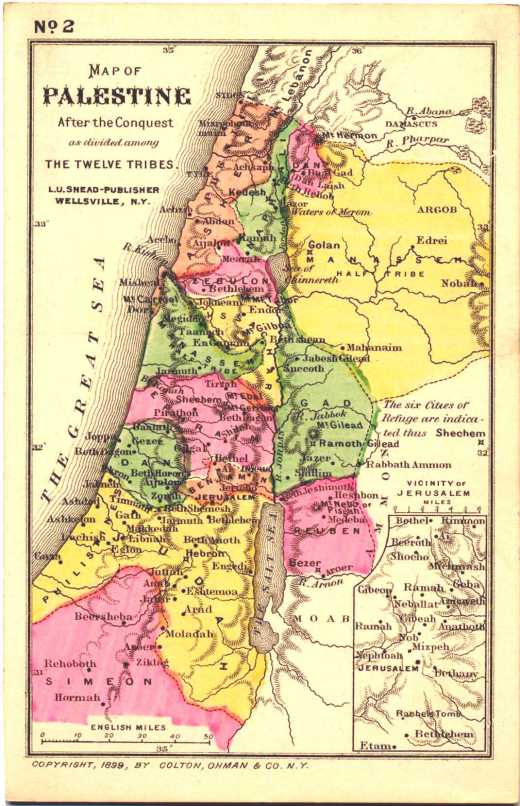
12 Tribes


Living Your Own Narrative

By Mark Kirschbaum

Perashat Massai begins by stating:

‘These are the journeys of the Children of Israel who left the land of Egypt and Moshe listed their goings and comings, by the word of God, and these are their comings and goings’.

After this is a long list of where the people camped and where they moved on to, all beginning ‘…and they left place X, and encamped in place Y…

There are several textual peculiarities that are noted by the Midrashim and commentators:

  1. the first word, eleh ‘these’,  is not preceded by the usual ‘and’, meaning, by Midrashic convention, that this section is set off from the texts preceding it (as opposed to it being written ‘v’eleh’).
  2. The odd word appearing later, motzaeihem ‘the place they left’’ provokes comments, as does its chiastic use in the verse, first mostzaeihem l’mas’eihem ‘where they came from and where they went’, later maseihem l’motza’eihem ‘where they went and where they came from.’
  3. The dangling clause, al pi Hashem, ‘by the word of God’, is ambiguous- is it that the Israelites traveled by the word of God, or listing by Moshe of these stations that was commanded by God?
  4. The obvious question: Who cares what places were traveled past? Is there any purpose whatsoever to this list of transient camp sites the people passed through on their way from Egypt to the Land of Israel?

As is frequently the case, the Midrash offers several alternate possible purposes imparted by this itinerary review, so as we are discussing lists, here’s another list:

1. To commemorate God’s miracles which were performed at these places, so that the events that transpired at these locations would not be forgotten. This theme is picked up by the Ramban as well, but one would have to say this approach is at best problematic, as we have, indeed, forgotten what happened at most of these places.

2. The Midrash quoted by Rashi grants this passage a message related to healing and growth; on their way home, a father might point out to his now healed son all the stops along the way to the hospital where the son had crises- so too Moshe is instructed to record all the places where the people angered God. Thus, this approach is meant to recall the actions of the people as they matured, at these places, so the list serves as a growth chart.

3. The Midrash states that these places are recalled in order to, as it were, thank the places themselves for their hospitality in letting the Israelites camp on them.

These approaches are repeated by the medieval commentators, and appear in the Hasidic writings in a transformed manner. For example, the Mei Hashiloach, in Perashat Devarim, cites midrashic approach number 3, but ‘in reverse’. Rather than thanking the places, as in the Midrash, it is to exonerate the people by placing the blame for any problems upon the place itself, that is to say, if the people sinned in a certain place, it was the fault of an inhospitable environment, not the people. Their sins were the result of a bad “situation”, so to speak.

Still, the critical question remains, why does the contemporary reader need this list of place names?

The Baal Shem Tov is quoted by the Degel Mahane Ephraim as teaching that the 42 journeys enumerated here, which correspond to the 42 letter name of God, represent the development of spiritual stages along the way of each and every individual, and could be decoded if one only knew how to interpret the place names properly.

Following the Baal Shem Tov’s lead, other thinkers try to pinpoint exactly what it is at these places that correspond to our lives. The Degel Mahane Ephraim, and the Kedushat Levi, for example, both suggest that there were spiritual challenges faced and won by the Israelites at these sites, which explains the odd word ‘motza’eihem‘ as being derived from the term ‘nitzotzot‘, spiritual sparks or quanta, which were transformed and assimilated by the people at each of these places.

The Degel adds that these sites had to be enumerated by Moshe because the people themselves were unaware at the time that they had brought about this spiritual sublation, as is so frequently the case. However, Moshe, being in a superior spiritual situation, was aware of these spiritual victories, and therefore could detail them, and this information is what is being transmitted to the people, that in these places something of importance was accomplished.

The Arvei Nahal is bothered by this approach, however- he is bothered by what is now a standard sci-fi trope:  if these journeys and stations were necessary fulfillments of a 42 stage development of holiness, then how could this spiritual journey have been accomplished in God’s original plan, whereby the people go straight from Egypt to Israel? After all, we are taught that it was the sins of the people that led to this prolonged itinerary…

The Arvei Nahal answers that in different spiritual states different amounts of physical actualization are required. Had they not sinned, ‘all these journeys would have been rectified without needing any journeying at all’…

(I do suggest reading the actual answer of the Arvei Nahal in the original text; he sets this answer in the context of the difference between spiritual imagining of martyrdom vs. the actual act of  dying as a martyr, and presents a sensitive bit of consolation to victims of crisis,  claiming that those who give their lives ‘al Kiddush Hashem’, who are martyred as victims of spiritual persecution, do not suffer. Were that were true. In the last few weeks my sleep has been frequently disturbed in thinking of all the  children that were killed in the recent weeks, as well as a NY Times Book Review article regarding the SS death squads; there was a story cited of one Nazi soldier who marched on proudly carrying a still sighing one year old on his bayonet. I pray that the Arvei Nahal is correct).

To the Sefat Emet, it is the journey that is the message. This repeated clause, ‘comings and goings’, is to remind us that in every person’s life, every step towards something is also a step away from something (… you’re sick of hangin’ around and you’d like to travel; get tired of travelin’ and you want to settle down, I guess they can’t revoke your soul for tryin’…); in this textual instance the 42 journeys forward plus the 7 sites reached in retreat (see Rashi in Bamidbar 26:13) correspond to the 49 levels of impurity traversed by the people en route from Egypt (lowest rung) to Israel (highest rung).

Every step towards a goal is a step away from past failures, but how do we become conscious of this process in our own everyday life? After all, we see ourselves every moment of the day, it is hard to notice change in our weary busy lives… The Sefat Emet answers, it is in the review, in the act of each person looking back at their own life journey, it is looking at the big picture of where you’ve been, where you are going, and what you’ve learned from all those moments that effects the transformation and elevation of each of these episodes in retrospect into a spiritual journey.

To the Tiferet Shelomo, this kind of consciousness is not only about a big picture, but even from moment to moment, with every interaction, every time one speaks.  He sees the odd term motza’eihem as not being derived only from ‘nitzotzot‘, as we saw earlier, rather he sources it to the phrase ‘motza’ot hapeh’, literally translated as ‘speech outputs’to teach that our utterances, our words, can travel farther than we know, have ramifications way beyond our intentions, sometimes the right word at the right time in the right place can be utterly transformative.

A theme of these reading on the ‘comings and goings’ of the human journey is that we are not always aware of the monumentality of seemingly trivial events in our life; sometimes an unplanned random episode or chance conversation might affect the whole world…

So let’s return to the first textual problem noted earlier.  The verse opens with the word eleh, ‘these are the journeys’ vs. v’eleh, ‘And these are the journeys’. As we noted earlier, it is a midrashic principle that if there is no ‘and’ at the beginning, it signifies that this passage represents a break from what was transpiring previously, that something new is occurring, that a new story is about to happen.

This break from the previous text suggests that the listing of place names is in some way a novel event, a new episode. What new episode can we find in a seemingly formulaic recapitulation of places visited?

I submit that this listing of place names signals a transformative moment in the people’s consciousness, the crucial first recognition of shared history.  Previously they were a band of freed slaves who seemed to wander from one place to another, things simply happened as they do in nature.  The wandering freed slaves are about to enter the land, and become a free people, with their own independent story. The people will now have a History, a collective narrative. By virtue of this narrative, by recounting the places the people have journeyed and thus engraving into collective memory ‘places where things happened’, the wandering freed slaves become transformed into a People with an epic saga. By listing these places, Moshe has constructed the ‘narrative’ of the early history of the Jewish People. As Paul Ricoeur explains:

…the activity of narrating does not consist simply in adding episodes to one another; it also constructs meaningful totalities out of scattered events. This aspect of the art of narrating is reflected, on the side of following a story, in the attempt to ‘grasp together’ successive events. The art of narrating, as well as the corresponding art of following a story, therefore require that we are able to extract a configuration from a succession…

Thus, in the simple act of listing all the places where the people have been, which in other contexts may simply be the result of chance, Moshe has transformed a group of people into the People, with a story, a history, a narrative, with all that it implies in terms of a ‘living project’ for the future. The Netivot Shalom adds that even if we don’t understand how to decode the specific names listed here into corresponding moments of our personal spiritual bildungsroman, the mere encounter with this perasha, and the idea of a meaningful sequence in our lives, is in a sense already transformative of how we think of our own personal evolution.

Recognizing the transformative nature of the personal narrative, realizing that our life story is in fact a story, is already a step towards attributing meaning to our existence. A critical component of the Jewish concept of teshuva, ‘repentance’, involves a review of where the events of our lives have taken us, how we have responded, and how we might act differently faced with a similar challenge. It is worthwhile to recognize the centrality of the narrative function in our own self estimation; it is not in vain that the Rabbis, in discussing the acts of repentance and reconciliation used the metaphor of a ‘Book of Life’. Our lives are not unlike a text, a book, a book we ourselves author with a text made up of each and every life choice we make, a volume in which every individual is their own dramatist, “and what a long strange trip it’s been”…

Kirschbaum, Mark. "Living Your Own Narrative." Tikkun Daily Blog. (Viewed on July 26, 2014). http://www.tikkun.org/tikkundaily/2012/07/20/weekly-torah-commentary-matot-massei-2-essays/

Matot, Numbers 30:2-32:42

Link to Parsha: http://www.hebcal.com/sedrot/matot

Struggling with Torah

By Rabbi Janet Darley

If you look at the Liberal Judaism Lectionary, you will notice that, unusually, for this week there is only one suggested reading. Why?  Well, a closer examination reveals that much of Mattot contains material that is quite uncomfortable.

The setting for Mattot is the last year of the Israelite journey through the wilderness. It contains three distinct sections. In the first, Moses addresses the assembled tribal leadership concerning vows and oaths. The second section discusses the war on Midian and the third, the request of Reuben and Gad to settle east of the Jordan rather than crossing it.

This last section is the only part that appears in the Liberal Judaism lectionary and that of the Movement for Reform Judaism. The division of lands is quite a safe topic. It contains the request of the tribes Reuben and Gad, herders with large numbers of animals, to remain in the fields to which they had taken a liking rather than be required to cross the Jordan. This incurs a rebuke since the order of their words in their plan to build pens for their livestock and cities for their children seems to indicate more interest in their flocks and herds than in their children, but it is not by any consideration unsettling.

The same cannot be said for the middle section, which prescribes a war against the Midianites.  Going far beyond a simple military campaign, it calls for the slaughter not only of soldiers, but of women and children as well.  This seeking of vengeance is in response to an incident at Baal-peor recounted in Numbers 25.  Rabbi Gunther Plaut points out war that has posed a moral challenge to Jews throughout our history.  In many ways, this passage stands in stark contrast to other discussions of warfare in Torah. Elsewhere, Torah sets out rules for war, including the prohibition of cutting down fruit-bearing trees when laying siege to a city and exempting people from military duty under certain conditions.  If asked about the Jewish view of war, we would be more likely to quote the injunction of Psalm 34:15 to “seek peace and pursue it”, than to quote Numbers 31.

Plaut reminds us that this account in Numbers, written after the fact, was more of a reconstruction of history than actual history.  He argues “it doubtlessly came from an age when Israel had trouble with the native inhabitants of its conquered territories and when widespread immorality was ascribed to these components of the population.”  This story is therefore a retrospective judgement, suggesting that if Moses’ injunctions had been followed correctly, there would have been fewer problems in the land.

Though this section requires a ritual atonement to be made by those involved in the killing of the prisoners, arguably a unique provision, I would struggle to explain it to a visitor to my synagogue.  Furthermore, there is always a chance that someone will use it to justify some horrible act.  Indeed this section of Mattot may well have been one of the texts relied on by Rabbi Dov Lior, arrested in Israel following his endorsement of a publication which states that it is permissible to kill innocent non-Jewish civilians in times of war.  That concern may be why we don’t read it—we certainly don’t want to be seen to be advocating such behaviour.

Yet, I wonder if we really do ourselves a favour when we forget that our sacred writings contain some passages in which we as Progressive Jews do not see divine inspiration but rather their writers succumbing to all too human fear and anger.  In the context of Interfaith relations it is often easy to point out troubling passages in others’ sacred texts, while we have seemingly forgotten our own. As Progressive Jews we believe that we can find divine inspiration by reading Torah, but we do not believe that everything in Torah is the word of God.

One value of reading these texts is the reminder that there are passions that we humans have had to struggle against in the past and still do today.  We also have to deal with the consequences of succumbing to them, and in the case of war the consequences are often more than we are willing to acknowledge at first. What effects would a war such as the one described in Mattot really have on those conducting it?

War is always troubling and the mental and moral impact on the combatants is as much to be feared as the physical destruction it brings.  As an American baby-boomer I became well acquainted with the effects of the Vietnam War on many of those who fought in it as well as its impact on American society. Only a couple of years ago a close friend spoke to me of her fears about what her son would be like when he returned from his tour of duty in Iraq.

The potential effects of war did not escape previous generations of rabbis. In his 1914 Rosh Hashanah sermon, Rabbi Israel Mattuck voiced his concern about the war seemingly enveloping the world: “The results of centuries of human effort in civilization are threatened with complete destruction.  The ruin of towns and sacred houses is but symbolic of the deeper spiritual ruin which this war threatens.”

Rabbi Harold Saperstein, in a sermon given on Armistice Day 1936, offered these words.  “I can see them marching down the streets of Lynbrook [the Long Island community of his synagogue].  Fine brave-hearted boys, chin up and eyes straight ahead.  Boys we know and love, boys whose voices we have heard from this pulpit, dedicating themselves to the cause of Judaism in their Bar Mitzvah speeches…. The years will pass.  A weary, shattered, broken world will declare another armistice.  The boys will come back. But not all of them. Some who come back will not come back the same as they went.  And some will curse God for having permitted them to live and suffer.”

I find little in Mattot that is inspiring or edifying, but I do find in it the reminder that our ancestors were human and that they struggled with some of the same issues we struggle with today. Their responses may have been appropriate for their time, but we cannot follow them unquestioningly.  We live in different times and with different knowledge and understanding.  We must bring that difference to our struggle with the texts left us by our ancestors.

Darley, Janet. "Parashat Mattot." Leo Baeck College D'var Torah Archive." (Viewed on July 19, 2014). http://www.lbc.ac.uk/201107211480/Weekly-D-var-Torah/parashat-mattot.html

Torah for an Imperfect World

By Punk Torah

Sometimes reading the Torah is like reading a book written by a blood thirsty thirteen year old with attention deficit disorder. This week’s portion jumps, not so elegantly, from women taking vows, to killing the Midianites and stealing their stuff, then all of a sudden we’re diving up a bunch of land. The end, next chapter please.

And you wonder why more people don’t take the Torah seriously? It’s like cut-and-paste poetry. Once the story gets really good, G-d interrupts everything with a census or some obscure set of rules that makes no sense. Or it starts off really boring, and you give up half way, only to find out the really good stuff is toward the end.

The Torah doesn’t have a good beginning, middle and end. And it’s really not meant to, either. I think there’s three basic reasons for that.

First, the Torah is a reflection of life. And life doesn’t have a real beginning, middle and end. Sure, individual lives start and finish, but the legacy of humanity lasts forever (or at least until SkyNet and the Terminators finish us off). At any rate, Torah reflects life, and life is filled with low points, high points, boring, pointless interruptions, scandals, intrigue, and everything else…and sometimes the order of those things doesn’t make any sense.

Second, the Torah is a reflection of Creation. There’s a midrash that says that G-d looked into the Torah before creating the world. I like that. The Torah is flawed at times, and frankly, so is the world. Now, I’m not calling HaShem a crummy writer or a bad creator, but the world isn’t perfect, and if you read the Torah enough, you’ll find out that the Torah isn’t perfect all the time either.

Finally, the Torah is the reflection of the human soul…sometimes for better, and sometimes for worse. This week, we’re dealing with the souls of women and warriors, liars and hinderers, revenge-seekers and oppressors. Next week, the soul may change, and go in a new direction. But the Torah does us a huge favor and lets us see all sides of the soul. Hopefully, the soul doesn’t end either.

So what’s the bottom line? Don’t let the strange ups-and-downs of the Torah, the weird jumping back and forth from women-and-their-dads-to-blood-and-guts keep you from learning. Life, Creation, and the human spirit has its ups-and-downs, and its weird moments, too.

Punktorah. "God is a Bloodthirsty Thirteen Year-Old Boy with ADD." PunkTorah.org. (Viewed July 19, 2014). http://punktorah.org/god-is-a-bloodthirsty-thirteen-year-old-boy-with-add-parshat-matot/

Pinchas, Numbers 25:10-30:1

Link to Parsha: http://www.hebcal.com/sedrot/pinchas

Torah: Touched By God

By Rabbi Tony Bayfield

God spoke to Moses saying: Pinchas, son of Eleazar son of  Aaron the Priest, has turned back My anger from the Israelites by displaying among them his zeal for Me, so that I did not wipe out the Israelite people in My zeal. Say, therefore, ‘I grant him my pact of friendship. It shall be for him and his descendants after him a pact of priesthood for all time, because he was zealous for his God, thus making expiation for the Israelites.’ (Num. 25:10–13)

I stand up in honour of the Torah, follow it round the synagogue out of respect with my eyes and my posture. But not as a sacred totem, nor as a manifesto carefully crafted for ease of maximum buy-in. What tells me that this is a document touched by God is its elusive character, its deceptive complexity and the depth of challenge it throws down. Like God, it will not be possessed or summoned to yield simple truths. It does not provide an incontrovertible programme with which to capture the souls of others. Rather, it bothers, provokes, disturbs. Sometimes even ‘touched by God’ will not do. There are dark passages and characters in the Torah, passages displaying zealotry and applauding violence. By men.

Pinchas.

We are near both the end of the Book of Numbers and the Promised Land – in fact, at a place called Shittim (which means ‘acacia trees’). The sons of Israel have become involved with women from the locality and have embraced them in immoral and idolatrous practices. A plague is raging. Just as Moses is about to deal with the situation, a man called Pinchas (Phinehas), grandson of Aaron and son of Aaron’s son Eliezer, grabs hold of a spear, rushes into a private chamber, finds an Israelite man called Zimri having sex with a Midianite woman called Cozbi and despatches them both through the stomach. The plague is checked, the defection is halted and God rewards Pinchas with the pact of hereditary priesthood. That is the story.

By and large, the traditional Jewish sources are accepting and approving of Pinchas’ act of zealotry. The end amply justifies the means. How could that not be so, since the text of the Torah itself explicitly endorses Pinchas’ act? Yet hereditary priesthood is high reward indeed for the work of an impulsive, murderous moment. Characteristically male.

I remember, in my student days at the Leo Baeck College in London, being introduced to a particular midrashic sequence from a collection known as Midrash Tanhuma in which both the ancient authors and my teacher, Professor Raphael Loewe MC, revelled in the details – of where precisely the spear had entered and exited and of the exact position that Zimri and Cozbi had adopted at the moment they were caught in flagrante delicto. This midrash turns Pinchas into something of a strong man and has him running round the camp with the unfortunate couple impaled on his spear like an exotic kebab.

Pinchas turns up in later midrashic history in all manner of positive places – at the head of the Israelites in their campaign against Midian, intent on completing the good work he himself had begun by slaying Cozbi (Num. R. 22:4.); avenging his maternal grandfather Joseph, who had been sold into slavery by the Midianites (Sifrei Num. 157; B.T. Sot 43a.); miraculously slaying Balaam (B.T. Sanh. 106b.); as one of the two spies sent by Joshua to Jericho (Targum Yerushalmi Num. 21.22.), where he managed to make himself invisible like an angel (presumably he could be trusted to enter Jericho without having recourse to the services of its best-known inhabitant).

The Mishnah goes so far as to codify the incident: ‘If a man …. cohabits with a gentile woman, he may be struck down by zealots’ (M. Sanhedrin 9:6.) and a midrash has Pinchas recalling this halakhah (law) as legal justification for his own behaviour (Sifrei Num. 131.) – even without Moses’ permission, a Moses paralysed by his own marriage to a Midianite woman (Exod. 2:16–21; B.T. Sanh. 82a; Num. R. 20:24).

But what I find truly fascinating, terrifyingly fascinating, is the way that the story is dealt with in contemporary Jewish Bible commentary. I want to quote at some length from Gunther Plaut, that renowned rabbi and scholar from Canada, whose major commentary appeared in 1981.

Plaut raises the moral question of how a priceless reward could be given for an act of killing and says: “ By post-biblical and especially contemporary standards, the deed and its rewards appear to have an unwarranted relationship. But the story is biblical and must be appreciated in its own context. To begin with, Phinehas is rewarded not so much for slaying the transgressors as for saving his people from God’s destructive wrath. But, even if we assume that the text concentrates on the former merit, we must remember that the Moabite fertility cult was, to the Israelites, the incarnation of evil and the mortal enemy of their religion.”  He then goes on to quote George E Mendenhall, who identifies the plague with bubonic plague and suggests that Zimri was following a pagan precedent for dealing with the affliction (it is remarkable what one used to be able to get in public health benefits!). Plaut, however, concludes: “ Phinehas did not act out of superior medical knowledge. He saw in Zimri’s act an open breach of the Covenant, a flagrant return to the practices that the compact at Sinai had foresworn … This was the first incident in which God’s power over life and death (in a juridical sense) passed to the people. Phinehas’ impulsive deed was not merely a kind of battlefield execution but reflected his apprehension that the demands of God needed human realisation and acquired a memorable and dramatic example against permissiveness in the religious realm.”

There are some voices from the classical period which sound much more disturbed by Pinchas than Plaut appears to be. A passage in Tractate Sanhedrin (82a) struggles with the legal problems. Why no warning? Why no evidence? Why no trial? The answer that emerges is that the act was licit only because the couple were caught in flagrante delicto. Had they finished fornicating, then Pinchas’ zealotry would have been murder. If Zimri had turned on Pinchas and killed him first, he would not have been liable to the death penalty, since Pinchas was a pursuer seeking to take his life. Even here the rabbinic anxiety is more convincing than the conclusions at which they arrive to allay it. The question was taken up again in the nineteenth century by Samson Raphael Hirsch, who offers the same lame explanation: “Phinehas acted meritoriously only because he punished the transgression in flagrante delicto, in the act. Had he done it afterwards it would have been murder.”

That same passage from Tractate Sanhedrin also reports Rabbi Hisda as stating explicitly that anyone consulting ‘us’ about how to act in a similar situation would not be instructed to emulate Phinehas’ example. Interestingly, a connection is made between Pinchas’ slaying of Zimri and Cozbi and Moses’ slaying of the Egyptian overseer. Because the Exodus text offers little comment and refrains from explicit praise of Moses, the rabbis felt more able to voice doubts here. Some even connect Moses’ act of killing with the punishment of not being allowed to enter the Promised Land. But they are still a minority.

I want, at this point, to go back to the passage that I quoted from Gunther Plaut. “This was the first incident in which God’s power over life and death (in a juridical sense) passed to the people.”  I have severe doubts about God’s power over life and death being taken up by religious traditions and religious authorities and those four words ‘in a juridical sense’ only increase my discomfort. For there is no juridical context to Pinchas’ act. He acted alone; as the text implies and tradition makes explicit (Jerusalem Talmud 25,13.), without the approval of Moses or the religious, political and legal authorities of his time; no warning was given, no evidence adduced, no trial took place. As Plaut says: “ His act reflected his apprehension that the demands of God needed human realisation and required a memorable and dramatic example against permissiveness in the religious realm.”  In this, Plaut is absolutely at one with an early twentieth-century, Orthodox commentator, Baruch Epstein, author of Torah Temimah. According to Epstein there is justification if such a deed is ‘animated by a genuine, unadulterated (sic) spirit of zeal to advance the glory of God.’ (Torah Temimah on Num 25 v7).

That, for me, is the clearest remit for and definition of zealotry and fanaticism that I know. It is the ultimate reversal of a wonderful hasidic adage “ Take care of your own soul and another person’s body, not of another person’s soul and your own body.”  It encapsulates that terrifying absolute certainty that you know what God requires and that others do not. It declares with total conviction that human beings can stand in God’s place and hold sway over life and death, that we can execute, not in self-defence, not in the defence of the lives of others but to advance our own religious agenda and protect our own religious point of view. It seems to me to be a peculiarly male failing.

I do not have to spell out contemporary examples of those who appear to have seen in Pinchas and in similar scriptural authorities not simply justification but inspiration for becoming God and doing God’s supposed murderous will. In fact, part of my discomfort with Plaut may be explained by just how much the world has (apparently) changed over the last twenty-five years, how much more we are aware of the resurgence of fundamentalist zealotry, religious fanaticism and violent patriarchy.

Jews recall Brooklyn-born physician Baruch Goldstein who, apparently with the story of Esther in mind, went out just before Purim in 1994 and murdered twenty-nine Muslims in the Ibrahimi Mosque over the Cave of Machpelah in Hebron. And Yigal Amir who believed he was saving Israel by shooting Prime Minister Yitzhak Rabin. Christians too have their fundamentalist zealots prepared to threaten violence, bomb and murder at abortion clinics in many parts of America. Islam has been hideously defaced by kidnappers and suicide bombers, for whom every conceivable act of inhumanity – and some that were even inconceivable before they were perpetrated – is justified by their religio-political goals and suitable Koranic texts.

Zealotry and fanaticism represent a facet of religion which disturbs me deeply. Pinchas is a terrifying role model, a dark character who seduces his fellow men from dark passages in our holy Torah.

So there we have it. A text, a sidrah against which I rebel from the very heart of my being. It is not that I cannot wrestle with it; it is not that I mind being challenged by it; and it is certainly not that I cannot find some things of merit, interest and religious quality within the narrative. But I rebel because it can be read and heard as having authority, as being worthy of reverence, as being God’s word. Which it is not. It can be taken up and used in ways which are absolutely antithetical to religion, to humanity and to the name of God. Too much of the commentary on this text, both ancient and modern, is self-justifying rather than self-critical, supporting blind obedience and justifying zealotry and fanaticism.

I stand up in honour of the Torah, follow it round the synagogue out of respect with my eyes and my posture. For this is a document touched by God. Like God, it does not offer a simple menu of impressive sound bites, homely truths and responsibility-absolving instructions. Rather, it challenges us even to the extent of asking us to struggle with texts which we ourselves can misunderstand, misuse or leave as hostages to fortune. It demands that we accept the fact that there are dark passages which are not God’s but ours, still ours – we men – even in Torah.

Bayfield, Tony. "Parashat Pinchas: 2009." Leo Baeck College Publications Weekly D'Var Torah. (Viewed on July 12, 2014). http://www.lbc.ac.uk/20090710914/Weekly-D-var-Torah/parashat-pinchas.html

Pinchas: A Covenant of Peace

By Rabbi Sylvia Rothschild

No biblical figure is so identified with zealotry as is Pinchas.  He steps out in the closing verses of last week’s sidra, so  outraged by the sight of a prince of Israel and a Midianite woman cavorting together that he acts immediately, not waiting for any legal process – he thrusts his spear into the couple as they lie together, and kills them both.

It is horrible to read, but more horrible still is God’s response.  Pinchas is to receive a special reward – “Pinchas is the only one who zealously took up My cause among the Israelites and turned my anger away so that I did not consume the children of Israel in my jealousy.  Therefore tell him that I have given him My covenant of peace” (Num 25:11-12)

Pinchas’ action ended an orgy of idolatry and promiscuity that was endangering the integrity of the people.  But while the outcome was important, the method was terrible. And this rage which led him to act without any inhibition or process is not unique in bible. Remember the young Moses who murdered the Egyptian taskmaster?  Or Elijah who slaughtered the priests of Baal?

These are events in our history which we cannot ignore, but neither can we celebrate. We have in our ancestry jealous rage and zealotry.  So for example Elijah, having killed hundreds of idolatrous priests and demonstrating to his own satisfaction the falseness of their faith, finds that being zealous for God does not guarantee safety. Queen Jezebel is angered and Elijah had to run for his life to the wilderness.  There he encounters many strange phenomena, but ultimately hears God not in the storms but in the voice of slender silence.

Moses’ act of killing was a little different – a young man who had only recently understood his connection to an enslaved people, he found their treatment unbearable, and when he found an Egyptian beating a Jew he looked around, saw no one so struck him and hid the body in the sands.  Only the next day when he realised he had been seen, did he flee into the wilderness, there to meet God at the bush which burned but which was not consumed.

And Pinchas, whose act of violence grew from his anger against those who were mingling with the Midianite women and taking up their gods was rewarded by God with a ‘brit shalom’, a covenant of peace and the covenant of the everlasting priesthood.

Each of these men killed in anger – anger that God was not being given the proper respect, anger that God’s people were being abused.  None of them repented their action, although Elijah and Moses were certainly depressed, anxious and fearful after the event.  And God’s response seems too mild for our modern tastes.

Yet look at God’s responses a little more closely.  Elijah is rewarded not by a triumphalist God but by the recognition of God in the voice of slender silence –the ‘still small voice’. That voice doesn’t praise him but challenges him – “What are you doing here, Elijah?”  After all the drama Elijah has to come down from his conviction-fuelled orgy of violence and recognise in the cold light of day what he has done.  Only when he leaves behind the histrionics does God become known to him – in that gentle sound of slender silence, and with a question that must throw him back to examine the more profound realities about himself and his own journey.

Moses too is not rewarded with great honour and dramatic encounter – his fleeing from the inevitable punishment is about survival and there is a tradition that Moses did not enter the promised land, not only because of what had happened at the waters of Meribah, but because that action brought to mind the striking of the Egyptian – Moses hadn’t learned to control his temper and his actions even after forty years of wandering in the wilderness.

Moses’ first encounter with God too was so gentle as to be almost missable.  In the far edges of the wilderness alone with his father in law’s sheep this miserable young man saw a bush which burned but which wasn’t burned out.  It is a story we know from childhood, but something we generally don’t recognise is that to notice such a phenomenon in the wilderness where bushes burned regularly, took time – Moses must have stood and watched patiently and carefully before realising there was something different about this fire. There is gentleness and the very antithesis of drama and spectacle, of the immediacy and energy of the zealot.

The reward for Pinchas is also not as it first seems.  God says of him “hineni notein lo et breetee, shalom”.  “Behold, I give him my covenant, peace”.  The Hebrew is not in the construct form, this is not a covenant of peace but a requirement for Pinchas to relate to God with peace, and his method for so doing is to be the priesthood.

The words are written in the torah scroll with an interesting addition – the vav in the word ‘shalom’ has a break in it.  The scribe is drawing our attention to the phrase – the violent man has not been given a covenant of peace but a covenant to be used towards peace – that peace is not yet complete or whole- hence the broken vav – it needs to be completed.

One of the main functions given to the priesthood is to recite the blessing of peace over the people, the blessing with which we end every service but which in bible is recited by priests as a conduit for the blessing from God.

Rabbi Shimon ben Halafta tells us “there is no vessel that holds a blessing save peace, as it says ‘the Eternal will bless the people with peace’”  In other words, the eternal priesthood given to Pinchas forces him to speak peace, to be a vessel of peace so as to fulfil his priestly function.  In effect, by giving Pinchas “breetee, shalom” God is constraining him and limiting his violence, replacing it with the obligation to promote peace. It is for Pinchas and his descendants to complete the peace of God’s covenant, and they cannot do so if they allow violence to speak.

Each of the three angry men – Moses, Pinchas, Elijah – are recognised as using their anger for the sake of God and the Jewish people, but at the same time each is gently shepherded into a more peaceful place.  And this methodology is continued into the texts of the rabbinic tradition so that by Talmudic times self-righteous zeal is understood as dangerous and damaging and never to take root or be allowed to influence our thinking.

Times change, but people do not – there are still many who would act like Pinchas if they could: every group and every people has them.  Their behaviours arise out of passionate belief and huge certainty in the rightness of those beliefs.  Rational argument will never prevail against them, but gentle patient and persistent focusing on the goal of peace, our never forgetting the need for peace, must temper our zealots. Every tradition has its zealots and its texts of zealotry, but every tradition also has those who moderate and mitigate, who look for the longer game and the larger goal. We must keep asking ourselves, which group are we in today?

Rothschild, Sylvia. "Parashat Pinchas (2014)." Leo Baeck College Publications Weekly D'Var Torah." (Viewed on July 12, 2014). http://www.lbc.ac.uk/201407101866/Weekly-D-var-Torah/parashat-pinchas.html

Balak, Numbers 22:2-25:9

Link to Parsha: http://www.hebcal.com/sedrot/balak

The Other

By Leanne Stillerman

At the opening of parshat Balak, Bnei Yisrael are encamped at the plains of Moab in the desert. They have recently emerged victorious against the Emorite people, after being refused peaceful passage through the Emorite lands. Their formidable victory against the Emorites and their seemingly inexplicable exodus from Egypt have inspired fear in the now neighbouring Moabite people, who join with their king, Balak, in enlisting the help of Bilaam, a seer from Mesopotamia with reported powers to bless and curse. The people of Moab approach Bilaam in the hope that he will curse Bnei Yisrael, and that this curse will weaken the nation and assist the Moabites in chasing them from their lands.

The text suggests that the people of Moab’s plan to curse is motivated by no less than terror of dispossession by a nation they perceive as mightier and more numerous than themselves. The text uses the phrase “vayagor Moab” (Bamidbar 22:3), which, in its plain meaning, is translated as “And Moab became terrified”. The Midrash Rabba comments on the root of the word “vayagor”, and suggests that the people already saw themselves as “gerim” – strangers – in their own land; they already visualized their own expulsion at the hands of Israel.

The text conveys the way in which the Moabites perceive B’nei Yisrael as an almost supernatural force, which they cannot hope to confront without external help. The metaphors used by the Moabites reflect a sense of the people of Israel as an almost non-human mass; the Moabites exclaim: “Now this horde will lick clean all that is about us as an ox licks up the grass of the field,” and Balak refers to them as having “covered the eye of the earth”, a phrase used to describe swarms of locusts. Whether seen as a herd of oxen or a swarm of locusts, it is clear that the perceptions of the people hover between super-human and sub-human. It is here that our text provides us with a classic xenophobic narrative, reflecting a fear of dispossession and a characterization of the “other” as less than human, a narrative which has repeated itself throughout human history.

The text describes the way in which Bilaam continues to attempt to curse the people through techniques of divination, despite signs which suggest that his attempts will be blocked. The first night when Bilaam is visited by Balak’s messengers, God visits him in a dream and tells him” “you will not curse this people, for they are blessed.” However, Bilaam does not convey this message to the messengers. Instead, he simply tells them to return to Moab, because “God will not let me go with you”. Bilaam does not play the role of a true prophet, conveying the divine message, and fails to suggest that God opposes this mission altogether. Had Bilaam conveyed the message, he might have facilitated an authentic dialogue, and assisted the Moabites in perceiving the people of Israel more accurately. Instead, the narrative suggests that Bilaam resists an awareness of what is, attempting to manipulate and alter reality.

It is only at the end of the narrative, when Balak takes Bilaam to the final vantage point from which he hopes Bilaam will curse the people, that Bilaam sees “that it is good in the eyes of God to bless Israel”. At this point, the text tells us, Bilaam does not go out to seek divinations, as he had on previous occasions. Instead, he looks out towards the wilderness, and then lifts his eyes and sees the people encamped according to their tribes. It is only at this point that Bilaam encounters “ruach Elokim” – the spirit of God. On the previous two occasions, God placed a blessing in his mouth, which he forcibly delivered. This time, the blessing flows freely from Bilaam through his encounter with God. Bilaam has finally surrendered his attempts to manipulate reality according to his perceptions, and turns to a genuine perception of what is, which leads to the famous blessing, “mah tovu ohalecha Ya’acov, mishkenotecha Yisrael”. Perhaps, in part, this narrative challenges us to drop our preconceptions of reality and the “other”, and genuinely listen and see the signs around us.

Stillerman, Leanne. "Balak 5770." Limmud on One Leg. (Viewed on July 5, 2014). http://limmud.org/publications/limmudononeleg/5770/balak/


Our Eternal Battle with the Ideology of Pe’or

By Rabbi Yehuda Amital (summarised by Joey Shabot)

The last section of our parasha tells the story of Am Yisrael succumbing to the sin of worshipping the diety of the Moav.

Two verses describe this idol-worship: “And they called the people to the sacrifices of their gods and the people ate and bowed down to their gods. And Yisrael joined itself to Ba’al Pe’or, and the anger of Hashem was kindled against Yisrael” (Numbers 25:2-3).

Apparently, these verses describe two distinct groups of idol worshippers. We know from other places in Torah that the main deity of Moav was not Pe’or, but rather Kemosh. Kemosh was worshipped through sacrifices and genuflection, as described in the first verse. Pe’or, however, was worshipped in a very different manner: not through sacrifices but rather through undressing in front of and defecating on the idol figure.

It is significant that the latter verse, discussing the worship of Pe’or, tells us of Hashem’s anger. Furthermore, whenever the Torah refers to the sin with the women of Moav, it refers to it as “the matter of Pe’or” (Numbers 25:18, 31:16), a clear indication that Pe’or represented the essence of the sin. The number of people who died as a result of this sin was 24,000. Even the sin of the Golden Calf resulted in no more than 3,000 deaths! What precisely was so bad about Pe’or per se, and why does Pe’or receive such prominence as the central sin in this story?

The key to this question lies in the answer to another, more straightforward problem: what was it that made Benei Yisrael, just praised by Bil’am for not adopting perverse and foreign elements (23:9, 21, 23) succumb to this particularly bizarre form of idol worship?

Let us think for a moment beyond the specific manner in which Pe’or was worshipped, and consider the ideology behind it. Pe’or represents an ideology still fashionable today, containing two elements: man living and behaving as he would in his most natural state, and as a result, losing the feeling of common shame (busha) that would otherwise characterize man as distinct from the animals.

According to this ideology, there is no reason for man to feel shame. What is natural is good! Why should fulfilling his most basic and natural physical functions be any cause for hiding? In fact, one would expect the opposite from a God-fearing nation – that man, in celebration of a perfect creation (his wondrous body, and a perfect natural world around him), should do nothing less than embrace nature just as it is, proudly flaunting it as God made it, without adding or taking away. And therefore, it would be perfectly appropriate for these ideas to find expression in nothing less than the very worship of the divine, in the culture of such a nation. Viewed from such a perspective, the manner of Pe’or-worship is indeed articulate poetry, expressing a developed philosophical stance – a stance, however, that Judaism strenuously rejects.

The Torah opens with the theme of the tension between pure nature and shame. The effect of eating from the tree of knowledge, it will be remembered, was to “know the difference between good and bad” (Genesis 2:17). Immediately after tasting from this tree and thus now having the ability to distinguish, Adam and Chava’s first action is to cover their nakedness, fashioning makeshift clothing from the first material in sight (3:7). Adam clearly articulates his first reaction to realizing that he was not dressed: “I was afraid because I was naked…” (3:10). Later, it is Hashem Himself who clothes Adam and Chava (3:21).

The Kabbalists express this idea as central to the whole of creation. Jumble the letters of the first word of the Torah, “Bereishit,” and you can get “Yere boshet” – mindful of shame, which represents the antithesis of unharnessed nature and the antithesis of Ba’al Pe’or. It is man’s job not to be merely part of nature, but to transcend it and perfect it.

Between the days of Ba’al Pe’or and our times, there have been yet others who questioned the theological assertion that man must to a certain degree alter God’s creation. In the well-known midrash (Tanchuma, parashat Tazria), Turnus Rufus, a Roman ruler, questions R. Akiva: “Whose actions are more becoming, God’s or man’s?” R. Akiva, preempting him, asserts that man’s actions are more becoming, and as evidence he illustrates that wheat is useless until man bakes bread with it, and flax is useless until man weaves it. Here, the Roman is really questioning the Jews’ audacity in circumcising their males – how do we dare alter what God made? Indeed, R. Akiva provides an articulate response. His point resounds through the mitzvot, starting from circumcision and extending to such mitzvot as orlat ilan (waiting three years before enjoying the fruit of a tree) and the concept of tzniut (modesty). The same God who created the world also commanded human beings that the world’s natural state is not always perfect or good, and that it is left to man to perfect the world.

The rejection of Pe’or’s “natural” ideology finds expression not only in the Torah’s opening and various mitzvot, but also at its very end. In describing Moshe Rabbeinu’s burial place, the Torah reads “in the valley in the land of Moav against (mul) Beit Pe’or” (Devarim 34:6). Immediately, one cannot help but wonder if the Torah could not find a more complementary manner in which to describe the location, and if it could not have closed with prettier imagery than Pe’or? The Torah’s purpose in summoning associations of the incident described in our parasha, as well as the strategic placement of the grave of Moshe, who can be seen as the embodiment of Torah, becomes obvious in light of the above. The Torah’s challenge to Pe’or’s ideology, and the CONFRONTATION it presents, is clearly symbolized here by the pure contrast: Moshe and his Torah, vs. Pe’or and its temple. Moshe remains eternally poised against Pe’or.

One of the tenets of our Torah is that not everything that is natural is wholesome. And in effect, all of Torah is sandwiched, from Bereishit to Ve-zot Ha-berakha, between reminders of this value.

Amital, Yehuda. "Our Eternal Battle with the Ideology of Pe'or." The Israel Koschitzky Virtual Beit Midrash.  (Viewed on July 5, 2014). http://vbm-torah.org/archive/sichot/bamidbar/40-62balak.htm

Chukat, Numbers 19:1-22:1

Link to Parsha: http://www.hebcal.com/sedrot/chukat

Dvar Tzedek

By Rabbi Rachel Kahn-Troster

As the Israelites wind down their adventures in the desert and prepare to enter the Promised Land as a free generation, they must again confront their faith in God’s ability to protect and provide for them. At the heart of Parashat Chukkat is the puzzling episode of Moses and the rock that yields water. Through Moses and the costly mistake that he makes, this parashah teaches us the proper way to express trust in God. The challenges that Moses and the Israelites face in finding the right way to engage in and express their belief in God challenge us to think about the ways we demonstrate commitment to our values in the public sphere.

In this episode, the people complain of thirst and of feeling abandoned by God. Moses is commanded by God to assemble the people and to order a specific rock to yield water. This is constructed as a highly visible spectacle: God specifies that the miracle must take place l’ayneihem, before the very eyes of the people. Instead of immediately obeying God’s commandment and speaking confidently to the rock—showcasing the miraculous benevolence of the Divine—Moses chastises the people and asks, “Will we get water for you from this rock?!” This question shifts the focus away from God to God’s human agents, and does so in an exceedingly public forum. Moses proceeds to hit the rock, making it appear that he is the cause of the water that gushes forth. The desired immediate result—salvation from thirst—is achieved, but the theological goal—demonstrating God’s power to the people—is not. God’s rebuke to Moses, that he “did not trust Me enough to affirm my sanctity in the sight of the Israelite people,” emphasizes that through his public outburst Moses squanders an opportunity to reinforce the faith of the people and inspire them to trust in God.

A midrash notes that Moses had doubted and challenged God prior to this episode, but until now had done so only in private and therefore without censure. The confrontation at the rock, however, is impossible for God to overlook. Moses is punished not for lacking personal faith, but for not inspiring faith in the Israelites. Here, Moses allows the Israelites to see the cracks and fissures in his own faith in God. This weakness is reflected in the Israelites’ future poor behavior and outbursts against God. Indeed, later in the parashah, the people complain again about the difficulty of life in the desert. They have not learned to trust in God.

This passage suggests that our public actions, ones in which we commit our names and our reputations, can have significant impact, and that they need to be constructive in order to be effective. As social justice activists we need the courage to declare the importance of bringing justice to the world. Learning from Moses, we should make sure that our declarations are positive, have substance and invite participation. We must project and inspire confidence. We must speak to the rock.

Yet, much of what passes for “action” or activism today is superficial, even though in this age of Google it sometimes seems like nothing is private and that everything we do—from the petitions we sign to the donations we make—is part of the public record forever. We go onto Facebook and become fans of many different causes with a few mouse clicks. We wear a T-shirt with a cute slogan or slap on a bumper sticker. These forms of discourse are public but they are shallow. A public display with little to back it up is not that different from Moses’s outburst in the desert. It may deliver water, but does not inspire larger, more lasting results or change the consciousness of our audience.

To truly make a difference, we have to be willing to engage our values in public in a way that has meaning. We can call or write to our elected officials. We can attend a rally or a speech, and text our friends to join us there. We can write a letter to the editor or an op-ed. When we make donations to causes we believe in, we can allow those organizations to use our names in their lists of supporters. Or we can take a real risk with our Facebook friends and online followers, and actively engage them in an in-person conversation about the causes we believe in. Real engagement requires more than a mouse click.

We need to take up the challenge given to Moses by God to sanctify God’s name publicly and in a substantive way. There is real risk involved in taking a confident stand in the sight of others, but there are also real rewards.

Kahn-Troster, Rachel. "Dvar Tzedek 5774." American Jewish World Service. (Viewed on June 28, 2014). http://ajws.org/what_we_do/education/publications/dvar_tzedek/5774/chukkat.html

Miriam – Water Under the Bridge?

By Rabbi Bradley Artson

Careers of public figures take on a life of their own, ebbing and flowing with shifts in public opinion and the latest values.

One Jewish figure whose popularity is at an all-time high is the prophet Miriam, the sister of Moses and Aaron.

While featured prominently in the Torah, Miriam’s claim to fame always paled in the face of her more visible brothers. After all, Aaron was the first Kohen Gadol (high priest), the link between the Jewish people and their religion, and Moses was the intimate friend of God, transmitting sacred teachings to the people.

Compared to those two leaders, Miriam simply faded into the background. True, we celebrate her beautiful song at the shores of the Red Sea, but even that poem is overshadowed by Moses’ far-lengthier song. Today, Miriam’s fame rests less on any specific accomplishment and more on the fact that she was a woman.

miriam bible

Three thousand years ago–and in most parts of the world even today–being a woman was itself disqualification from public recognition or accomplishment. With so few female heroes, Miriam stands out precisely because we are now more sensitive to just how difficult it is for a woman to gain public recognition. Today’s parasha comments on the death of this prophet, that “Miriam died there and was buried there, and the community was without water.”

Rashi (11th Century, France) noticed the strange juxtaposition of Miriam’s death and the shortage of water, and assumed that there must be a connection between the two. “From this we learn that all forty years, they had a well because of the merit of Miriam.” Miriam’s Well entered the realm of Midrash as testimony to the greatness of this unique leader.

As the Jews wandered through the wilderness, lacking adequate water would have been fatal. However, the power of Miriam’s integrity, piety and caring was such that God provided a moving well of water, one which followed the people throughout their wanderings until the moment of her death. Without Miriam, there was no more water.

Miriam’s place in Jewish legend points to two lessons we can carry with us through our own personal wildernesses. While male prophets emphasize the power of words, the centrality of rules of conduct, of sanctity and of justice, Miriam’s prophecy was one of deed. Rather than stirring speeches or administration of justice, Miriam focused on teaching her people how to sing in moments of joy, and she saw to their sustenance during their period of exposure and fragility.

Miriam’s example, paralleled by countless women after her, is one of action–deeds of love and support. Without Miriam’s efforts, no one would have been able to listen to the words of Moses or to study God’s Torah. Acts of caring and love–that is the special gift that women give humanity. Notice, also, that no one comments on her well, on how important and valued her contribution is until after she has died.

The tragic reality is that for most women, after-the-fact recognition is often the only kind that is given. The women who work in the homes raising children, the women who work in the schools teaching students, the women who work in hospitals tending the sick, these and countless other women perform the difficult, tedious tasks that sustain and make human life possible.

While medallions and press releases accompany the splashier achievements of some men, many women quietly provide wells of nurturing and support without public attention or commendation. Only when they are no longer able to serve are their services noticed, and then only because they are missed. Why didn’t anyone notice Miriam’s well while she was still alive?

It may be too late to change Miriam’s status among her own generation, although many Jewish men and women are now, belatedly, giving her the prominence that her compassion and nurturing deserve. But it is not too late for our generation to re-examine its own values and heroes today.

Do we sufficiently honor those whose contribution is quiet support of others? Do we still relegate such vital care to one specific group, or have we each undertaken to make ourselves not only disciples of Aaron, not only children of Moses, but also personifications of Miriam–using our hands and hearts, just as she did, to irrigate the lives of our people and of all people?

Artson, Bradley. "Miriam - Water Under the Bridge?" MyJewishLearning.com. (Viewed on June 28, 2014). http://www.myjewishlearning.com/texts/Bible/Weekly_Torah_Portion/hukkat_artson5762.shtml?p=0

Korach, Numbers 16:1-18:32

Link to Parsha: http://www.hebcal.com/sedrot/korach

Brass Pans

By Rabbi Lazer Gurkow

As recounted in this week’s Torah portion, Korach led a rebellion against Moses and Aaron. Two hundred and fifty of Korach’s followers brazenly performed the rite of incense offering—a rite reserved only for the high priest. They were punished, but the brass pans they used in their misguided offering were salvaged. G‑d instructed that they be utilized as a covering for the altar. Why would a sinner’s pan be incorporated into the altar of atonement?

The simple reason given is that this would serve as a reminder to the nation never to engage in rebellion again. Yet there must be a deeper dimension, a positive aspect, to this remarkable twist in the tale.

The chassidic masters point out that every metal used in the building of the Tabernacle represented a human character trait. Gold is indicative of awe, silver of love, and brass of conviction and strength of character. Korach and his men were indeed made of brass, prepared as they were to sacrifice their life on the altar of conviction.

They backed the wrong horse, but they sure knew how to run. Their conviction was laudable though their choice was tragic. So G‑d instructed that the brass pans be incorporated into the altar itself, but the hot coals within it—also used to perform the incense rite—be discarded. This demonstrates that G‑d did not approve of the nature of their sacrifice, but appreciated the sacrifice itself.

The message to the nation was simple. Do not repeat Korach’s mistake, but do take a lesson from the manner in which he pursued it. Find that strength within yourself, but harness it to the service of G‑d.

Korach was given a gift, but he abused it. We need to utilize that very gift in a positive sense. Strength of character is handy when, for example, skeptics and detractors beset us and question our values.

When doubts cross our mind, when questions plague us, conviction sustains us till such time as we discover the answers. When our strength is eroded by temptations and craven delights, we rely on our inner reserves till our moment of weakness passes.

In short, when the ego, heart or mind loses enthusiasm, an unshakable faith will carry the day.

This Torah portion comes on the heels of the story we read last week, in which the nation was handed a forty-year sentence to wander the desert. It would take patience and long-term commitment to overcome this long and trying period. This strength of character was born out of the ashes of Korach’s tragedy.

Though Korach’s rebellion was ill-fated, it sparked a fire deep within the Jewish soul. If Korach could feel such conviction, then so could we. Buoyed by this conviction, the nation resolved to overcome the forty-year sentence and enter the promised land.

We too would do well to tear a page out our ancestors’ playbook. We too have been wandering for many years, and we too await the promise of return. With the conviction of a faith unshaken, let us resolve to anticipate the coming redemption speedily in our days, Amen.

Gurkow, Lazer. "Brass Pans." Chabad.org. (Viewed on June 21, 2014). http://www.chabad.org/parshah/article_cdo/aid/395376/jewish/Brass-Pans.htm

Servant Leadership

By Rabbi Jonathon Sacks

“You have gone too far! The whole community are holy, every one of them, and the Lord is with them. Why then do you set yourselves above God’s congregation?” (Num. 16: 3).

What exactly was wrong in what Korach and his motley band of fellow agitators said? We know that Korach was a demagogue, not a democrat. He wanted power for himself, not for the people. We know also that the protestors were disingenuous. Each had their own reasons to feel resentful toward Moses or Aaron or fate. Set these considerations aside for a moment and ask: was what they said, true or false?

They were surely right to say, “All the community are holy.” That, after all, is what God asked the people to be: a kingdom of priests and a holy nation, meaning, a kingdom all of whose members are (in some sense) priests, and a nation all of whose citizens are holy.

They were equally right to say, “God is with them.” That was the point of the making of the Tabernacle: “have them make Me sanctuary for me, and I will dwell among them” (Ex. 25: 8). Exodus ends with the words: “So the cloud of the Lord was over the tabernacle by day, and fire was in the cloud by night, in the sight of all the Israelites during all their travels” (Ex. 40: 38). The Divine presence was visibly with the people wherever they went.

What was wrong was their last remark: “Why then do you set yourselves above God’s congregation?” This was not a small mistake. It was a fundamental one. Moses represents the birth of a new kind of leadership. That is what Korach and his followers did not understand. Many of us do not understand it still.

The most famous buildings in the ancient world were the Mesopotamian ziggurats and Egyptian pyramids. These were more than just buildings. They were statements in stone of a hierarchical social order. They were wide at the base and narrow at the top. At the top was the king or pharaoh – at the point, so it was believed, where heaven and earth met. Beneath was a series of elites, and beneath them the labouring masses.

This was believed to be not just one way of organising a society but the only way. The very universe was organised on this principle, as was the rest of life. The sun ruled the heavens. The lion ruled the animal kingdom. The king ruled the nation. That is how it was in nature. That is how it must be. Some are born to rule, others to be ruled.

Judaism is a protest against this kind of hierarchy. Every human being, not just the king, is in the image and likeness of God. Therefore no one is entitled to rule over any other without their assent. There is still a need for leadership, because without a conductor an orchestra would lapse into discord. Without a captain a team might have brilliant players and yet not be a team. Without generals an army would be a mob. Without government, a nation would lapse into anarchy. “In those days there was no king in Israel. Everyone did what was right in their own eyes” (Judges 17:6, 21:25).

In a social order in which everyone has equal dignity in the eyes of heaven, a leader does not stand above the people. He serves the people, and he serves God. The great symbol of biblical Israel, the menorah, is an inverted pyramid or ziggurat, broad at the top, narrow at the base. The greatest leader is therefore the most humble. “Moses was a very humble man, more humble than anyone else on the face of the earth” (Num. 12:3).

The name to this is servant leadership, and its origin is in the Torah. The highest accolade given to Moses is that he was “the servant of the Lord” (Deut. 34:5). Moses is given this title eighteen times in Tanakh as a whole. Only one other leader merits the same description: Joshua, who is described this way twice.

No less fascinating is the fact that only one person in the Torah is commanded  to be humble, namely the king:

When he takes the throne of his kingdom, he is to write for himself on a scroll a copy of this law, taken from that of the Levitical priests. It is to be with him, and he is to read it all the days of his life so that he may learn to revere the Lord his God and follow carefully all the words of this law and these decrees and not consider himself better than his fellow Israelites … (Deut. 17: 18-20)

This is how Maimonides describes the proper conduct of a king:

Just as the Torah has granted the him great honour and obligated everyone to revere him, so too it has commanded him to be lowly and empty at heart, as it says: ‘My heart is a void within me’ (Psalm 109:22). Nor should he treat Israel with overbearing haughtiness, as it says, ‘he should not consider himself better than his fellows’ (Deut. 17:20).

He should be gracious and merciful to the small and the great, involving himself in their good and welfare. He should protect the honor of even the humblest of people.

When he speaks to the people as a community, he should speak gently, as in ‘Listen my brothers and my people…’ (King David’s words in I Chronicles 28:2). Similarly, I Kings 12:7 states,  ‘If today you will be a servant to these people…’

He should always conduct himself with great humility. There is none greater than Moses, our teacher. Yet, he said: ‘What are we? Your complaints are not against us’ (Exodus 16:8). He should bear the nation’s difficulties, burdens, complaints and anger as a nurse carries an infant.

The same applies to all positions of leadership. Maimonides lists among those who have no share in the world to come, someone who “imposes a rule of fear on the community, not for the sake of Heaven.” Such a person “rules over a community by force, so that people are greatly afraid and terrified of him,” doing so “for his own glory and personal interests.” Maimonides adds to this last phrase: “like heathen kings.”[5] The polemical intent is clear. It is not that no one behaves this way. It is that this is not a Jewish way to behave.

When Rabban Gamliel acted in what his colleagues saw as a high-handed manner, he was deposed as Nasi, head of the community, until he acknowledged his fault and apologised. Rabban Gamliel learned the lesson. He later said to two people who declined his offer to accept positions of leadership: ‘Do you think I am giving you a position of honour [serarah]? I am giving you the chance to serve [avdut].” As Martin Luther King once said “Everybody can be great…because anybody can serve.”

C. S. Lewis rightly defined humility not as thinking less of yourself but as thinking of yourself less. The great leaders respect others. They honour them, lift them, inspire them to reach heights they might never have done otherwise. They are motivated by ideals, not by personal ambition. They do not succumb to the arrogance of power.

Sometimes the worst mistakes we make are when we project our feelings onto others. Korach was an ambitious man, so he saw Moses and Aaron as two people driven by ambition, “setting themselves above God’s congregation.” He did not understand that in Judaism to lead is to serve. Those who serve do not lift themselves high. They lift other people high.

Sakcs, Jonathon. "Servant Leadership." OU.org. (Viewed on June 21, 2014). http://www.ou.org/torah/parsha/rabbi-sacks-on-parsha/servant-leadership/

Sh’lach, Numbers 13:1-15:41

Link to Parsha: http://www.hebcal.com/sedrot/shlach

The Blue of the Ocean, the Sky, and the Tzitzit

By Elizabeth Richmond

“Speak to the Israelite people and instruct them to make tzitzit for themselves on the corners of their garments through all the ages; let them attach a cord of blue to the tzitzit of each corner. That shall be your tzitzit; look at it and recall all of God’s commandments and observe them… Thus shall you be reminded to observe all My commandments and to be holy to your God.  I the Lord am your God, who brought you out of the land of Egypt to be your God… (Numbers 15: 38-41). ”

Parashat Sh’lach concludes with these famous instructions to attach tzitzit (fringes) to the corners of our clothing as a reminder of and a directive to keep God’s commandments. The instruction of tzitzit is seen as a reminder of the entirety of religious practice. Our Sages believed that it was so important that they incorporated it verbatim into the Shema, one of the most central prayers in Judaism.

The Rabbis wondered why God commanded the inclusion of one blue thread among the white threads of the tzitzit. Tractate Menahot of the Babylonian Talmud reports Rabbi Meir asking “Why is blue different from all other colors?” and then answering, “Because blue resembles the sea, and the sea resembles sky, and the sky resembles God’s Throne of Glory…as it is written: ‘Above the sky over their heads was the semblance of a throne, like sapphire in appearance…'”

In other words, Rabbi Meir hypothesizes that the blue thread in tzitzit is meant to guide its wearers through a chain of associations beginning with immediate visualization of tzitzit and ending with the expansiveness of God. But why didn’t Rabbi Meir simply say that the color blue reminds us of God’s throne? Why do we first need to think of the ocean and the sky?

Rabbi Meir is alluding to the intimate connection between our religious actions and the real world. Our relationship with the Divine must also encompass a relationship with the world that surrounds us: the ocean, the sky, and the rich variety of life that dwells in between. We must learn to truly see, and thereby to know, the full world that God has created, from the depths of the ocean to the heights of the sky and the vastness of earth.

Indeed, we are not permitted to merely contemplate the world–we must be part of it. Immediately preceding Rabbi Meir’s comment, the Talmud asks why we are told to look at tzitzit and remember God’s commandments. The Talmud offers the answer that “seeing leads to remembering and remembering leads to doing.”

Seeing or reading about tzitzit is meant to remind us to act. This is true as much today as it was when these words were written. Perhaps thinking of the blue of the ocean and the sky can serve as a reminder to care for the earth and make choices that lead to sustainable development. Perhaps remembering those who inhabit the expanse of land between ocean and sky, and recalling our communal redemption story, should remind us of our obligation to build a world that honors the dignity and equality of all people.

We can see the earth differently by traveling and interacting with a diversity of people, visiting the developing world, or simply walking down the streets of our own cities, eyes wide open, speaking with those who need help. If we look carefully enough, what we see may remind us, like the Shema does, of our ancient and modern family stories.

Ours are stories about slavery, poverty, immigration, environmental degradation, suffering, and, in many cases, redemption. Our stories can help us to see the stories of others and to act in ways that will bring about redemptive endings. As the Rabbis imply in their teaching about tzitzit and its place in the Shema, when we look around we are challenged to make empathic connections between ourselves and the world around us. These connections obligate us to act.

The color blue that reminds us of ocean, sky, and God’s throne also reminds of this connection. The particular shade of blue to be used in tzitzit is called tekhelet. Ramban (Nahmanides) suggests that tekhelet was chosen because its spelling is very close to the word takhlit, which means purpose or goal.

The relationship between the two words summarizes the Talmud’s teaching on tzitzit. The purpose of our religious rituals is to truly see and engage with the world and its people. This engagement with the world leads us into relationship with the Divine. Only then, as the end of Parashat Shlah tells us, we will be holy to our God.

* The Blue Thread: The Torah says that of the four threads at each corner, one should be of “techeilet.” Techeilet is a blue dye made from the blood of the chilazon, a sea creature found on the coast of northern Israel. Why don’t we use the blue thread today? This particular blue dye was very precious and because of its value, the Romans (who conquered Israel in 63BCE) decreed that only “blue-blooded” royalty could wear the color techeilet. This caused the Jewish dyers to go underground. By 639 CE, at the time of the Arab conquest, the secret of techeilet was lost all together. It is interesting that the series of stripes (usually black or blue) on just about every Tallit Gadol may have their origin as a reminder of the “strand of techeilet” once worn as part of the Tzitzit. In the late 19th century, a massive international search was made to rediscover the original chilazon, the snail used to make techeilet. Since then, several species of snails have been suggested by researchers, but much controversy remains about the matter. Today, while some scholars advocate the wearing of “techeilet strings” from these snails, most scholars remain unconvinced. Consequently, most observant Jews wear only white Tzitzit. The Tzitzit are still fit for use, even if they are all white, without the blue string.
Richman, Elizabeth. "The Blue of the Ocean, the Sky, and the Tzitzit." MyJewishLearning.com. (Viewed on June 14, 2014). http://www.myjewishlearning.com/texts/Bible/Weekly_Torah_Portion/shlah_ajws.shtml?p=0

Shelach Lecha: Name Change

By Rabbi Jay Kelman

Of the 12 leaders sent to Israel to help prepare the people for their imminent entry into the land, only Yehoshua is previously known to us. He was Chief of Staff during the Jewish people’s first war, when Amaleki terrorists attacked the women and children of Israel soon after the Exodus.

However, Yehoshua was not just a great military man, a trait that made him a most appropriate leader of the Jewish people when they eventually did enter the land of Israel. He was a spiritual giant, accompanying Moshe at Sinai. “And Moshe and his aide Yehoshua set out, and Moshe ascended G-d’s mountain” (Shemot 23:13). He was also there forty days later, ready to assist Moshe as he descended from Sinai to the sight of the golden calf. Presumably, it was these displays of leadership that led to a name change (in the footsteps of Abraham, Sarah and Yaakov), with a yud being added to his original name, Hoshea. Our Sages, in fact, declared that the yud that was taken from the end of Sarai’s name when it was changed to Sarah was the “same yud” that was added to the beginning of Yehoshua. Abraham and Sarah began Jewish history by leaving their homeland and going to the land of Israel; Yehoshua was the one to lead their descendants, as a nation, into that land.

According to many commentaries, Yehoshua’s name had been changed much earlier—he is actually called by his “new” name in the above mentioned instances—but the Torah first records it here, as he readied himself to join the scouting expedition to Israel. Strangely, our Sages view this name change, as it is mentioned here, in a negative light. Moshe’s addition of the letter yud, making the first two letters of his name equivalent to one of the possible spellings of G-d’s name, is said to have been meant as a prayer that “G-d should save you (Hoshea) from the advice of the meraglim“.

It appears that Moshe had a pretty good premonition of what was in store for this doomed mission, yet he did not want to abort it. If the Jewish people were going to be able to enter the land of Israel, he reasoned, they would need a team of inspirational leaders. The spoon-feeding that they received in the desert—free food, drink, housing, clothing and the like—was going to have to give way to the hard work of building a new nation. G-d would no longer provide for them with nothing required. The mission of the meraglim was a most necessary test of the readiness of the Jewish people to establish a State. While Moshe had a hunch that they were not yet ready, he understood that he must send them in any case. Knowing the risks involved, he hoped and prayed even more that the mission would be a success.

It was this fear that led him to pray for Yehoshua especially. “Amalek lives in the Negev area” was one of the opening salvos of the meraglim. By invoking fears of the dreaded Amalek, the meraglim hoped to dissuade the Jewish people from entering the land. Living in Israel, they not-so-subtly explained, would mean ongoing wars and terrorism. Yehoshua, as the one who led the successful battle against Amalek just a few months earlier, was the key to a successful mission. That first battle took place in the desert, but fighting them on their own territory might be a different story. Urban warfare is never easy.

As the Meshech Chochma so brilliantly points out, it was crucial to morale that Yehoshua, at least, did not succumb to fear. If our highest-ranking military officer said that Amalek could not be defeated, then the battle truly was lost.

Moshe’s best hope for a successful mission rested in the ability of Yehoshua to convince his colleagues that, with proper preparation and G-d’s help, they could conquer the land “flowing with milk and honey” (13:27). Alas, this was to be an impossible task. Our Sages, commenting on a textual anomaly, note that the meraglim basically had their minds made up even before they left on their mission. Their unwillingness to see things from a different perspective when they visited the land doomed the nation to years of wandering (perhaps generations of wandering, as many of our commentaries claim). May we merit, like Yehoshua, to see G-d in front of all of our names; a G-d who demands that we take the first step of our journey, but is always there to support us.

Kelman, Jay. "Shelach Lecha: Name Change." Torah in Motion. (Viewed on June 14, 2014). http://torahinmotion.org/discussions-and-blogs/shelach-lecha-name-change

Behaalotecha, Numbers 8:1-12:16

Link to Parsha: http://www.hebcal.com/sedrot/behaalotcha

Know What to Keep, Know What to Relinquish

By Elliott Malamet

A novice monk joins a monastery. The rules are quite simple. You are only allowed to speak two words every ten years. After ten years, he tells the head monk, the abbot, “Bed hard.” After another ten years, he says “Bad food.” Ten years later, after having been at the monastery for 30 years, he says “I quit.” The abbot looks at him and says, “I’m not surprised. You’ve been complaining ever since you got here.”

Our parsha narrates the basic human activity of complaining and does so in a very particular way. We are told that the Bnei Yisrael are “kemitonenim” (Numbers, 11:1). In most English translations of this word, we are told that they were “complainers”, a transposition from the Hebrew word “mitlonenim.” But Rav Shimshon Raphael Hirsch (19th cent. Germany) interprets the verse differently: the people are not simply complainers, but rather they are like “onenim”, they are “like mourners.” An onen, in Jewish law, is a person who is in a state of limbo, having suffered a loss but not yet buried their loved one.

What would the Jewish people be mourning? Is it simply, as the subsequent verses suggest, the loss of the imaginary food they claimed they ate in Egypt? Why does the verse say “kemitonenim” – what does it mean that they were like mourners, almost as if they are pretending to be devastated? How does their plight mirror our world and our lives?

The Jews in the desert, though under God’s providence and heading for the Land of Israel, act as if they are undergoing a tragedy, as though someone has died. By mourning a false picture of our lives, by complaining over the fact that not every day will be paradise, that the meal we just ate wasn’t quite to our liking, that not every situation works out perfectly – when we act as if something is tragic when it is minor, and then overlook what is truly significant, we become “kemitonneim”: pseudo-mourners.

The fuel for false mourning is false desire, where we feel bad about not having what in fact we do not require. The language in the Torah is very specific: the mixed multitude in their midst “hitavu taaveh” – literally appetited an appetite, or desired a desire. This is a very unusual grammatical construction, meant to tell us something unique and problematic about human beings. Unlike animals, who only respond to tangibly felt appetites, humans can not only imagine a given pleasure but we may consciously bring ourselves to desire something, what the French philosopher Emmanuel Levinas calls “the temptation of temptation.”

I believe that the key to understanding this is to contemplate the idea of renunciation. As one therapist commented to an indecisive patient: “Decisions are expensive. They cost you everything else.” To decide is to renounce. To decide is step forward into the future in a particular direction and to say goodbye to other directions. To live in this city and not that one. To take that job and not that one. And, of course, this partner and not that one. The psychoanalyst Allan Wheelis, states the issue quite poignantly:

“To proceed with awareness and imagination is to be affected by the memory of crossroads which one will never encounter again. Some persons sit at the crossroads, taking neither path because they cannot take both, cherishing the illusion that if they sit there long enough the two ways will resolve themselves into one and hence both be possible. A large part of maturity and courage is the ability to make such renunciations.”

To know what to keep; to know what to relinquish. To give up on the illusion that is not my portion and embrace the life that is mine. And to do all of this with an awareness of time passing – that is the liberation that comes with renouncing the inessential and getting to what matters.

Malamet, Elliott. "Beha'alotcha 5772." Limmud On One Leg. (Viewed on June 7, 2-14). http://limmud.org/publications/limmudononeleg/5772/behaalotecha/#another

Power or Influence?

By Rabbi Jonathon Sacks

There is a lovely moment in this week’s parsha that shows Moses at the height of his generosity as a leader. It comes after one of his deepest moments of despair. The people, as is their wont, have been complaining, this time about the food. They are tired of the manna. They want meat instead. Moses, appalled that they have not yet learned to accept the hardships of freedom, prays to die. “If this is how you are going to treat me,” he says to God, “please go ahead and kill me right now – if I have found favour in your eyes – and do not let me face my own ruin.” (Num. 11: 15)

God tells him to appoint seventy elders to help him with the burdens of leadership. He does so, and the divine spirit rests on them. But it also rests on two other men, Eldad and Medad, who were not among the chosen seventy. Evidently Moses had selected six men out of each of the twelve tribes, making 72, and then removed Eldad and Medad by lot. Nonetheless they too were caught up in the moment of inspiration.

Joshua, Moses’ deputy, saw this as a potential threat. Moses replies with splendid magnanimity: ‘Are you jealous for my sake? I wish that all the Lord’s people were prophets and that the Lord would put His spirit on them!’ (Num. 11: 29)

This contrasts sharply with his conduct later when his leadership was challenged by Korach and his followers. On that occasion he showed no gentleness or generosity. To the contrary, in effect he prayed that the ground would swallow them up, that “they go down alive into the realm of the dead” (Num. 16: 28-30). He is sharp, decisive and unforgiving. Why the difference between Korach on the one hand and Eldad and Medad on the other?

To understand it, it is essential to grasp the difference between two concepts often confused, namely power and influence. We tend to think of them as similar if not identical. People of power have influence. People of influence have power. But it is not so. The two are quite distinct and operate by a different logic, as a simple thought experiment will show.

Imagine you have total power. Whatever you say, goes. Then one day you decide to share your power with nine others. You now have at best one-tenth of the power you had before. Now imagine that you have a certain measure of influence. Then you decide to share that influence with nine others whom you make your partners. You now have ten times the influence you had before, because instead of just you there are now ten people delivering the same message.

Power works by division, influence by multiplication. Power, in other words, is a zero-sum game: the more you share, the less you have. Influence is a non-zero game: the more you share, the more you have.

Throughout his forty years at the head of the nation, Moses held two different leadership roles. He was a prophet, teaching Torah to the Israelites and communicating with God. He was also the functional equivalent of a king, leading the people on their journeys, directing their destiny and supplying them with their needs. The one leadership role he did not have was that of High Priest, which went to his brother Aaron.

We can see this duality later in the narrative when he inducts Joshua as his successor. God commands him:

‘Take Joshua son of Nun, a man of spirit, and lay your hand on him … Give him some of your honour [hod] so that the whole Israelite community will obey him. (Num. 27: 18-20)

Note the two different acts. One, “lay your hand [vesamachta] on him,” is the origin of term semichah, whereby a rabbi ordains a pupil, granting him the authority to make rulings in his own right. The rabbis saw their role as a continuation of that of the prophets (“Moses received the Torah from Sinai and transmitted it to Joshua; Joshua to the elders; the elders to the prophets; and the prophets handed it down to the men of the Great Assembly,” Avot 1: 1). By this act of semichah, Moses was handing on to Joshua his role as prophet.

By the other act, “Give him some of your honour,” he was inducting him into the role of king. The Hebrew word hod, honour, is associated with kingship, as in the biblical phrase hod malkhut, “the honour of kingship” (Dan. 11: 21; 1 Chronicles, 29: 25).

Kings had power – including that of life and death (see Joshua 1: 18). Prophets had none, but they had influence, not just during their lifetimes but, in many cases, to this day. To paraphrase Kierkegaard: when a king dies his power ends. When a prophet dies his influence begins.

Now we see exactly why Moses’ reaction was so different in the case of Eldad and Medad, and that of Korach and his followers. Eldad and Medad sought and received no power. They merely received the same influence – the divine spirit that emanated from Moses. They became prophets. That is why Moses said, “I wish that all the Lord’s people were prophets and that the Lord would put His spirit on them.” Prophecy is not a zero-sum game. When it comes to leadership-as-influence, the more we share the more we have.

Korach, or at least some of his followers, sought power, and power is a zero-sum game. When it comes to malkhut, the leadership of power, the rule is: “There is one leader for the generation, not two.  In kingship a bid for power is an attempted coup d’etat and has to be resisted by force. Otherwise the result is a division of the nation into two, as happened after the death of King Solomon. Moses could not let the challenge of Korach go unchallenged without fatefully compromising his own authority.

So Judaism clearly demarcates between leadership as influence and leadership by power. It is unqualified in its endorsement of the first, and deeply ambivalent about the second. Tanakh is a sustained polemic against the use of power. All power, according to the Torah, rightly belongs to God. The Torah recognises the need, in an imperfect world, for the use of coercive force in maintaining the rule of law and the defence of the realm. Hence its endorsement of the appointment of a king should the people so desire it. But this is clearly a concession, not an ideal.

The real leadership embraced by Tanakh and by rabbinic Judaism is that of influence, above all that of prophets and teachers. That is the ultimate accolade given to Moses by tradition. We know him as Moshe Rabbenu, Moses our teacher. Moses was the first of a long line of figures in Jewish history – among them Ezra, Hillel, Rabban Yohanan ben Zakkai, Rabbi Akiva, the sages of the Talmud and the scholars of the Middle Ages – who represent one of Judaism’s most revolutionary ideas: the teacher as hero.

Judaism was the first and greatest civilization to predicate its very survival on education, houses of study, and learning as a religious experience higher even than prayer. The reason is this. Leaders are people able to mobilise others to act in certain ways. If they achieve this only because they hold power over them, this means treating people as means, not ends; as things not persons. Not accidentally the single greatest writer on leadership as power was Machiavelli.

The other way to achieve it is to speak to people’s needs and aspirations and teach them how to achieve these things together as a group. That is done through the power of a vision, force of personality, the ability to articulate shared ideals in a language with which people can identify, and the capacity to “raise up many disciples” who will continue the work into the future. Power diminishes those on whom it is exercised. Influence and education lift and enlarge them.

Judaism is a sustained protest against what Hobbes called the “general inclination of all mankind,” nameless “a perpetual and restless desire of power after power, that ceaseth only in death.”  That may be the reason why Jews have seldom exercised power for prolonged periods of time, but have had an influence on the world out of all proportion to their numbers.

Not all of us have power, but we all have influence. That is why we can each be leaders. The most important forms of leadership come not with position, title or robes of office, not with prestige and power, but with the willingness to work with others to achieve what we cannot do alone; to speak, to listen, to teach, to learn, to treat other people’s views with respect even if they disagree with us, to explain patiently and cogently why we believe what we believe and do what we do; to encourage others, praise their best endeavours and challenge them to do better still. Always choose influence rather than power. It helps change people into people who can change the world.

Sacks, Jonathon. "Power or Influence?" OU Torah. (Viewed on June 6, 2014). http://www.ou.org/torah/parsha/rabbi-sacks-on-parsha/power-influence/

Naso, Numbers 4:21-7:89

Link to Parsha: http://www.hebcal.com/sedrot/nasso

The Law and Lore of the Wayward Woman

By Adina Roth

Torah—with its rich narratives and poetry, glimpses of the Divine and profound wisdom—is a text we turn to for inspiration, intellectual stimulation and meaning. Yet there are moments in the Bible when culturally located prejudices come to the fore and the reader is left struggling with the tension between timeless writing and context-bound oppression. One such moment is the law of the sotah—or wayward woman—found in Parashat Naso.

The law reads as follows: If a man has suspicions (also translated as “jealousy” or “zealous indignation”) that his wife has had an affair, he brings her before the kohen (priest), who makes her drink a mixture of holy waters and earth. He removes her head covering (which implies shaming) and warns her that if she has indeed been with a man other than her husband, the ingested waters will cause her thigh to collapse and her stomach to distend. The sages are divided on whether this refers to miscarriage or the explosion of her uterus and genitals. Either way, the gruesome punishment seems to be a direct response to the alleged crime: sexual ‘waywardness’ is followed by sexual shaming and maiming. Alternatively, if the woman is revealed to have not been with another man, she returns home with her husband to bear a child—an uncomfortable consolation prize for one who has just been publicly defamed.

Having heard the kohen’s warning and just before drinking the water, the woman must answer “Amen, Amen.” In this context, we realize that ‘Amen,’ despite its benign, comforting associations today, actually means to submit to God’s will. ‘Amen’ is sinister here, as the woman is forced to surrender her fate to forces beyond her control.

It’s ironic that in this rare instance when a woman is given the opportunity to speak in a biblical ritual, she is simultaneously restricted in what she can say; these robotic and depersonalized words silence any defense she might have offered of her guilt or innocence. The subservient quality of ‘Amen’ also contrasts with her alleged waywardness. If she has been wayward, ‘Amen’ signifies the beginning of her return to compliance. If not, it is her forced acceptance that this shaming ordeal is God’s will despite her innocence.

In contrast to the passivity of the woman’s ‘Amen,’ the text places all of the agency and power among men. Her husband brings her to the male kohen, who administers the ritual. And the rite itself carries out the will of a Deity who is characterized as masculine in a biblical context. In this web of husband, priest and God controlling her fate, the woman’s story is absent.

In fact, it could be argued that the patriarchal nature of the ritual depends on the absence of her authentic voice and story. Her story—with all of its intricate details of how she got married, the nuanced unfolding of her relationship with her husband and her private desires and hopes—would identify the woman as an individual. In expressing her individual, lived experience, the woman’s complex story could pose a challenge to the unequal power dynamics and absolutes that the law attempts to enforce.

If the suppression of the woman’s story enables the oppression of women in the sotah ritual, it makes me think that the telling of women’s stories in their own voices can be a powerful antidote to oppression. Women’s stories are, in their own way, forms of “waywardness”—positive, powerful rejections of the status quo. By telling stories, we can challenge sexual norms, question the entire patriarchal system and develop women’s agency over their lives. Stories can serve as activist tools to help women in all cultures move beyond ‘Amen Amen’—and into empowerment.

Women across all cultures are working to author their own stories. Whether it is the sharing among Jewish women in a Rosh Chodesh circle or the oral narratives of women travelers in sub-Saharan Africa, stories are being used to make room for today’s wayward women’s voices to be heard.

Consider the story of Mukhtaran Bibi, a courageous warrior woman in Pakistan. After a tribal council determined that she should be gang raped to redress a family honor crime, Mukhtaran did not shrivel up in despair or commit suicide. Instead, she chose to step forward and, at great risk to herself and her family, she told her story. It created ripples, which turned into waves, and generated such interest that she became an activist, building schools and establishing networks to empower women further. She prosecuted her rapists and her courage gave strength to other women in similar situations to speak out and tell their stories. Individual stories are so powerful that they can inform and inspire activism and even bring about policy change.

It is worth contemplating how women’s waywardness is still punished in overt and subtle ways in the 21st century. The law of sotah in Parashat Naso invites us to consider how women’s stories have been suppressed and controlled by patriarchal conventions—and how unlocking them can lead to change in our own time. Storytelling, with its complex portrayals of humanity, helps shift women from the subservience of ‘Amen’ to the power of having a voice. Only then do they have the freedom to author their own lives.

Roth, Adina. "Parashat 5774: The Law and Lore of the Wayward Woman." American Jewish World Service. (Viewed on May 31, 2014). http://ajws.org/what_we_do/education/publications/dvar_tzedek/5774/naso.html

Tasting Life’s Bitter Waters

By Chana Weisberg

You are intensely committed, to a vision, a goal, a dream. You are devoted to this vision because you know it will make the world a better place for yourself and everyone else. You believe that regardless of the effort it takes, following through with this goal will ultimately make your life more fulfilling, more altruistic, loftier.

Then along comes life. And with it the ups and downs, the challenges and the obstacles. You’re not sure of the cause, but at some point you find that you have swerved from your path, strayed from your morals. It might have been restlessness or boredom with the monotony of the day-to-day minutiae. Or perhaps it was a spirit of impulsiveness, a rebellion against the swerves that life has thrown you.

Maybe you can be blamed for losing your vision and forgoing your ideals. Or maybe you couldn’t ever have been expected to rise above the harsh circumstances of your life. Whatever the case, you wake up one morning to the realization that you have changed. You are no longer leading the life that you had always believed you would. You have strayed from your moral vision. You have betrayed your dream.

You may ask yourself: If I do change paths now, what will be the end result?Is there a path of return? Do I want to take it? Are the costs too high? Is it worth the effort? If I do change paths now, what will be the end result? Will I ever fully succeed?

Common wisdom, laced with its jaded cynicism, says there’s no turning back the clock. Move on with life, leave your childish idealism behind and face the reality of adulthood. Life is not a bed of roses; you need to look out for yourself and your needs. Forget your lofty ideals; a path of sacrifice is not where you will find fulfillment. And anyways, once you have already veered off the path, it can never be the same. It’s simply too late.

Torah wisdom, of course, asserts the opposite.

This week’s Torah reading discusses the law of the ishah sotah, the “wayward wife” who is suspected of adultery.

Moralists see the story of the ishah sotah as expressing the sanctity and holiness of marriage in Judaism.

Others see G‑d’s willingness to erase His holy name for the sake of marital harmony as an indication of the importance of peace between man and wife, and amongst mankind in general. It is a question here of simple existence, whether the marriage will or will not continue

Kabbalists see the story as a cosmic metaphor of the “marriage” between G‑d and the “wayward” Jewish people, who are tested and eventually exonerated through the “bitter waters” of exile.

But perhaps we can also see, in the story of the sotah, a promising lesson for each of us in the personal sojourns of our own lives.

The ishah sotah is labeled a wayward wife because she has “strayed,” deviated from the prescribed moral road, even if she has not been implicated in actual adultery. Her husband has warned her in the presence of two witnesses not to seclude herself with her suspected lover. She has ignored this warning. Her behavior prevents the marriage from being permitted to continue.

At this point, the husband or the wife can decide to terminate the marriage, without any admittance of guilt. Neither the husband nor the wife can be forced to have the test of the bitter waters. But should they wish to resume their marriage, the suspecting husband brings his wife to the Holy Temple, where the kohen enacts the ceremony of the bitter waters. The husband then brings an offering for his wife, making it clear that he wishes to continue the marriage should his wife be vindicated.

The offering consists of unsifted, coarse barley flour, the commonest grain, without the oil or incense that accompany other grain offerings. It is a question here of simple existence, whether the marriage will or will not continue. An animal food—barley—is brought to signify the wife’s questionable moral standing: even if her guilt has not reached the point of actual adultery, she has veered from the pure path and followed her animalistic instincts.

Relevant passages from the Torah were written on a scroll and dissolved in the “curse-bearing waters.” The name of G‑d appeared in these passages, and in the process it would be erased. If the woman was guilty of actual adultery, the waters would cause her an accursed death. If not, she would be blessed with offspring, and her marriage would enjoy a newfound commitment and happiness.

But since the ishah sotah had strayed from the proper path—even if she had not actually committed adultery—why was she blessed so abundantly?The ishah sotah, like each of us struggling with the vicissitudes of our own lives, has never really entirely strayed

Because in truth, the ishah sotah, like each of us struggling with the vicissitudes of our own lives, has never really entirely strayed. We are still “married” to our ideals and vision, since they are so much a part of our soul. We simply need to be reunited with our true, inner self.

Like the ishah sotah on her path of exoneration and return, this takes effort. It takes strength of character. It might involve humiliation or sacrifice. But if our resolve is firm enough, if our character is up to the challenge, if we persevere in what we know is true and right, ultimately we will succeed.

G‑d stands at our side. Once we have demonstrated our commitment, He will defend us, even allowing His own name and honor to be “erased” while assisting us in our endeavor. Moreover, not only will we succeed at realigning our own life to what it was originally, but our commitment and the fruits of our commitment will be more productive and more blessed, leading to greater yields and to a more mature relationship with ourselves and with our world.

Because we haven’t just returned to what we were. We have grown through the process. True growth is not about only persevering on one straight path. Only after tasting of the bitter waters of life, only after struggling and stumbling and standing up against the darker forces of our world, does one become a greater, more courageous and enriched human being. Only after straying and then rebounding are we driven with a stronger yearning for inner unity and divine life. Only after experiencing the darkness of life’s night and the desolation of its winters do we attain an even more intense and meaningful bond with G‑d.

The lesson of the ishah sotah to each of us, man or woman, is that though our path may be a difficult and twisted one, when we victoriously face down the wearying struggles and tempting choices we emerge as greater individuals, and as a redeemed people, in a redeemed world.

Wesiberg, Chana. "Tasting Life's Bitter Waters." Chabad.org. (Viewed on May 31, 2014). http://www.chabad.org/parshah/article_cdo/aid/390606/jewish/Tasting-Lifes-Bitter-Waters.htm

Bamidbar, Numbers 1:1-4:20

Link to Parsha: http://www.hebcal.com/sedrot/bamidbar

Naming Names

By Rabbi Eric Yoffie

The Children of Israel had recently escaped from slavery. How might a census have been a way of rehabilitating slaves and restoring to them a sense of their self-worth and pride?

This is perhaps the first census in human history. There is little to suggest that this was a common practice at the time. What was the purpose of the census?

If the purpose of the census had been purely administrative, wouldn’t estimates have been enough? Does the text suggest that these numbers were merely estimates?

Who ordered the census?

Why did God need a census? Did the God of the Burning Bush, the God who sent the plagues to Egypt, the God who parted the Sea of Reeds need someone to count the Israelites? Could not this God have produced an exact number?

For whose sake was the census conducted?

Why was it necessary for the census to have been organized according to families or clans rather than individual by individual?

Because of [Israel’s] love for God, God numbered them. (Rashi on Numbers 1:1)

Israel has been compared to a heap of wheat. As the measures of wheat are counted when carried into the barn, so, said the Holy One, blessed be He, shall Israel be numbered on all occasions. (Numbers Rabbah I:4)

“Take a census of the whole Israelite community…b’mis’par shemot”–literally, “according to the number of names.” What is the meaning of “according to the number of names?” Everyone said his name and wrote it in a book, and afterward they counted the names and knew how many people there were. (Malbim on Numbers 1:2)

“Take a census [S’u et rosh–literally, “Lift up the head”] of the whole Israelite community.” The words’u is only used when the intention is to indicate greatness [that is, holding high one’s head]. (Ramban on Numbers 1:2)

“According to the number of names…” For at that time, every one of that generation was designated by his name, which indicated and reflected stature and character. (Sforno on Numbers 1:2)

As Rashi indicates, the census was clearly done not for God’s sake but for the sake of the Children of Israel. In what way is the carrying out of a census a sign of God’s love for Israel?

The manner of conducting the census as described in the Torah and as further explained by Malbim is enormously cumbersome. Why have everyone write his name in a book rather than simply have all the people line up and do a count?

According to the Rambam, in what way does the census contribute to the “greatness,” that is, the self-esteem, of the people of Israel?

The first census in human history was ordered by God as a sign of God’s love and concern for the people of Israel and as an instrument for enhancing their confidence and feelings of self-worth. Not a single person was to be forgotten. A mass of oppressed slaves, who in Egypt had no individual worth whatever, were now to merit an individual count.

And why was the mechanism of counting to record their names in a book used? Because, according to Sforno, everyone from that generation would then be thought of by his name and thus by his own unique, personal qualities. And why was the count organized according to families? Because slaves are denied the security of family life, while for civilized people the family is the instrument for building identity, ethical commitment, and devotion to tradition.

Does this obsession to know the former slaves by their individual names seem excessive? Not at all. What is more important than being known by our right name? Is anything more connected to the depth of our being than our name? If you wish to connect to another person, what is the first important thing you do? You learn his or her name. And what do people expect of their synagogues and their synagogue leaders? That we know their names.

Note: The most trusted servant of God was Moses, and what did God say to Moses? “I have singled you out by name” (Exodus 33:17). What we should aspire to in our synagogues is that our members cease to be an undifferentiated mass and that just as God knew Moses, we know them–each and every one–by name.

Yoffie, Eric. "Naming Names." MyJewishLearning.com. (Viewed on May 24, 2014). http://www.myjewishlearning.com/texts/Bible/Weekly_Torah_Portion/bmidbar_uahc.shtml?p=0

Parashat Bamidbar 5774 

By Rabbi Joshua Rabin 

To the Burmese government, the Rohingya Muslims do not exist. This group of approximately 1.2 million people living in western Burma has been referred to by the United Nations as “one of the most persecuted minorities in the world.” The Rohingya consider themselves a distinct ethnic minority, but the Burmese government disputes this claim. In addition to refusing to recognize the group’s identity, the government has also inflicted widespread human rights violations against the Rohingya, including restricting marriage and child-bearing, depriving them of freedom of movement, and forcing them to live in deplorable conditions in internally displaced persons camps. The human rights organization, Fortify Rights, argues that the government intends “to make life so intolerable that they [the Rohingya] will leave the country.”

This past month, when the Burmese government conducted the first national census in thirty years, census takers were forbidden from allowing people to identify themselves as Rohingya. Given the systematic oppression of this group, exclusion from the census seems far from the most pressing issue; however, a census is not a mere counting of heads. The United Nations Population Fund (UNFPA) argues that an accurate census helps countries monitor progress in achieving the UN’s Millennium Development Goals to eradicate poverty. The census also gives local communities access to data as a means of advocating on their own behalf, and helps individuals hold civil authorities accountable for how goods and services are allocated nationwide. Perhaps just as importantly, denying a group’s right to self-identification in a national census is tantamount to saying that the group does not exist at all. 

The Torah also understands the importance of getting an accurate count of people. At the very beginning of Sefer Bamidbar, God commands Moses to “Take a census of the whole Israelite community by the clans of its ancestral houses, listing the names, every male, head by head.” Our commentators offer a variety of explanations for why God commands Moses to take a second census of the Israelites in Parashat Bamidbar, as one was already taken inParashat Ki Tissa. Some commentators explain that a census was required for the practical realities of governing the Israelites, while the Rashbam, a medieval commentator, and Jacob Milgrom, a modern commentator, state that the census was necessary to know how many Israelites could be conscripted into military service when the nation enters Canaan. While the census from our parashah was far from a complete picture of the Israelite nation, as it completely excluded women, our commentators argue that it enabled the Israelites to form a functioning society. 

Taking a mystical approach, Rabbi Levi Yitzhak of Berditchev, an 18th-century Hasidic Master, writes that the very act of ensuring that each Israelite is properly counted is a matter of cosmic significance, for each Israelite symbolizes each word of the Torah: 

God gave the Torah to Israel and the souls of Israel form the body of the Torah. There are 600,000 Jewish souls, parallel to the number of letters in the Torah. Israel, in other words, are the Torah. Each one of us constitutes one of Torah’s letters. By counting Israel, therefore, Moses was learning the Torah…


In Levi Yitzhak’s commentary, each time Moses counted an individual Israelite, he was reminded that every individual is precious to God, and is an essential representation of God’s clarion call to the Israelite nation and all of humanity. Far from the utilitarian purpose of military conscription or equitable resource allocation, our parshah recognizes that counting someone is a statement of a person’s existence and an affirmation that they matter. In contrast, when a person is excluded from a census—when who they are, what they need, and what their group represents remains unacknowledged—it is the ultimate affront to human dignity. 

In a speech about the exclusion of the Rohingya from the Burmese census, Wai Wai Nu, the director of Women Peace Network Arakhan, an organization working for the rights of Rohingya women, said that the government is sending the message that “Rohingyas are no longer regarded as human beings.” Parashat Bamidbar reminds us that ensuring that people are accurately counted not only enables the leaders of their nations to provide practical goods and services, but also attests that their dignity and humanity are respected. 

As Burma makes a challenging transition to democracy and peace, AJWS supports 28 grassroots organizations in the country that are working to hold the government accountable for its actions, particularly against women and oppressed minorities. Groups like Fortify Rights have worked to research and document human rights violations that continue to take place. While Fortify Rights and other critics of the census were not successful in ensuring that the census included all minority populations in Burma, they continue to advocate for an end to oppressive government policies against the Rohingya. We can support their efforts to ensure that, even in the absence of an accurate counting, every person in Burma truly counts. 

Rabin, Joshua. "Bamidbar 5774." American Jewish World Service. (Viewed on May 24, 2014). http://ajws.org/what_we_do/education/publications/dvar_tzedek/5774/bamidbar.html