All posts by izonah

Israel: D-7

A week before my first trip to Israel and I am nervous and excited. Excited to finally visit the place that is so central to my prayers and rituals. Nervous that my expectations will not be met and I will disappointed in a place that I want so badly to love and embrace. The trip feels like a pilgrimage of sorts, a coming home, a return to something my heart needs. At the same time, though, I want to be dispassionate and not demand too much: I don’t want to risk losing the Israel of my prayers.

I am incredibly lucky to be able to make this maiden visit with members of my synagogue. The itinerary is stimulating and challenging and exactly the way I wanted my first trip to be. The question framing our trip is: “How does a country dealing with the basic existential question of survival not only hold on to its basic declaration of intent – to be a state both Jewish and democratic – but also create, build, thrive and grow?” We will travel the length and breadth of Israel with this question in mind, not looking for faults, but trying to uncover complexities: seeking to understand how it is possible to be Jewish, progressive, and Zionist in this most complex of societies. Wrestling with this question will be a journey that I hope will increase my connection with the State of Israel and teach me more about myself and the place my heart calls home…I can’t wait to get there.

V’zot Habracha, Deuteronomy 33:1-34:12

Link to Parsha: http://www.hebcal.com/sedrot/vezothaberakhah

I Have Been to the Mountaintop

The End of the Torah

The image of a serpent biting its own tail is prevalent in many different mythologies. It first appeared as early as 1600 BCE in Egypt, and then later amongst the Greeks who called it the “Ouroboros”, meaning “devouring its tail”. The psychologist Jung saw the Ouroboros as an archetype; an innate, universal, prototypical idea:

“In the image of the Ouroboros (the serpent swallowing its own tail) lies the thought of devouring oneself and turning oneself into a circulatory process… The Ouroboros is a dramatic symbol for the integration and assimilation of the opposite, i.e., of the shadow…it is said of the Ouroboros that he slays himself and brings himself to life, fertilizes himself and gives birth to himself. He symbolises the One, who proceeds from the clash of opposites, and he therefore constitutes the secret of the prima materia which […] unquestionably stems from man’s unconscious” – C.G. Jung, Collected Works, Vol. 14 para. 51

Does this imagery help us to understand what is happening at that fateful moment when we turn, yet again, from the end of the Torah back to its very beginning? That instant, when we return to the start of Bereshit (Genesis), is the moment when Judaism “slays itself and brings itself to life”.

In cultures that are not based around a primary canonical text, there is a free choice of stories and they can be read in any order. However, a closed canonical culture needs to focus its adherents on the core text in order to sustain its identity. Built into the very concept of a closed canonical culture is the notion that at a certain point the story will stop. When we reach the end of the Torah we put the story of Joshua to one side, along with the entire historiography of the conquest of Canaan; turning our backs on the future we will head back towards pre-history. The biblical canon is brought to life, or better, “given a constantly renewable lease on life” (Yerushalmi, “Zachor”), by our predetermined relationship with re-reading.

The return to Bereshit is a source of eternal youth, but it is also filled with an anxiety that Jung alludes to. As the snake twists its head back into pre-history to consume its tail, the particularist tale of Exodus and Sinai is forced to confront the shadow of its universalist beginnings.

So imagine for a second what it would be like if, instead of heading back to the start of Bereshit, we allowed ourselves to read on into the book of Joshua. We would surely have to confront the crisis sparked off by Moses’ death and described by the Amora Rav in Talmud Masechet T’murah 16a: Rav Judah reported in the name of Rav: When Moses departed [this world] for the Garden of Eden he said to Joshua: ‘Ask me concerning all the doubts you have’. He replied to him: ‘My Master, have I ever left you for one hour and gone elsewhere? Did you not write concerning me in the Torah: “But his servant Joshua the son of Nun departed not out of the tabernacle?” (Ex. XXXIII, 11) Immediately the strength [of Moses] weakened and [Joshua] forgot three hundred laws and there arose [in his mind] seven hundred doubts [concerning laws]. Then all the Israelites rose up to kill him. The Holy One, blessed be He, then said to him [Joshua]: ‘It is not possible to tell you. Go and occupy their attention in war…

Rav understands that the death of Moses generates a huge sense of loss of continuity amongst the Israelites, which is then sublimated in violence towards the other inhabitants of the land. The book of Joshua deals with the Israelites’ anxiety after Moses’ death.

Additionally, were we to continue reading onwards instead of turning back to Bereshit, we would soon lose our sense of the coherence of the canon. Where does our story end? Why stop at the end of the Tanach – what about the rest of the Jewish story? Canonical cultures seem to be doing well in the contemporary world partly because they provide a sense of safety and closure.

Whether we read on after the death of Moses, or whether we choose to return to the start of Bereshit, we will be beset by tension and anxiety. Either way we will need to steel ourselves to the challenge: “Chazak, Chazak, V’Nitchazek” – “Be strong, be strong, and let us strengthen one another!” Have you ever wondered why we need to say such a strange thing at the end of the Torah?

Levy, Joel. "V'zot Habracha 5766." Limmud on One Leg. (Viewed on October 15, 2014). http://limmud.org/publications/limmudononeleg/5766/vzot-habracha/

Ha’Azinu: Deuteronomy 32:1-32:52

Link to Parsha: http://www.hebcal.com/sedrot/haazinu

Dripping Like Rain, Flowing Like Dew

By Rabbi Ruth Gais

Give ear, O heavens, let me speak;
Let the earth hear the words I utter!
May my teaching drip as the rain,
My words flow as the dew,
Like showers on young growth,
Like droplets on the grass.
For the name of Adonai I proclaim;
Give glory to our God! (Deuteronomy 32: 2-3).

Moses’ final words to us, his people, are poetry. These words are so important that ordinary prose just won’t work. They are so important that the entire world, heaven and earth must listen. His words, grandiloquent, fierce, and impassioned, must fall upon us like rain, touch us like dew.

I can understand the comparison to rain. Rain, as we understand more and more in our drought-stricken region, is absolutely crucial for life. These days we welcome it with gladness. But always, whenever it rains, even a light drizzle, no matter the spirit in which we accept it, we can’t help but notice it. Whatever Moses will say in the verses that follow will be like rain–an attention-grabbing teaching that we cannot and must not ignore.

But like other commentators, I’m a bit puzzled by the mention of dew. Why does Moses say that his words are like the dew? Rashi, following Sifre, a midrash on Deuteronomy, explains that everyone rejoices in the dew but rain, though vital, can be annoying to someone on a journey, for example, or to a winemaker into whose vat the rain falls as he is pressing his grapes and spoils his yield. Rashi’s answer is both practical and acute; it takes into account our very human reaction to a phenomenon that we know is crucial for our survival but at that particular moment is, well, raining on our parade.

Rashi assumes that everyone unconditionally rejoices in the dew. I love the dew because it is the antithesis of rain. Dew is shy and unpretentious, qualities which rain can sometimes also possess, but much more aggressively. Rain always calls attention to itself.

But when I think of dew, it is with a smile. I think of an early summer morning. It is calm and sleepy. I could be the only one awake in the whole world except for the birds. The sun has just risen and its rays are still gentle. I am barefoot. If I just run out the door I’ll get my feet wet and then go about my business. But if I take my time and look before I step on the grass, I can see the little drops of dew glistening on each individual blade. When I step on the grass, I shiver a little, but it’s a pleasant, anticipatory shiver, heralding all the mystery that the new day will bring. Dew is quiet, and unassuming, beneficial and dependable, yet mysterious. It is there every morning but we are likely to ignore it or take it for granted.

Dew just is. This simple fact is crucial to our understanding of the importance of dew. The implication of dew’s quiet existence is quite profound. To be aware of the dew is to become alert to all of the hidden goodness of God that we so often take for granted. In the haftarah we read for Shabbat Shuvah (the Shabbat between Rosh Hashanah and Yom Kippur) this week, Hosea tells us that God will be to Israel “ka’tal,” like the dew (Hosea 14:6), and coated with dew, Israel will blossom and flourish.

Rain, like Torah, keeps us alive but rain does not always fall. The dew, smaller and less obvious, is a constant. Both rain and dew are signs of God’s mercy, which is at times obvious, at times less so. During these days of teshuvah (repentance) when we have much hard spiritual work to do I find it comforting to think of God’s mercy like the dew, always there, steadfast in love no matter how far we might have strayed and how long we might have forgotten it.

Gias, Ruth. "Dripping Like Rain, Flowing Like Dew." MyJewishLearning.com. (Viewed on September 25, 2014). http://www.myjewishlearning.com/texts/Bible/Weekly_Torah_Portion/haazinu_ujafedny5762.shtml?p=0

The Leader’s Call to Responsibility

Rabbi Jonathon Sacks

When words take wing, they modulate into song. That is what they do here in Haazinu as Moses, with the angel of death already in sight, prepares to take leave of this life. Never before had he spoken with such passion. His language is vivid, even violent. He wants his final words never to be forgotten. In a sense he has been articulating this truth for forty years but never before with such emotion. This is what he says:

Give ear, O heavens, that I may speak,
Earth, hear the sayings of my mouth …
The Rock, His acts are perfect,
For all his ways are just.
A faithful God without wrong,
Right and straight is He.
He is not corrupt; the defect is in his children,
A warped and twisted generation.
Is this the way you repay God,
Ungrateful, unwise people?
Is he not your father, your Master.
He made you and established you. (Deuteronomy 32: 1-6)

Don’t blame God when things go wrong. That is what Moses feels so passionately. Don’t believe, he says, that God is there to serve us. We are here to serve Him and through Him be a blessing to the world. God is straight; it is we who are complex and self-deceiving. God is not there to relieve us of responsibility. It is God who is calling us to responsibility.

With these words Moses brings to closure the drama that began in the beginning with Adam and Eve in the Garden of Eden. When they sinned, Adam blamed the woman, the woman blamed the serpent. So it was in the beginning and so it still is in the twenty-first century secular time.

The story of humanity has been for the most part a flight from responsibility. The culprits change. Only the sense of victimhood remains. It wasn’t us. It was the politicians. Or the media. Or the bankers. Or our genes. Or our parents. Or the system, be it capitalism, communism or anything between. Most of all, it is the fault of the others, the ones not like us, infidels, sons of Satan, children of darkness, the unredeemed. The perpetrators of the greatest crime against humanity in all of history were convinced it wasn’t them. They were “only obeying orders.” When all else fails, blame God. And if you don’t believe in God, blame the people who do. To be human is to seek to escape from responsibility.

That is what makes Judaism different. It is what made some people admire Jews and others hate them. For Judaism is God’s call to human responsibility. From this call you can’t hide, as Adam and Eve discovered when they tried, and you can’t escape, as Jonah learnt in the belly of a fish.

What Moses was saying in his great farewell song can be paraphrased thus: “Beloved people, I have led you for forty years, and my time is coming to an end. For the last month, since I began these speeches, these Devarim, I have tried to tell you the most important things about your past and future. I beg you not to forget them.”

“Your parents were slaves. God brought them and you to freedom. But that was negative freedom,chofesh. It meant that there was no-one to order you about. That kind of freedom is not inconsequential, for its absence tastes like unleavened bread and bitter herbs. Eat them once a year so you never forget where you came from and who brought you out.”

“But don’t think that chofesh alone can sustain a free society. When everyone is free to do what they like, the result is anarchy, not freedom. A free society requires cherut, the positive freedom that only comes when people internalise the habits of self-restraint so that my freedom is not bought at the expense of yours, or yours at the cost of mine.”

“That is why I have taught you all these laws, judgments and statutes. None of them is arbitrary. None of them exists because God likes giving laws. God gave laws to the very structures of matter – laws that generated a vast, wondrous, almost unfathomable universe. If God were only interested in giving laws, He would have confined himself to the things that obey those laws, namely matter without mind and life-forms that know not liberty.”

“The laws God gave me and I gave you exist not for God’s sake but for ours. God gave us freedom – the most rare, precious, unfathomable thing of all other than life itself. But with freedom comes responsibility. That means that we must take the risk of action. God gave us the land but we must conquer it. God gave us the fields but we must plough, sow and reap them. God gave us bodies but we must tend and heal them. God is our father; He made us and established us. But parents cannot live their children’s lives. They can only show them by instruction and love how to live.”

“So when things go wrong, don’t blame God. He is not corrupt; we are. He is straight; it is we who are sometimes warped and twisted.” That is the Torah’s ethic of responsibility. No higher estimate has ever been given of the human condition. No higher vocation was ever entrusted to mortal creatures of flesh and blood.

Judaism does not see human beings, as some religions do, as irretrievably corrupt, stained by original sin, incapable of good without God’s grace. That is a form of faith but it is not ours. Nor do we see religion as a matter of blind submission to God’s will. That too is a form of faith but not ours.

We do not see human beings, as the pagans did, as the playthings of capricious gods. Nor do we see them, as some scientists do, as mere matter, a gene’s way of producing another gene, a collection of chemicals driven by electrical impulses in the brain, without any special dignity or sanctity, temporary residents in a universe devoid of meaning that came into existence for no reason and will one day, equally for no reason, cease to be.

We believe that we are God’s image, free as He is free, creative as He is creative, on an infinitely smaller and more limited scale to be sure, but still we are the one point in all the echoing expanse of space where the universe becomes conscious of itself, the one life form capable of shaping its own destiny: choosing, therefore free, therefore responsible. Judaism is God’s call to responsibility.

Which means: thou shalt not see thyself as a victim. Do not believe as the Greeks did that fate is blind and inexorable, that our fate once disclosed by the Delphic oracle, has already been sealed before we were born, that like Laius and Oedipus we are fated, however hard we try to escape the bonds of fate. That is a tragic view of the human condition. To some extent it was shared in different ways by Spinoza, Marx and Freud, the great triumvirate of Jews-by-descent who rejected Judaism and all its works.

Instead like Viktor Frankl, survivor of Auschwitz, and Aaron T. Beck, co-founder of cognitive behavioural therapy, we believe we are not defined by what happens to us but rather by how we respond to what happens to us. That itself is determined by how we interpret what happens to us. If we change the way we think – which we can, because of the plasticity of the brain – then we can change the way we feel and the way we act. Fate is never final. There may be such a thing as an evil decree, but penitence, prayer and charity can avert it. And what we cannot do alone we can do together, for we believe “it is not good for man to be alone.”

So Jews developed a morality of guilt in place of what the Greeks had, a morality of shame. A morality of guilt makes a sharp distinction between the person and the act, between the sinner and the sin. Because we are not wholly defined by what we do, there is a core within us that remains intact – “My God, the soul you gave me is pure” – so that whatever wrong we may have done, we can repent and be forgiven. That creates a language of hope, the only force strong enough to defeat a culture of despair.

It is that power of hope, born whenever God’s love and forgiveness gives rise to human freedom and responsibility, that has made Judaism the moral force it has always been to those who minds and hearts are open. But that hope, says Moses with a passion that still sears us whenever we tread it afresh, does not just happen. It has to be worked for and won. The only way it is achieved is by not blaming God. He is not corrupt. The defect is in us, His children. If we seek a better world, we must make it. God teaches us, inspires us, forgives us when we fail and lifts us when we fall, but we must make it. It is not what God does for us that transforms us; it is what we do for God.

The first humans lost paradise when they sought to hide from responsibility. We will only ever regain it if we accept responsibility and become a nation of leaders, each respecting and making space for those not like us. People do not like people who remind them of their responsibility. That is one of the reasons (not the only one, to be sure) for Judeophobia through the ages. But we are not defined by those who do not like us. To be a Jew is to be defined by the One who loves us.

The deepest mystery of all is not our faith in God but God’s faith in us. May that faith sustain us as we heed the call to responsibility and take the risk of healing some of the needless wounds of an injured but still wondrous world.

Sacks, Jonathon. "The Leader's Call to Responsibility." OUTorah.org. (Viewed on September 25, 2014). http://www.ou.org/torah/parsha/rabbi-sacks-on-parsha/leaders-call-responsibility/

Avinu Malkeinu

The Incomparable Barbra Streisand and the Haunting Supplication of High Holy Days


Avinu malkeinu sh’ma kolenu
Avinu malkeinu chatanu l’faneycha
Avinu malkeinu alkenu chamol aleynu
V’al olaleynu v’tapenu
Avinu malkeinu
Kaleh dever v’cherev v’raav mealeynu
Avinu malkeinu kalehchol tsar
Umastin mealeynu
Avinu malkeinu
Avinu malkeinu
Kotvenu b’sefer chayim tovim
Avinu malkeinu chadesh aleynu
Chadesh a leynu shanah tovah
Sh’ma kolenu
Sh’ma kolenu
Sh’ma kolenu
Avinu malkeinu
Avinu malkeinu
Chadesh a leynu
Shanah tovah
Avinu malkeinu
Sh’ma kolenu
Sh’ma kolenu
Sh’ma kolenu
Sh’ma kolenu

Nitzavim-Vayeilech, Deuteronomy 29:9-31:30

Link to Parsha: http://www.hebcal.com/sedrot/nitzavimvayeilech

The I-Thou Encounter

By Robbie Duschinsky

‘For this commandment which I command you this day, it is not too hard for you, neither is it far off… But the word is very nigh unto you, in your mouth, and in you heart, that you may do it [la’asoto]’ (Deut 30: 11, 14). What does it mean for the commandments to already be ‘very near’ to us?

One person who considers this question is the early Christian thinker Saint Paul. Paul writes ‘For the word’ – ‘that is, the word of faith’ – ‘is very near to you, in your mouth and your heart’ (Romans, x: 8). For Paul, what is near us from the beginning is the possibility of faith in G-d. Considering differences between a Christian and a Jewish perspective, the modern Jewish philosopher Martin Buber observes wryly in his book Two Types of Faith (p.53) that Saint Paul misses out the last bit of the verse from Deuteronomy ‘that you may do it’ [la’asoto]. In Buber’s account, the commandments are not too hard for us or far off – because communication with G-d is an ongoing dimension of what we do. This communication, Buber argues, is present in each connection in which someone or something is treated as meaningful and extraordinary in their own right, an encounter Buber calls ‘I-Thou’. Such encounters, he insists, occur in all kinds of circumstances – relating to other people, learning new things, encountering nature – across in all the various doings that make up the concrete practices of our lives. Each one points beyond itself towards communication with and instruction from G-d.

A surprising figure comes to Saint Paul’s defence. The psychoanalyst Jacques Lacan veers off during a discussion of psychosis to argue against Buber. Lacan argues that ‘the I is essentially fleeting in nature and never entirely sustains the Thou’ (Lacan, Seminar 3, p.286). Lacan’s point is that we are all so fractured, so dependent on other people for our self-definition: how can we sustain any relationship with the Thou? If Lacan is right, the possibility of relationship with G-d is thrown back onto the question of whether a person has faith – rather than any prior intimacy between G-d and our fragmentary, everyday human actions. But Lacan has not got Buber right at all; in fact, the opposite. For Buber, it is precisely because each of us is always fractured, never whole, and always in some way dependent upon other people, that I-Thou encounters occur in our lives. That is why G-d’s word is so near to us, always and necessarily. We can’t ever fully avoid a sense of our experiences as meaningful and extraordinary… there is so much we don’t know, we are surprised even by ourselves, and we need one another so badly.

Duschinsky, Robbie. "Another Voice 5773." Limmud On One Leg. (Viewed on September 19, 2014). http://limmud.org/publications/limmudononeleg/5773/nitzavim-vayelech/

You Are Stationed

By Rabbi Elizabeth Tikvah Sarah

What are we doing when we read the Torah? Do we regard it as a resource for our own lives today, and engage with the texts as part of our own personal search for meaning and purpose? Or: Are we, like the generations who went before us, rehearsing an ancient rite as we read and reread the ‘Five Books of Moses’ each year in the context of the weekly rhythms of congregational life? Perhaps, taking a more objective approach, we read to gather fragments of evidence about the past; or, to explore the stories and mores of an ancient people; or, to discover clues to the civilisations of the ancient Near East. Perhaps we read the Torah as a work of literature; or, adopt a critical approach to its textual sources and their redaction.

Some of us will be reading the Torah for many different reasons and from many different perspectives – and, as with all the portions of the Torah, Parashat NitzavimVa-yeilech may be read on all these levels. Nevertheless, as soon as we identify this double portion, which runs from Deuteronomy chapter 29 (:9) through Deuteronomy chapter 31, we are situating our reading in the context of the annual Torah reading cycle, which dictates, depending on the particular year, that Nitzavim and Va-yeilech, will either be read together during the same week, or on succeeding weeks, one after the other. What is more, because within the annual Torah reading cycle Nitzavim or NitzavimVa-yeilech is usually read, either immediately before Rosh Ha-Shanah, or on Shabbat Shuvah, the Sabbath between Rosh Ha-Shanah and Yom Kippur, these texts take on an additional resonance as conveyors of messages about personal responsibility, commitment and the need for repentance. Indeed, within the progressive Jewish world, passages from Nitzavim are also read on Rosh Ha-Shanah and Yom Kippur. So, the congregations of the Movement for Reform Judaism read Deuteronomy 29:9-14 as the second portion on Rosh Ha-Shanah and read Deuteronomy 30: 8-20 on Yom Kippur afternoon, while the congregations of Liberal Judaism read Deuteronomy 29:9-14 and 30:11-20 on Yom Kippur morning.

These plural frames of reference generate frameworks of interpretation, even before we examine the texts. They certainly contribute to the way I read them. And so, when I read the opening words of Nitzavim: Atem nitzavim ha-yom kul’chem lifney Adonai Eloheychem – ‘You are stationed here today, all of you, before the Eternal One your God’ (Deut. 29:9a), I am not only encountering a narrative about the Israelites ‘stationed’ – nitzavim – in the wilderness, at the end of their forty year journey c. 1250 BCE, I am also imagining the Jewish people, here and now, gathering together during the most sacred season of the Jewish year. Significantly, the text itself insists on this identification. It is clear that ha-yom, ‘today’ is not just a transient moment in time, long since passed, it is every today. As we read at Deuteronomy 29 (:13-14):

Not only with you do I make this covenant, with its sanctions, with those who are with us today, standing before the Eternal One our God, but also with those, were not here today.

Rather than analyse every word and phrase of Nitzavim- Va-yeilech, I want to stay with the thread of connection created in the text by the word ha-yom, ‘today’, and take my lead from the opening statement: Atem nitzavim ha-yom kul’chem lifneyAdonai Eloheychem – ‘You are stationed here today, all of you, before the Eternal One your God’.  In the second half of the verse, the message, kul’chem, ‘all of you’, is underlined by setting out a list: ‘your heads, your tribes, your elders and your officers; every man of Israel’ – kol ish Yisrael (29:9b); a list which continues through the next verse (29:10):

Your children, your wives and your sojourner, who is in the midst of your camp; from those who cut wood to those who draw water.

The list suggests total inclusion of all those who are part of the ‘camp’, including those who are not Israelites. At the same time, it is clear that the plural subjects, Atem, ‘You’, who are being addressed, are the male Israelites: children, wives and sojourners belong to them.

So, when it comes to the readers of this passage, in particular, those who live within the Jewish ‘camp’ today, understanding the text as addressed to them ha-yom, ‘today’, is a very different experience for male and female readers. While men can identify themselves as the active subjects, women are presented with a challenge: do I consider myself included, along with my husband, or do I want to take active steps to be included in my own right? And for those women who do not have a husband, who are single or widowed or divorced or lesbian, do I feel part of the camp? Do I want to be part of the camp? Can I include myself? What do I need to do to be included?

And what of Va-yeilech, the second part of the double portion (Deuteronomy, chapter 31)? At first sight, preoccupied as it is with the final days of Moses and the impending succession of Joshua, it seems to be less relevant for ha-yom, today. And yet, the opening two words suggest something else: Va-yeilech Moshe – ‘Then Moses went’. An echo, at the end of the wilderness wanderings, of the first journey of the first ancestor – Va-yeilech Avram – ‘Then Avram went’ (Leich L’cha, Genesis 12:4) – the simple phrase reminds us that, ultimately, each individual is challenged to go on a journey; albeit, individual women have the additional challenge of including themselves. That is why the first part of the double portion, begins Atem nitzavim – ‘You are stationed’: to be stationed is to stand in readiness for departure. And the existential message is even more powerful: it is not possible to stand still, to stay where we are; from a Jewish perspective, ‘being’ is inextricably linked with ‘doing’ and moving forward into the future. I am, therefore I act. Indeed, at the heart of Nitzavim, the reader is presented with a set of choices: between life and death, good and evil, blessing and curse (30:15-19), and so, ultimately, unless we make the choice to die, we are challenged – each one of us – to live: u’vacharta ba-chayyim ‘therefore you shall choose in life!’ (30:19).

Tikvah Sarah, Elizabeth. "Parashat Nitzavim-Vayelech 5773." Leo Baeck College, Weekly D'Var Torah. (Viewed on September 20, 2014). http://www.lbc.ac.uk/Table/Weekly-D-var-Torah/

Ki Tavo, Deuteronomy 26:1-29:8

Link to Parsha: http://www.hebcal.com/sedrot/kitavo

Love Is Not the Opposite of Hate

By Rabbi Bradley Artson

Human beings never seem able to express all their hatred for each other.

Men and women war against each other; blacks and whites, gay and straight, liberals and conservatives, city-folk and suburbanites–there is no end to stereotypes, hostility and mistrust. In response to this propensity to hate, Nobel laureate Elie Weisel organized an international conference on hate in Oslo, Norway. The glittering list of invited participants included four presidents, and 70 writers, scientists and academics.

The two questions which shaped their deliberations were, “Why do people hate?” and “Why do people band together to express hatred?” Although the speeches were beautiful and the resolutions were firm, the entire event was fairly predictable, except for their primary conclusion, which seems so at odds with common sense. Ask anyone what the opposite of hate is, and they will tell you it’s love. But the consensus of these most accomplished, powerful and thoughtful people was that, “Only the belief in and execution of the law can defeat hatred.”

In other words, the opposite of hate is law. The Prime Minister of Norway even bolstered that claim by quoting from the statesman/philosopher Edmund Burke (18th century England) that, “When bad men combine, the good must associate, else they will fall one by one.” While this insight might be news to the largely-Christian west, it merely confirms the age-old conviction of Judaism that law is the indispensable expression of love and decency. A people abandons law at the peril of their own character, justice and survival.

Our Torah portion understands that need for law, for mitzvot, insisting that, “The Lord your God commands you this day to observe these laws and rules; observe them faithfully with all your heart and soul.” Why is law essential to Judaism? Without clear standards of communal behavior and individual rectitude, each person is forced to fall back on their own sense of right and wrong. Without external guidelines, that sense can all too easily become simply a way to excuse ones own predilections and to overlook one’s own weakness.

Halakhah (Jewish Law) provides a “second opinion,” integrating the claims of conscience with the will of God and the wisdom of the sages. In addition to establishing a context for moral decision, halakhah also allows for communal cohesion. Without a binding structure for maintaining consensus, Judaism rapidly dissolves into a combination of nostalgia, good intentions and contemporary politics. No longer able to hold together a people, each individual fashions their own faith out of the inherited remains of the past, and then everybody calls their own hodgepodge, “Judaism.”

Halakhah cuts through that solipsism, forcing people to integrate the needs of their neighbors and coreligionists, an awareness of God and the sacred, and the highest ideals of human morality. In an age of lonely individuals coming together to try to foster a sense of meaning without impinging on autonomy, Jewish law forges us into a community, with a framework to channel and guide our individuality.

Finally, halakhah extends the realm of the sacred and the moral beyond a once-a-week (or once-a-year) peek into a prayerbook or a synagogue. Instead, Judaism becomes the prism through which we refract all the rays of light from every aspect of our lives, sanctifying and elevating every moment, every deed and every place.

In the words of Rabbi Pinhas in Midrash Devarim Rabbah, “Whatever you do, the mitzvot accompany you. If you build a house . . . if you make a door . . . if you buy new clothes . . . if you have your hair cut . . . if you plough your field . . . if you sow it . . . if you gather the harvest . . .. God said, “Even when you are not occupied with anything, but are just taking a walk, the mitzvot accompany you.”

Jewish law, then, is the powerhouse that has maintained Jewish unity, purpose and vigor throughout the ages. Through our halakhah, we reach beyond our drives to attain our aspirations, beyond our flaws to embody our ideals. As they have been for thousands of years, the laws of the Torah and the Talmud summon us to aim high, to become the earthly representatives of the sacred and the sublime.

In the words of Midrash Derekh Eretz Zuta, Jewish law allows us to let all our “doings be for the sake of God, revering and loving God, feeling awe and joy towards all the ‘mitzvot.'” Take a stand against hatred; do a ‘mitzvah.’

Artson, Bradley. "Love Is Not the Opposite of Hate; Law Is." MyJewishLearning.com. (Viewed on September 12, 2014). http://www.myjewishlearning.com/texts/Bible/Weekly_Torah_Portion/kitavo_artson5762.shtml?p=0

A Nation of Storytellers

By Rabbi Jonathon Sacks

Howard Gardner, professor of education and psychology at Harvard University, is one of the great minds of our time. He is best known for his theory of “multiple intelligences,” the idea that there is not one thing that can be measured and defined as intelligence but many different things – one dimension of the dignity of difference. He has also written many books on leadership and creativity, including one in particular, Leading Minds, that is important in understanding this week’s parsha.

Gardner’s argument is that what makes a leader is the ability to tell a particular kind of story – one that explains ourselves to ourselves and gives power and resonance to a collective vision. So Churchill told the story of Britain’s indomitable courage in the fight for freedom. Gandhi spoke about the dignity of India and non-violent protest. Margaret Thatcher talked about the importance of the individual against an ever-encroaching State. Martin Luther King told of how a great nation is colour-blind. Stories give the group a shared identity and sense of purpose.

Philosopher Alasdair MacIntyre has also emphasized the importance of narrative to the moral life. “Man,” he writes, “is in his actions and practice as well as in his fictions, essentially a story-telling animal.” It is through narratives that we begin to learn who we are and how we are called on to behave. “Deprive children of stories and you leave them unscripted, anxious stutterers in their actions as in their words.” To know who we are is in large part to understand of which story or stories we are a part.

The great questions – “Who are we?” “Why are we here?” “What is our task?” – are best answered by telling a story. As Barbara Hardy put it: “We dream in narrative, daydream in narrative, remember, anticipate, hope, despair, believe, doubt, plan, revise, criticise, construct, gossip, learn, hate and love by narrative.” This is fundamental to understanding why Torah is the kind of book it is: not a theological treatise or a metaphysical system but a series of interlinked stories extended over time, from Abraham and Sarah’s journey from Mesopotamia to Moses’ and the Israelites’ wanderings in the desert. Judaism is less about truth as system than about truth as story. And we are part of that story. That is what it is to be a Jew.

A large part of what Moses is doing in the book of Devarim is retelling that story to the next generation, reminding them of what God had done for their parents and of some of the mistakes their parents had made. Moses, as well as being the great liberator, is the supreme story teller. Yet what he does in parshat Ki Tavo extends way beyond this.

He tells the people that when they enter, conquer and settle the land, they must bring the first ripened fruits to the central sanctuary, the Temple, as a way of giving thanks to God. A Mishnah in Bikkurim describes the joyous scene as people converged on Jerusalem from across the country, bringing their firstfruits to the accompaniment of music and celebration. Merely bringing the fruits, though, was not enough. Each person had to make a declaration. That declaration become one of the best known passages in the Torah because, though it was originally said on Shavuot, the festival of firstfruits, in post-biblical times it became a central element of the Haggadah on seder night:

My father was a wandering Aramean, and he went down into Egypt and lived there, few in number, there becoming a great nation, powerful and numerous. But the Egyptians ill-treated us and made us suffer, subjecting us to harsh labour. Then we cried out to the Lord, the God of our ancestors, and the Lord heard our voice and saw our misery, toil and oppression. So the Lord brought us out of Egypt with a mighty hand and an outstretched arm, with great terror and with signs and wonders. (Deut. 26: 5-8)

Here for the first time the retelling of the nation’s history becomes an obligation for every citizen of the nation. In this act, known as vidui bikkurim, “the confession made over firstfruits,” Jews were commanded, as it were, to become a nation of storytellers.

This is a remarkable development. Yosef Hayim Yerushalmi tells us that, “Only in Israel and nowhere else is the injunction to remember felt as a religious imperative to an entire people.” Time and again throughout Devarim comes the command to remember: “Remember that you were a slave in Egypt.” “Remember what Amalek did to you.” “Remember what God did to Miriam.” “Remember the days of old; consider the generations long past. Ask your father and he will tell you, your elders, and they will explain to you.”

The vidui bikkurim is more than this. It is, compressed into the shortest possible space, the entire history of the nation in summary form. In a few short sentences we have here “the patriarchal origins in Mesopotamia, the emergence of the Hebrew nation in the midst of history rather than in mythic prehistory, slavery in Egypt and liberation therefrom, the climactic acquisition of the land of Israel, and throughout – the acknowledgement of God as lord of history.”

We should note here an important nuance. Jews were the first people to find God in history. They were the first to think in historical terms – of time as an arena of change as opposed to cyclical time in which the seasons rotate, people are born and die, but nothing really changes. Jews were the first people to write history – many centuries before Herodotus and Thucydides, often wrongly described as the first historians. Yet biblical Hebrew has no word that means “history” (the closest equivalent isdivrei hayamim, “chronicles”). Instead it uses the root zakhor, meaning “memory.”

There is a fundamental difference between history and memory. History is “his story,” an account of events that happened sometime else to someone else. Memory is “my story.” It is the past internalised and made part of my identity. That is what the Mishnah in Pesachim means when it says, “Each person must see himself as if he (or she) went out of Egypt.”

Throughout Devarim Moses warns the people – no less than fourteen times – not to forget. If they forget the past they will lose their identity and sense of direction and disaster will follow. Moreover, not only are the people commanded to remember, they are also commanded to hand that memory on to their children.

This entire phenomenon represents a remarkable cluster of ideas: about identity as a matter of collective memory; about the ritual retelling of the nation’s story; above all about the fact that every one of us is a guardian of that story and memory. It is not the leader alone, or some elite, who are trained to recall the past, but every one of us. This too is an aspect of the devolution and democratization of leadership that we find throughout Judaism as a way of life. The great leaders tell the story of the group, but the greatest of leaders, Moses, taught the group to become a nation of storytellers.

You can still see the power of this idea today. As I point out in my book The Home We Build Together, if you visit the Presidential memorials in Washington, you see that each carries an inscription taken from their words: Jefferson’s ‘We hold these truths to be self-evident . . .’, Roosevelt’s ‘The only thing we have to fear, is fear itself’, Lincoln’s Gettysburg Address and his second Inaugural, ‘With malice toward none; with charity for all . . .’ Each memorial tells a story.

London has no equivalent. It contains many memorials and statues, each with a brief inscription stating who it represents, but there are no speeches or quotations. There is no story. Even the memorial to Churchill, whose speeches rivalled Lincoln’s in power, carries only one word: Churchill.

America has a national story because it is a society based on the idea of covenant. Narrative is at the heart of covenantal politics because it locates national identity in a set of historic events. The memory of those events evokes the values for which those who came before us fought and of which we are the guardians.

A covenantal narrative is always inclusive, the property of all its citizens, newcomers as well as the home-born. It says to everyone, regardless of class or creed: this is who we are. It creates a sense of common identity that transcends other identities. That is why, for example, Martin Luther King was able to use it to such effect in some of his greatest speeches. He was telling his fellow African Americans to see themselves as an equal part of the nation. At the same time, he was telling white Americans to honour their commitment to the Declaration of Independence and its statement that ‘all men are created equal’.

England does not have the same kind of national narrative because it is based not on covenant but on hierarchy and tradition. England, writes Roger Scruton, “was not a nation or a creed or a language or a state but a home. Things at home don’t need an explanation. They are there because they are there.” England, historically, was a class-based society in which there were ruling elites who governed on behalf of the nation as a whole. America, founded by Puritans who saw themselves as a new Israel bound by covenant, was not a society of rulers and ruled, but rather one of collective responsibility. Hence the phrase, central to American politics but never used in English politics: “We, the people.”

By making the Israelites a nation of storytellers, Moses helped turn them into a people bound by collective responsibility – to one another, to the past and future, and to God. By framing a narrative that successive generations would make their own and teach to their children, Moses turned Jews into a nation of leaders.

Sacks, Jonathon. "A Nation of Storytellers." OUTorah.org. (Viewed on September 12, 2014). http://www.ou.org/torah/parsha/rabbi-sacks-on-parsha/nation-storytellers/

Ki Tetzei, Deuteronomy 21:10-25:19

Link to Parsha: http://www.hebcal.com/sedrot/kiteitzei

To Wear is Human

By Rabbi Elliot Kukla and Reuben Zellman

For all those who have ever struggled with how to discipline children’s bad behavior, this
week’s parsha, Ki-Teitze, offers an easy answer: stone them to death! (Deut. 21:21)

Thankfully, Jews have recognized for over a thousand years that this is an unacceptable solution to a common problem. In fact, we learn in the Talmud (Sanhedrin 71a) that this apparent commandment of the Torah was never once carried out. Our Sages refused to understand this verse literally, as it conflicted with their understanding of the holiness of each and every human life.

With this scenario in mind, let us look at another verse in our parsha: “A man’s clothes should not be on a woman, and a man should not wear the apparel of a woman; for anyone who does these things, it is an abomination before God.” (Deut. 22:5) Just as classical Jewish scholars reinterpreted the commandment to stone to death rebellious children, they also read our portion’s apparent ban on “cross-dressing” to yield a much narrower prohibition.

The great medieval commentator Rashi explains that this verse is not simply forbidding
wearing the clothes of the “opposite gender.” Rashi writes that such dress is prohibited only when it will lead to adultery. Maimonides, a 12th century codifier of Jewish law, claims that this verse is actually intended to prohibit cross-dressing for the purposes of idol worship. (Sefer haMitzvot, Lo Taaseh 39-40) In other words, according to the classical scholars of our tradition, wearing clothes of “the wrong gender” is proscribed only when it is for the express purpose of causing harm to our relationship with our loved ones or with God. The prohibition that we learn from this verse is very specific: we must not misrepresent our true gender in order to cause harm. Otherwise, wearing clothing of another gender is not prohibited. The Talmud puts it most succinctly: v’ein kan toevah – “there is no abomination here.” (Babylonian Talmud, Nazir 59a-b)

So, what does this verse mean for us today? In order to understand it in our own context, we need to examine two questions: What does it mean to wear clothing of a gender we are not? And, what does it mean to cause harm?

Many people feel like their true gender is not (or is not only) the gender that was assigned to them at birth. The Torah is asking us not to misrepresent our gender, which we can understand as using external garments to conceal our inner selves. Unfortunately, many transgender and genderqueer people today feel forced to hide in exactly this way. In our society the penalty for expressing the fullness of a gender-variant identity is often severe and can include verbal, sexual, and physical abuse, employment discrimination, an inability to access education and health care and, sometimes, murder.

Gender rigidity does not just impact transgender and genderqueer people. It also harms the eight year-old boy who was suspended from school for wearing his ballet tutu to class in upstate New York, the flight attendant in Atlanta who sued her employer for firing her because of her refusal to wear make-up, and the butch lesbian who was shouted at and harassed in a “women’s” restroom in a synagogue in Los Angeles. Much of this mistreatment comes from those who insist that wearing the clothes of the “other gender” is wrong “because it says so in the Bible.”

Classical Jewish scholars do not accept such a justification for narrow-mindedness. Neither should we. Rather, we can flip mainstream understandings of our verse on their head and understand it as a positive mitzvah, a sacred obligation to present the fullness of our gender as authentically as possible. Unfortunately, not everyone is able to fulfill this mitzvah without endangering their life or livelihood, and the protection of human life always comes first in Judaism. However, the Torah wants us to be true to ourselves.

Next, we come to the second part of our prohibition: that we must not cover up our gender in order to cause harm. Transgender and genderqueer people who hide under the clothing of the gender they were assigned – rather than expressing themselves as they really are – suffer terrible harm. Rates of depression, suicide, and destructive self-medication are astronomical.

Each and every soul is created in the multifaceted image of the Creator. When we try to conceal that uniqueness, we cause ourselves pain. And when we ask others to obscure themselves we cause them harm. The great majority of our parsha is concerned with the minute details of preventing harm. The lines before our verse, teach that if we see that someone’s donkey has fallen down, we are required to help that person lift the animal up. The verse immediately following, instructs us never to hurt a mother bird as we are collecting her eggs. And the very next verse commands us to build a guardrail around the roof of our houses, to prevent anyone from falling off . The verse about what to wear is nestled amongst mitzvot that guide us towards exquisite levels of empathy and gentleness towards all of creation.

As our Sages realized, a sacred tradition that command us not to cause pain to a single mother bird, must not be asking us to stone to death small children or conceal our true gender. Jewish tradition asks us to safeguard each unique being created in the image of God, by preventing harm. When we cover up our true souls and muffle our divine reflection under clothes that feel “wrong”, we are harming God’s creation. This is what our Torah prohibits!

Kukla, Elliot and Zellman, Reuben. "To Wear Is Human: Parshat Ki Tetze." TransTorah.org. (Viewed on September 6, 2014). http://www.transtorah.org/PDFs/To_Wear_Is_Human.pdf

Sex and the Torah

By Akiva Yael

Sex saturates our Torah. So many of the stories central to our tradition thrive on sexuality, sensuality and straight eroticism. Entirely of her own volition, Sarah gives her handmaid, Hagar, to her husband for purposes of procreation. Lot’s daughters get their father drunk and seduce him. Onan resorts to the withdrawal method to avoid the risk of impregnating his late brother’s wife. Tamar disguises herself as a prostitute and tricks her former father-in-law into marrying her. Potiphar’s wife attempts to seduce Joseph and then accuses him of rape when he rebuffs her advances. And Shir HaShirim was clearly intended for languid recitation under the enticing glow of a Spring moon, the scent of jasmine in the air.

Of course, our holy text devotes considerable space to delineating the prohibited and the permissible within the realm of sexuality. This week’s parshah, Ki Tetzei, addresses adultery, virginity, rape, the problem of favoring one wife over another, cult prostitution, divorce and family honor. Included in the mix is a rather fascinating step-by-step guide to taking captive a woman from a people a soldier has only just vanquished on the battlefield; as well as the parental responsibility to provide proof of a daughter’s virginity and the punishment of stoning.

The drama of human experience is clearly balanced by a strict framework of rules and regulations. What proved relevant for our people in ancient times, however, does not always resonate as well today. “But if the charge proves true, the girl was found not to have been a virgin, then the girl shall be brought out to the entrance of her father’s house, and the men of her town shall stone her to death; for she did a shameful thing in Israel, committing fornication while under her father’s authority. Thus you will sweep away evil from your midst” (Deuteronomy 22:20-21).

I’m grateful we’ve left the days of murdering women who’ve had premarital sex behind, but the portrayal of sex in 21st century American culture doesn’t make me feel much better. We’ve retained a relentless emphasis on virginity, placing a remarkably high social value on both having it and “losing” it. For heterosexual men, there seems to be a concurrent value based around “taking” virginity. Movies and television depict consensual sex as passionate and effortless – completely devoid of anxiety, awkwardness, and very real negotiations around contraception and sexually transmitted infections. We’re generally treated to a story about romance blossoming, or an encounter that is in some way new between two (or more) people. Typically, we are not offered a portrayal of mutual fulfillment within the context of a sustaining and committed relationship. Yet, many of us have chosen partnerships or are actively pursuing partnership. The chasm between sex in the Torah and sex in Hollywood is enormous and most of us seem settled somewhere in between.

For centuries, our sages have devoted tremendous attention to sex. Their philosophical musings, judgements and advice have created a concept of sex in Judaism that is both inherently positive and profoundly spiritual. Of course, Jewish law frames all such sex within the confines of marriage. But as the right to marry has yet to be extended to all American citizens, and because marriage for many of us is a state-sanctioned category rather than a religious one, I prefer to replace the “sex within marriage” ideal with the concept of sex within a committed relationship.

In Judaism, procreation is only one, and not the primary, purpose of sex. Indeed, sex is a means for two people to truly know one another in a way no one else can. In fact, the Hebrew word for sex between husband and wife in our Torah comes from the root “to know.” Sex can prove a portal to deep and enduring intimacy, both physically and emotionally. It is essential for establishing a strong and sustainable bond between people working to build a life together.

When we think of ourselves as sparks of divinity, we must think of sex as the uniting of one divine spark with another. The resultant blaze is completely unique, unreplicable with anyone else. And if we are all drops in the ocean of infinity, uniting with another moves us slightly closer to God. In our tradition, sex is holy and within the context of mutual love, respect and commitment, it’s considered a mitzvah.

Unfortunately, from our Puritan heritage and perhaps other religious traditions, Americans have inherited negative and unhealthy attitudes towards sex. In Judaism, sex is not shameful. Neither is it a casual game or a weapon. The pleasure of both partners is paramount and God is thought to be present with those united in love. It’s as far from stoning adulterers as it is from summer blockbusters.

This week’s parshah is a great opportunity to think about our own sexuality and attitudes towards sex. Write a sexual identity manifesto, explore yourself or explore a partner. Contrast the experience of feeling connected to a partner and the sense of divine connection. Consider finding divinity solo. And always know that where there is love, respect and pleasure, so too there is God.

Yael, Akiva. "Sex Saturates Our Torah: Parshah Ki Tetzei." PunkTorah.org. (Viewed on September 6, 2014). http://punktorah.org/sex-saturates-our-torah-parshah-ki-tetzei/

Shoftim, Deuteronomy 16:18-21:9

Link to Parsha: http://www.hebcal.com/sedrot/shoftim

Breathing New Life into Ancient Teaching

By Rabbi Shira Milgrom

One of the joys of Jewish life in the Land of Israel is the way ancient texts can be used in ordinary moments of daily life. A rabbinic colleague tells the story of a Jerusalem traffic jam: traffic had come to a complete halt, and drivers were leaning on their horns in frustration. The taxi driver (who was driving my colleague) finally stepped out of his car and reprimanded the driver behind him, with a full, verbatim quote of Exodus 14:15, in its original Hebrew:

“Why are you yelling at me? Speak to the people of Israel and tell them to move!” (The translation here is meant to reflect the use of the text.) Never mind that in the original context it is God speaking to Moses at the Sea of Reeds.

At another moment of Israel’s story—a moment neither joyous nor quotidian—members of Israel’s judiciary community brought a different Torah text to bear on Israeli society. It was 1982. Israel was in control of southern Lebanon when Lebanese Christian Phalangists attacked the predominately Muslim refugee camps of Sabra and Shatila, and many were killed. Huge protests in Israel against the killings forced the government to take action, resulting in its convening a commission to assess the responsibility of the Israeli government and army. The Kahan Commission, established by the Israeli government, was chaired by Yitzhak Kahan, president of Israel’s Supreme Court. It concluded that the Gemayel Phalangists bore direct responsibility for the massacres in the refugee camps, and that Israel was to be held indirectly responsible. It is to this second charge, that of indirect responsibility, that we turn our attention.

The Kahan Commission used as the basis of its argument an esoteric text from this week’s parashah:

“If, in the land that the Eternal your God is assigning you to possess, someone slain is found lying in the open, the identity of the slayer not being known, your elders and magistrates shall go out and measure the distances from the corpse to the nearby towns. The elders of the town nearest to the corpse shall then take a heifer which has never been worked, which has never pulled in a yoke, and the elders of the town shall bring the heifer down to an everflowing wadi, which is not tilled or sown. There, in the wadi, they shall break the heifer’s neck. The priests, the sons of Levi, shall come forward; for the Eternal your God has chosen them for divine service and to pronounce a blessing in the name of the Eternal, and every lawsuit and case of assault is subject to their ruling. Then all the elders of the town nearest to the corpse shall wash their hands over the heifer whose neck was broken in the wadi. And they shall make this declaration: ‘Our hands did not shed this blood, nor did our eyes see it done. Absolve, Eternal One, Your people Israel whom You redeemed, and do not let guilt for the blood of the innocent remain among Your people Israel.’ And they will be absolved of bloodguilt. Thus you will remove from your midst guilt for the blood of the innocent, for you will be doing what is right in the sight of the Eternal” (Deuteronomy 21:1–9).

Why must the elders and magistrates of the town nearest to the corpse go through this strange ritual and ask for absolution? Because they are presumed guilty. They bear indirect responsibility for the murder, because it occurred under their jurisdiction, on their watch, in their territory. Quoting directly from the Kahan Commission:

“A basis for such responsibility may be found in the outlook of our ancestors, which was expressed in things that were said about the moral significance of the biblical portion concerning the ‘beheaded heifer’ (in the Book of Deuteronomy, chapter 21). It is said in Deuteronomy (21:6-7) that the elders of the city who were near the slain victim who has been found (and it is not known who struck him down) ‘will wash their hands over the beheaded heifer in the valley and reply: our hands did not shed this blood and our eyes did not see.’ Rabbi Yehoshua ben Levi says of this verse (Babylonian Talmud,Sota 38b):

“The necessity for the heifer whose neck is to be broken only arises on account of the niggardliness of spirit, as it is said, ‘Our hands have not shed this blood.’ But can it enter our minds that the elders of a Court of Justice are shedders of blood! The meaning is, [the man found dead] did not come to us for help and we dismissed him, we did not see him and let him go—i.e., he did not come to us for help and we dismissed him without supplying him with food, we did not see him and let him go without escort.’. . . . When we are dealing with the issue of indirect responsibility, it should also not be forgotten that the Jews in various lands of exile, and also in the Land of Israel when it was under foreign rule, suffered greatly from pogroms perpetrated by various hooligans; and the danger of disturbances against Jews in various lands, it seems evident, has not yet passed. The Jewish public’s stand has always been that the responsibility for such deeds falls not only on those who rioted and committed the atrocities, but also on those who were responsible for safety and public order, who could have prevented the disturbances and did not fulfill their obligations in this respect.”

The Kahan Commission honored the Torah, breathed new life into ancient text, and held the Israeli government to moral standards that its citizens expected: a brilliant—and all too rare—moment.

For more information on the events leading to the establishment of the Kahan Commission, click here.

Milgrom, Shira. "Shof'tim: Breathing New Life into Ancient Teaching." ReformJudaism.org. (Viewed on August 30, 2014). http://www.reformjudaism.org/learning/torah-study/shoftim/shof%E2%80%99tim-breathing-new-life-ancient-teaching

D’var Tzedek

By Rabbi Joshua Rabin

On December 16, 2012, 23-year old Jyoti Singh was raped by six men while riding on a bus in New Delhi, India. The attack reportedly lasted over two and a half hours, and Singh died two weeks later in Singapore from her injuries. Four of her attackers were found guilty and sentenced to death by hanging.

Although Singh’s rapists were convicted for their horrific crime, the sad reality is that most cases of violence against women in India go unpunished. According to a report by the Council on Foreign Relations (CFR), only 40 percent of rapes in India are reported and only 26 percent of rape cases tried in court result in convictions. The CFR notes that India’s slow, underfunded and corrupt criminal justice system “exacerbated the plight of rape and sexual assault victims” rather than helping them achieve justice. Furthermore, the CFR reports that political and religious leaders promote a “culture of complicity” around violence against women, pressuring women and their families not to report these crimes or blaming the assaults on women themselves. Although we should find a small degree of comfort in knowing that Singh’s attackers were brought to justice, there is no doubt that there are countless women who will never receive the justice they deserve.

Parashat Shoftim, which begins with the Israelites standing on the precipice of entering the land of Canaan, recognizes that the emerging Israelite society must have a mechanism for justice to be served, and so dictates that a court system be constructed. However, our parashah is not content simply to command the Israelites to appoint judges upon entering the land of Canaan. Instead, the Torah specifies a code of morality that the judges must abide by: “You shall not judge unfairly; you shall show no partiality; you shall not take bribes, for bribes blind the eyes of the discerning and upset the plea of the just.”

While our parashah could have stated the importance of impartial and ethical leaders in general, it is particularly prescient in singling out the judicial system as an area of society that must be free of corruption. In a report by the United States Agency for International Development (USAID), judicial corruption is described as a serious impediment towards international development, for when the institution charged with enforcing the rule of law is compromised, “anti-corruption strategies are deprived of essential measures that are needed to increase the risks and reduce the benefits of corruption and to punish corrupt acts.” As a result, when our parashah tells us that upright judges must be chosen, God is providing the Israelites with a roadmap for an entire society to be guided by justice.

In taking a closer look at the language of Parashat Shoftim, we see that the challenge of creating just judicial systems lies in the human fallibility of the judges. Contemporary biblical scholar Jeffrey Tigay notes that by empowering all Israelites to “resist and protest abuses of authority,” this mitzvah from our parashah makes a striking distinction between what God will provide for the Israelites, and what the Israelites must create for themselves.

The 13th-century legal work, Sefer Ha-Hinukh, states that God commands the Israelites to prevent corrupt behavior “until the commands of the Torah cease to be dependent on the trustworthiness of each individual.” Explaining this interpretation, biblical scholar Nehama Leibowitz argues that by creating honorable systems of justice, the Israelites will “habituate the public to the rule of law and equity which will become second nature.” By insisting upon a just system of governance, the Torah is teaching us that we are the only obstacle to fully actualizing the potential of all human beings, and that creating institutions guided by justice is the first step in teaching an entire society what it means to pursue justice within the reality of daily living.

Contemporary philosopher Lenn Goodman writes that the Torah wants to show “how just institutions can create the good life it envisions,” commanding the Israelites to create societal structures that enable people to feel protected and valued. The situation in India supports Goodman’s claim, as Professor Mrinal Satish of the National Law University in Delhi argues that the way “the legal system deals with rape cases” results in the proliferation of violence against women in India. This is a clear instance of how a society’s ineffective and indifferent pursuit of justice not only fails to protect and value its citizens but condemns them to live lives of violence and fear.

American Jewish World Service continues to advocate for the passage of the International Violence Against Women Act (IVAWA) as a part of the We Believe campaign. We have the opportunity to send a clear message to our legislators that all countries must implement legal systems that support women in their pursuit to achieve justice. After all, ensuring that society’s most vulnerable people are treated justly is the only way to ensure that society will promote justice for all.

Rabin, Joshua. "Parshat Shoftim 5774: Dvar Tzedek." American Jewish World Service. (Viewed on August 30, 2014). http://ajws.org/what_we_do/education/publications/dvar_tzedek/5774/shoftim.html?autologin=true&utm_source=education&utm_medium=email&utm_campaign=20140825-E-DT

Re’eh, Deuteronomy 11:26-16:17

Link to Parsha: http://www.hebcal.com/sedrot/reeh

Entering a Land of Peace

By Rachel Farbiarz

In Parashat Re’eh, the Israelites are given intimation of the shape of their future society across the Jordan River. The portrait of the Israelites’ world-to-come generally radiates an exuberant sense of well-being—reflecting a society contentedly organized and functioning smoothly.

The desert nomads are regaled with how they will yearly process to a central site for the dedication of their agricultural bounty. Here, they will “rejoice before the Lord your God with your sons and daughters and with your male and female slaves…” And if the way is too long to travel with such plenty, the pilgrim will exchange his bounty for money to spend at God’s designated site on “anything you may desire.”

In this halcyon world, the bounty of the land will be mirrored in a generous social order: Debts will be remitted and slaves freed each seventh year—sent off with gifts from their masters “out of the flock, threshing floor and vat.” The “stranger, the fatherless, and the widow” will celebrate the festivals with each household. And, if God’s commands are hearkened: “There shall be no needy among you…” With these tantalizing promises of communal celebration and a caring civil society, Parashat Re’eh holds out the promise of idyll, plenty and joy.

There are, however, fissures veining the serene portrait. Until the people have “come to the resting place, to the allotted haven,” this bountiful existence will not be fully realized. The world of festive in-gatherings and pilgrimages will not be established until God “grants you safety from all your enemies around you and you live in security.” Realizing the promise of the well-ordered, abundant society that our parashah describes depends thus not only on arrival in the land, but also on reaching a state of peace therein.

The Israelites accordingly are commanded to eliminate sources of conflict—both external and internal—in settling their new world. They are to destroy all vestiges of Canaanite idol worship. Israelite cities that have strayed into idolatrous practice must be razed, and false prophets are to be cut down. Until they have emerged from this period of destruction, the parashah seems to imply, the Israelites will not realize the golden promise of their thriving society.

This approach to achieving peace and stability—the total eradication of conflict through violence—is of course understood today to be facile, cruel and ultimately unwise. Conflict cannot simply be excised tumor-like from society, and such blunt efforts to do so will likely only bring on its metastasization. Indeed, we have come to understand that conflict’s debilitating effects linger long after formal hostilities have ended.

In his lucid book, The Bottom Billion, economist Paul Collier identifies violent conflict among the several “development traps” that keep those in the world’s poorest countries—“the bottom billion”—from thriving. Specifically focusing on internal conflicts—civil wars and coups—Collier details how such instability stalks and then dismantles progress in the world’s poorest regions, effecting “development in reverse.” Collier reports that 73 percent of people in the world’s poorest countries are currently in, or have recently been through, a civil war, and that the experience of these persistent conflicts plays a significant role in “trapping” countries in poverty.

Civil wars, in Collier’s estimation, reduce growth by 2.3 percent per year. And critically, economic decline persists well after fighting has ceased. Lasting about seven years, a typical civil war thus leaves a country about 15 percent poorer than it would have been at peace. The war-torn Democratic Republic of Congo, for example, will require about 50 years of continuous peace at its current growth rate to simply return to its income levels of 1960.

With such debilitating consequences, violent conflicts are thus a formidable barrier to poor countries’ development—much less to achieving the sort of serene society depicted in our parashah. But here Collier’s analysis provides some hope and circles back to the symbiosis between peace and societal flourishing articulated in Parashat Re’eh. The strongest predictors for conflict, Collier argues, are not a country’s political, historical or ethnic configurations, but their economies. More than any other factors, low income and slow growth make it likely that a country will become mired in war. That is, while conflict impedes growth and reduces income, the relationship simultaneously holds the other way too: poverty breeds conflict.

To build societies in our parashah’s image, it may thus be wisest to heed its own admonishment: “Do not harden your heart and shut your hand against your needy brother. Rather, you must open your hand and lend him sufficient for whatever he needs.” When we do so, we invite the possibility that from our open hands will not only fall seeds of prosperity—but also of peace.

Farbiarz, Rachel. "Parashat Re'eh 5774." American Jewish World Service D'var Tzedek." (Viewed on August 20, 2014). http://ajws.org/what_we_do/education/publications/dvar_tzedek/5774/reeh.html

See and Observe

By Rabbi Yaacov Finn

This week’s parshah, Re’eh, contains an eclectic mix of laws including the laws of kashrut, tithes, remission and the pilgrimage festivals: ostensibly there is no connection between them. However, when considered in the context of the opening line – ‘See, I set before you today a blessing and a curse’ (Deuteronomy 11:26), I believe that an approach encompassing all these elements can be built. For this phrase starts somewhat oddly: it could simply have stated ‘I have set before…’. The addition of the word ‘Re’eh(See)’ is not only calling the listeners to attention but instructing them to direct their sight toward a set of options.

In doing so it is also suggesting the theme with which to connect the disparate elements of the ensuing parsha, namely, the religious requirement of sight.

Implicitly (as I hope to show), Moses is saying that to be religious and to follow a code of law takes perception: it requires the ability to ‘see’ between different choices, to ‘observe’ realities and to react accordingly. Starting with the laws of kashrut (fitness, correctness, especially for food) as presented in this week’s portion, they all focus on observable elements: Does this animal chew the cud and have split hooves? Is this bird a bird of prey? Does this fish have fins and scales? All these are objective criteria, and thus require the individual to observe, to see whether an item is permissible or not.

Moving to the laws of the tithe – the requirement either to share one’s harvest with the Levites, or the poor or to eat the produce in Jerusalem (depending on the year) – it is clearly a tool to promote a re-awakening of religious sight. By forcing the farmer to forego part of his foodstuffs, the giving of the tithe is supposed to encourage the farmer to observe how it is through divine will that the field yields its bounty. Furthermore, it is supposed to focus the farmer’s attention on those in society who are in need of support, e.g. the poor.

The laws of shemita (the remission year), require masters to let servants free and creditors to release individuals from their debts. Again, these demand an element of perception; one cannot help the poor if one doesn’t notice the poor! These laws require one to leave his or her own bubble, to ‘see’ those around them and act accordingly. Again the message is clear – ‘look’, ‘see’.

Finally, we must consider laws of the pilgrimage festivals for this is the slight exception. No longer an exaltation to be ‘observant’, the festivals are supposed to serve as a reminder of how the Jewish people are being watched over by G-d. ‘Three times in the year, every one of your males shall appear before the Lord, your God, in the place He will choose:’ (Deuteronomy 16:16). Three times a year Jews during the temple era would have to make the trek to Jerusalem to be ‘seen’, to remind them that G-d is forever watching, eternally observant.

I acknowledge I have not addressed every law (and there are many) in this week’s parshah. But based on this simple analysis it seems the whole portion is a plea by Moses in his final moments for the Jews to become a discerning people, an ‘observant’ people. This parshah is all about the requirement to be perceptive: to see, to observe and, on occasion, to be aware that we are being observed.

Finn, Yaacov. "Re'eh 5774." Limmud on One Leg. (Viewed on August 21, 2014). http://limmud.org/publications/limmudononeleg/5774/reeh/

Eikev, Deuteronomy 7:12-11:25

Link to Parsha: http://www.hebcal.com/sedrot/eikev

Training Days

By Rabbi Denise Eger

With preparation almost everything is possible. With the proper training program you can learn to run a marathon or ride a bike 500 miles for charity! It is a matter of discipline. It is a matter of dedication and it is a matter of preparation. It is a matter of training and building your endurance.

These are examples of how discipline, structure and belief in the cause might help someone achieve a great goal! But it doesn’t just happen because one decides to do so. It takes discipline, fortitude and perseverance. Especially for the times when the training is grueling and the body is tired or not willing!

In this week’s Torah portion Ekev, Moses shares some sage advice with the children of Israel as they are preparing to enter the Promised Land. Moses reminds the people that their journey from Egypt to the edge of Israel/Canaan was a process and describes this journey as the preparation and training for the task ahead. The forty years of desert wanderings which was once described as the consequence of a lack of faith in God (see Parshat Shelach Lecha) is now described by Moses as discipline and training for the era to come. The forty years in the desert was the necessary precursor to ready the people for the challenges of coming into and settling the Promised Land.

Moses says to the people “Remember the long way that Adonai your God has made you travel in the wilderness these past forty years that God might test you by hardships to learn what was in your hearts…” (Deut. 8:2). These tests were not merely trials but each experience along the way was to discipline and train the generations who would enter the Promised Land. Each was an opportunity to build faith and fortitude. Each encounter in the wilderness of Sinai was part of creating endurance in the Jewish people so that they would continue to honor their covenant even once they had settled the Promised Land. Moses says, “God subjected you to the hardship of hunger and then gave you manna to eat,…in order to teach you that humanity does not live on bread alone, but that a person may live on anything God decrees.” (Deut. 8:3).

Moses reminds the children of Israel anything is possible.  Sustenance will come from God in many forms, bread, manna, and yes from their faith built through these years of desert training! And Moses then places this training and the miraculous events that helped the Children of Israel do their wilderness training.  “The clothes upon you did not wear out nor did your feet swell these forty years. Bear in mind that Adonai your God is disciplining you just as a father disciplines his son.” (Deut. 8:4-5). This isn’t punishment but discipline as learning, as training, as preparation for a new life. Just as a parent tries to teach life lessons, Moses is trying to help us see God is teaching the Israelites life lessons. It isn’t always flowers and warm fuzzies but often that training and discipline is difficult. And it hardens one for the end result. In this case it was settling the Promise Land.

So the next time you set a goal in mind. Remember that it is possible but it will take endurance, perseverance, discipline, and yes faith. Just as it did for our ancestors as they entered the Promised Land.  Happy Training!

Eger, Denise. "Happy Training." Walking Humbly. Seeking Justice. Living with Hope. (Viewed August 16, 2014). http://rabbieger.wordpress.com/2011/08/18/training-days/

The Rhyme of No Reason

By Rabbi Mendel Kalmenson

During the closing days of Israel’s 1982 “Peace in Galilee” campaign in Lebanon, Tuvia Bolton was one of ten Chabad Chassidim who obtained authorization from the army to enter Beirut to cheer up the soldiers and assist them with their religious needs.

One morning, at the crack of dawn, they got their tefillin ready, and began asking soldiers if they wanted to do a mitzvah and put them on for a minute. Walking around looking for “customers,” Tuvia happened upon a line of about ten open-roofed jeeps with two soldiers seated in each. Their motors were running, and they were waiting in the chilly morning to go out on a mission.

“Tell me, Rabbi, if . . . if I put on tefillin, will G‑dprotect me?”He approached a soldier in a jeep and asked whether he wanted to don tefillin.

The fellow looked straight ahead, without reacting to the question. Tuvia stood waiting for a reply. After a few seconds of silence, the soldier turned and said (loose translation): “Get out of my sight, you religious degenerate! If you don’t get out of my face, I’ll tear you to pieces!”

Tuvia got the message that the answer was no. He tried to force a smile and figure out something to say, when the driver of the next jeep in line suddenly called out in a desperate tone of voice: “Rabbi, rabbi! Come here. I want to put on tefillin.” Happy to get away, Tuvia began to walk toward the third jeep in the line. “Tell me, rabbi,” the soldier called nervously after Tuvia had taken a few steps and was still quite a distance from him. “If . . . if I put on tefillin, will G‑d protect me?”

The man was obviously very worried. Yesterday he was probably sitting in his hardware store selling tools, and here he was today about to enter the front lines.“Listen, my friend,” Tuvia assured him, “G‑d will protect you whether you put on the tefillin or not. Don’t worry. He loves you unconditionally. But if G‑d protects you for free, why not do something for Him for free, and put on tefillin?”

It seems that the soldier who had been rude to him heard this exchange, because when Tuvia was done helping the other soldier with the tefillin, he called out, “Hey, rabbi! Come over here!”

Meanwhile he was rolling up his sleeve like he wanted to put on tefillin.

“What do you want? What happened?” asked Tuvia incredulously.

“What do you care?” he replied. “I want to put on the tefillin, too.”

“For real?”

“Listen, my friend. To put on tefillin in order to go to heaven, that’s not for me. But to put on tefillin for no reason . . . that I’m willing to do!”

And it will be, because you will heed these ordinances and keep and perform them, that G‑d, your G‑d, will keep for you the covenant and the kindness that He swore to your forefathers. —Deuteronomy 7:12

An interesting verse. Rather puzzling, even contradictory. At first glance it appears to speak of a relationship with G‑d that is conditioned upon observance: “because you will heed these ordinances, etc.” It suggests that “G‑d will keep you” only if you keep Him.

This arrangement is straightforward: keep G‑d’s will, and He will keep yours.Here we encounter the alleged classic mode of interaction between deity and worshipper, identical to the standard give and take which characterizes any commercial relationship, except that in this case the supplier can be relied upon to deliver.

This system is clearly articulated in the second paragraph of the most central Jewish prayer, the Shema (recorded later on in the same Torah portion):

And it will be, if you hearken to My commandments that I command you this day . . . I will give the rain of your land at its time, and you will gather in your grain, your wine and your oil. And I will give grass in your field for your livestock, and you will eat and be sated . . .

Beware, lest your heart be misled, and you turn away and worship strange gods . . . And He will close the heavens and there will be no rain, and the land will yield no produce, and you will perish quickly from the good land that G‑d gives you.

This arrangement is straightforward, containing no hidden fees or clauses: keep G‑d’s will, and He will keep yours. The thing is, we are taught by the sages that there’s more to our relationship with G‑d than cold business.

An inherent and unconditional bond binds G‑d and Jew, operating entirely independent of their respective performances. Jewish history is living proof of this deeper connection—a thousand times over. Just imagine if Jewish survival were linked to observance, or if Jewish devotion to G‑d depended on our people leading the good life . . .

The metaphor of covenant, achieved through an oath, is applied by the Torah to this unbreakable tie. For both a covenant and an oath are, by definition, unconditional, necessary only for moments of low or no performance.

This leaves us wondering about the above-quoted verse: “And it will be,because you will heed these ordinances and keep and perform them, that G‑d, your G‑d, will keep for you the covenant and the kindness that He swore to your forefathers,” which implies that our unconditional connection with G‑d is itself conditional!

Before unlocking the secret to understanding this enigmatic verse, an introduction is in order.

The rather unusual Hebrew word used here for “because [you will heed . . . ],”eikev, is related to the Hebrew word for heel.

Is our relationship with G‑d a game of mathematics or economics? One for me, one for You?Thus the unusual word choice leadsRashi to interpret the verse thusly: “If you will heed the minor commandments, those which a person tends to trample with his heels . . . [then ‘G‑d will keep His promise to you . . .’].”

What Rashi is saying here is that this verse isn’t referring to the quantity of divine service, but to its quality. This is about attitude, not amount.

Are mitzvot our way of paying G‑d for a service?

Are the good deeds we do our calculated trade for health, wealth, and happiness?

Is our relationship with G‑d a game of mathematics or economics? One for me, one for You?

If it is, we are bound to trip on our heels. When observing the Torah, we will come to pick and choose. And even if we choose all—because we want all—a means to serve G‑d has essentially become a means to serve ourselves.

This is not to say that the math doesn’t add up. It does. Just see the second paragraph of Shema. But good math can merely satisfy, not infatuate; it can produce money, but not love.

For love begins where mathematical equations end.

This brings us to the inner meaning of the verse: “And it will be, because you will heed these ordinances and keep them and perform them”—as Rashi explains, in the way of lovers, who skip math and discard heels—“that G‑d, your G‑d, will keep for you the covenant and the kindness that He swore to your forefathers.” G‑d will reciprocate accordingly.

Proverbs teaches: “As in water, one face reflects another, so is the heart of a man to a man.”

Our verse adds: So is the heart of G-d to man.

Kalmenson, Mendel. "The Rhyme of No Reason." Chabad.org. (Viewed August 15, 2014). http://www.chabad.org/parshah/article_cdo/aid/1241533/jewish/The-Rhyme-of-No-Reason.htm

Vaetchanan, Deuteronomy 3:23-7:11

Link to Parsha: http://www.hebcal.com/sedrot/vaetchanan

Do Not Make Yourself a Pesel, Lest Torah Become an Idol

By Rabbi Shira Milgrom

In the next parashah, Moses will tell the Israelite people: “Thereupon the Eternal One said to me, ‘Carve out two tablets of stone like the first, and come up to Me on the mountain; and make an ark of wood. I will inscribe on the tablets the commandments that were on the first tablets that you smashed, and you shall deposit them in the ark.’ . . . . After inscribing on the tablets the same text as on the first—the Ten Commandments that the Eternal addressed to you on the mountain out of the fire on the day of the Assembly—the Eternal gave them to me” (Deuteronomy 10:1-4).

Our parashah, Va-et’chanan, contains this second text of the Ten Commandments. One would expect a perfect replica of the first set, an exact repetition, as Moses and God both promise. It is startling and wonderful to see that the texts are not identical. Traditional commentary, encoded in L’cha Dodi, tells us that both versions of the commandment to observe the Shabbat are uttered in the same instant by God (shamor v’zachor b’dibur echad); the single Divine word shatters into countless sparks as when a hammer strikes the anvil. Biblical criticism teaches that the (edited) text we have before us is made up of different versions of our sacred narratives. Either way, the Torah pushes back against the notion that there could ever be a singular version of Divine truth. Divine truth is always beyond human grasp; the pure light of the Divine is necessarily refracted by human experience into countless colors.

Were we to imagine that God’s truth could be concretized into any form—two tablets, a Torah scroll, a dogma, or text—that would be idolatry. It would trivialize Divine wisdom and limit God’s infinite Presence to the specific letters we see in front of us. In that spirit of “pushing back against singular truth,” this week I would like to share a few challenging, sometimes playful, always important insights from the Chasidic anthology, Iturei Torah. The translations are mine as are any mistakes. These commentaries are drawn from both the Exodus and Deuteronomy versions of the Ten Commandments.

V’zot haTorah asher sam Moshe lifnei b’nei Yisrael, This is the Teaching that Moses set before the Israelites” (Deuteronomy 4:44). When we lift the sefer Torah after the Torah reading, it is our custom to recite this verse and to add: al pi Adonai b’yad Moshe,“from the mouth of God through the hand of Moses.” This is astonishing, because these two verses were combined from two stories that have nothing to do with each other . . . (R. Baruch Epstein)

“I stood before the Eternal and you at that time to convey the Eternal’s words to you, for you were afraid of the fire and did not go up the mountain” (Deuteronomy 5:5). The “I” of a person, this is the cause of the separation between a person and his Creator. As long as we are thinking about the “I,” it is difficult to get closer to holiness. (Sifrei Chasidim)

“Do not make for yourself an idol (pesel)” (Exodus 20:4). Don’t make yourself into someone who invalidates (posel) the ideas of others. Do not separate yourself from the community nor distance yourself from its burdens and needs. (R. Aharon of Karlin)

“Do not use the name of God for falsehood” (Exodus 20:7). Do not attach God’s name to things that are false and lies. Do not put the stamp of holiness on things that are completely invalid, that may look like mitzvot but are instead serious sins. It is the way of the yetzer (evil impulse) to deceive human beings, to paint a picture of righteousness that really is dreadful sin. And that is why the world was shocked when God stated, “Do not use the name of God for falsehood,” for indeed the most serious crimes and sins and all the horrible and cruel murders are committed with the veil of truth, uprightness, and justice. (R. Reuven Katz)

“You shall not murder” (Exodus 20:13). Here tirtzach is written with the vowel patach; in Deuteronomy, it is written with a kamatz. This is to teach that there are two kinds of murder: the physical one—and the one about which our Sages spoke (Talmud, Bava Metzia 58): “Whoever whitens (humiliates) the face of another in public as if spilled his blood.” (R. Noah Mindes)

“You shall love” (Deuteronomy 6:5). This phrase occurs three times in the entire Tanach (Jewish Bible): “you shall love your neighbor as yourself” (Leviticus 19:18), “you shall love him as yourself,” (Leviticus 19:34) and “you shall love the Eternal” [here]. Even though we have the principal that “there is no early or late in the Torah,” there is a hint here nonetheless. The reason that the Torah commands the love of people before the love of God is to teach us that it is not possible to achieve love of God except through loving human beings. And this is what the Ari (Isaac Luria) taught: “Before praying, a person should take upon oneself the mitzvah/commandment of loving one’s neighbor as oneself—to love each and every one.” (Ben Yair HaCohen)

“And these words which I command you shall be upon your heart” (Deuteronomy 6:6). Why not in the heart? The Kotzker Rebbe taught: “Sometimes these words lie upon your heart like a stone. And when the heart opens, in a special moment, they will enter it.” Most of the time our hearts are closed and things don’t enter it. But this is no reason to slacken from or forsake the worship of God. Let these things lie upon your heart, on the outside, like a stone. And some day, in a moment of awakening, when your heart opens (Rabbi Milgrom: heartbreak?), these words will enter into it and be inside. (Shem MiShmuel)

These commentaries play at the edge between reverence and rebellion: they know and treasure each word; at the same time, no single word, no single interpretation can ever capture the whole. Torah should never become a static idol. In the ever-expanding universe of Torah, each glimpse of Divine wisdom gives birth to infinitely more.

Milgrom, Shira. "Do Not Make Yourself a Pesel, Lest Torah Become an Idol." ReformJudaism.org. (Viewed August 9, 2014). http://www.reformjudaism.org/learning/torah-study/va-etchanan/do-not-make-yourself-pesel-lest-torah-become-idol

And I pleaded…

By Deborah Masel Miller

Comfort, comfort My crushed, My desolate people; bring them into the room beyond comfort, where I am prayer and I am pain.

Listen Israel as My servant Moses leads you to My crying rooms; hear him plead, Oh Lord open my lips …Lord let me cross over… let my teachings fall like rain…

Generation to generation…Ears that heard God speak from fire now hear His rain fall gently on their future fields. Eyes that saw the mountain burn to the heart of heaven see the goodly land across the river; but no one hears the breaking of a heart; they do not see the face that once saw face to Face look back in wonder and ahead in anguish.

This man Moses, born to be apart, pleading for his people. I will fill the world with prayer, said he upon that other peak, before I let You flood it with Your pain. You will show mercy upon whom You show mercy, and I shall never know Your ways, yet will I not choose the cloistered Eden-comfort of a drunken Noah, nor will I let You make of me a great nation. Blot me from the book You have written. I will forge a different comfort. If they would but listen I would teach them the comfort of carving You a highway through the desert stone, of loving You with all their heart and being and might in pain and sickness, in longing and defeat…

O that I had wings like a dove, I would fly away, and be at rest, then I would wander off, I would lodge in the wilderness…I would haste me to a shelter from the stormy wind and tempest…

Enough, said the Lord to His friend Moses. Let your longing be enough; let it hover here upon the blindness of My dark night. Let your longing sing My praise from here, My wounded dove, until your people learn to carry you across upon the eagle’s wings of prayer.

Masel Miller, Deborah. "'And I Pleaded,' Wings of Prayer." Limmud on One Leg. (Viewed on August 10, 2014). http://limmud.org/publications/limmudononeleg/5769/vaetchanan/

Devarim, Deuteronomy 1:1-3:22

Link to Parsha: http://www.hebcal.com/sedrot/devarim

History and Memory

By Rabbi Marc Saperstein

After a five-verse introduction, this entire parashah is presented as a speech by Moses addressed to the Israelite people not long before his death. The content of this oration is a historical overview of events experienced by the listeners or their parents, beginning after the Revelation at Sinai and continuing to the present. The events have already been narrated in earlier books of the Torah, but there are subtle shifts that make this not simple repetition. If the original narratives are a source of history, this oration is evidence for historical memory. I would like to illustrate by focusing on one passage, relating to Sihon the Amorite, king of Heshbon.

The original narrative comes in parashat Hukkat, Numbers 21:21–25. The facts seem straightforward. Israel sent messengers to Sihon asking for permission to pass through his territory, promising not to despoil any of the agricultural produce of the land. Sihon refused, gathered a military force and challenged the Israelites in the wilderness. The Israelites won a decisive victory and took possession of all the Amorite lands. There is no mention of God in this narrative; it is presented as simple reporting of a political decision, a military encounter, and the geographical and demographic consequences.

How different is Moses’ more expansive recounting of the same events in Deuteronomy 2:24–37. It begins with Moses’ report of a message delivered to him by God:

See, I give unto your power Sihon the Amorite, king of Heshbon, and his land. Begin the occupation: engage him in battle. This day I begin to put the dread and fear of you upon the peoples everywhere under the heaven, so that they shall tremble and quake because of you whenever they hear you mentioned (Deut. 2:24–25).

In this version, the military encounter with Sihon was a divine command, intended to enhance the prestige of the Israelites in the consciousness of the surrounding peoples. In the following verses, God is never absent for long: He has given the land of Canaan to the Israelites (2:29), He hardened the heart of Sihon to refuse passage (2: 30), He urges Moses again to take possession of the Amorite lands (2:33), He causes the defeat of Sihon and his forces (2:35) including all the significant towns (2:36), His commandment to respect the borders of the neighboring Ammonites was respected (2:37).

Thus we have two accounts of the same events: one in which human decisions and military factors are decisive, the other—perhaps in retrospect—with a thick theological overlay, making God responsible for all that has happened. Many believers will think of the second version as preferable, more pious. Some of us may prefer the more secular narrative of Numbers, without casting God as a global puppeteer, controlling human decisions, the outcome of battles, and the supplanting of a native population.

There is a twist in our parashah, however. After the report of the initial instructions from God to “engage [Sihon] in battle” cited above, Moses continues with the following verse, “And I sent messengers from the wilderness of Kedemoth to King Sihon of Heshbon with an offer of peace, as follows…,” namely, the proposal in Numbers 21, including an offer (not mentioned in Numbers) of repayment for anything eaten by the Israelites. God instructs Moses to engage Sihon in battle (2:24), and Moses responds by sending Sihon divrei shalom (2:26). Was Moses violating God’s instruction? This is something that the Sages and medieval commentators, who take such details seriously, are bound to explain. 

Nachmanides explains that the verses come out of order. It is as if Moses had used the pluperfect, referring to what preceded the divine command to engage in battle: “I had (previously) sent messengers with . . . an offer of peace,” which was rejected by Sihon. Other commentators suggest that this message of peace was itself the result of an unrecorded instruction from God to Moses. Don Isaac Abravanel, whose monumental biblical commentaries written before and after 1492 summarize much of the culture of Sefardi Jewry, was not convinced: “I have found no evidence” for such a separate communication.

Instead, Abravanel insists that this peace offering was indeed a diversion from God’s instruction—which was actually to find an excuse to go to war with Sihon—and it came at Moses’ own initiative, in order to communicate to the other nations that there is a real alternative to warfare. If there is an option for a peaceful resolution of a potentially violent conflict, it is worth taking the initiative even in violation of God’s direct command.

This would be a lovely message about the Jewish love for peace. But here too there is wrinkle. Numbers 31 of parashat Mattot begins with a divine command to “Avenge the children of Israel against the Midianites.” But then it is Moses who berates the victorious Israelite army for allowing the women and children to live, and orders his soldiers to kill every male, including children, and all mature women (Num. 31:15–18). Here Moses seems to be pushing God’s command in the direction not of peaceful co-existence but of a kind of violence that is horrifying to imagine.

Two ostensible conclusions. First, that we must be extremely careful about attributing divine sanction for anything relating to war, even when reading a biblical text. And second, that it is irresponsible to generalize about Judaism—or Christianity or Islam—as a religion either of peace or of violence. That Moses can be depicted in our parashah as taking the initiative for peace in apparent deviation from God’s instructions, yet in Numbers as ordering a genocidal massacre not explicitly sanctioned by God, reveals the complexity of our biblical literature in its teachings about war and violence, with a dark side along with its stirring visions of world peace. It is for us to choose which of these elements we will live by.

Saperstein, Marc. "Parashat Dearim." Leo Baeck College Weekly D'Var Torah. (Viewed August 2, 2014). http://www.lbc.ac.uk/201108041485/Weekly-D-var-Torah/parashat-devarim.html

Personal Exile

By Rae Hendriksz

In this week’s portion, we find Moses speaking to the Israelites before crossing the
border into their new land. After forty years of living in the desert in exile, the Israelites
have been led to the land of Canaan. Before they enter Canaan, Moses pauses to recall
significant events that have shaped the community before him.

During the four decades of wandering the wilderness, the Jewish people confronted a
variety of challenges; some so great they faced complete obliteration. They did not have
any knowledge about what they would face in the coming months and years. Through
all of these trials, Moses asked them to keep their faith in God. He encouraged them to
trust that God would protect them and at the right moment, would guide them to their
land. When the Israelites happen upon potential enemies, Moses encouraged them to
exercise self-discipline. Moses says:

Have no dread or fear of them. None other than God, who goes before you, will
fight for you, just as God did for you in Egypt before your very eyes, and in the
wilderness, where you saw how the Eternal your God carried you, as a parent
carries their child, all the way that you traveled until you came to this place. Yet
for all that, you have no faith in God, who goes before you on your journeys — to
scout the place where you are to encamp — in fire by night and in cloud by day,
in order to guide you on the route you are to follow. (1:29-33)

The Israelites did not always find it easy to retain their patience and trust in God in the
face of potential enemies or the hardships of their long years in the wilderness.

Exile can take many forms, both for whole peoples and in each of our lives. We may
feel alone and alienated from relatives or friends for a variety of reasons. Perhaps we
feel we feel distant from our family or community because of differences in the way we
live our lives. Perhaps we have selected a form of banishment for ourselves and chosen
to be alone. We may feel disconnected from ourselves or our previously-strong roots, as
though we are wandering in the desert, waiting for guidance to point us in a direction.
We may feel complete overwhelmed by an obscure future that we predict will be filled
with discomfort.

When we face exile in our own lives, whether self-imposed or forced, nourishing a trust
in anything, much less God, may seem difficult or even impossible. If we are struggling
with an illness or in the midst of a difficult time in our lives, we may feel isolated and
alone. We may face similar feelings of fear about being annihilated or terrified of an
unknown future. The fear of the unknown is often greater than its actualization. How do we encourage and cultivate any trust during these moments of felt exile?

There is a common yet mistaken myth that envisions a one-way trajectory away from
Exodus to Promised Land, from alienation toward community, and from disbelief or
doubt to trust. However, Jewish literature repeatedly affirms that these feelings do not
evolve automatically from one to the next and do not remain static. The tides of exile
and trust – the ebb and flow of hope and despair remain a consistent part our lives.

Just as the Israelites had no knowledge of the future that lay before them, we face life
without knowledge of what upcoming minutes, hours, months or years will hold. Some
time ago Rabbi Aliza Berk shared with me a Hebrew saying that sobers the joyous and
encourages the sad. This too shall pass is a powerful reminder that life’s moments are
fleeting and dynamic and change over time. It prompts us to take stock of the present
moment, and to remain open to a different future. The ancient Israelites had hope that
their time in exile would at some point end, and that one day they would live in a land
they could call their own.

Hendriksz, Rae. "Torah Reflections on Parashat Devarim." The Jewish Healing Center. (Viewed on August 2, 2014). http://www.jewishhealingcenter.org/TRs/Devarim_09.pdf

Masei, Numbers 33:1-36:13

Link to Parsha: http://www.hebcal.com/sedrot/masei


12 Tribes


Living Your Own Narrative

By Mark Kirschbaum

Perashat Massai begins by stating:

‘These are the journeys of the Children of Israel who left the land of Egypt and Moshe listed their goings and comings, by the word of God, and these are their comings and goings’.

After this is a long list of where the people camped and where they moved on to, all beginning ‘…and they left place X, and encamped in place Y…

There are several textual peculiarities that are noted by the Midrashim and commentators:

  1. the first word, eleh ‘these’,  is not preceded by the usual ‘and’, meaning, by Midrashic convention, that this section is set off from the texts preceding it (as opposed to it being written ‘v’eleh’).
  2. The odd word appearing later, motzaeihem ‘the place they left’’ provokes comments, as does its chiastic use in the verse, first mostzaeihem l’mas’eihem ‘where they came from and where they went’, later maseihem l’motza’eihem ‘where they went and where they came from.’
  3. The dangling clause, al pi Hashem, ‘by the word of God’, is ambiguous- is it that the Israelites traveled by the word of God, or listing by Moshe of these stations that was commanded by God?
  4. The obvious question: Who cares what places were traveled past? Is there any purpose whatsoever to this list of transient camp sites the people passed through on their way from Egypt to the Land of Israel?

As is frequently the case, the Midrash offers several alternate possible purposes imparted by this itinerary review, so as we are discussing lists, here’s another list:

1. To commemorate God’s miracles which were performed at these places, so that the events that transpired at these locations would not be forgotten. This theme is picked up by the Ramban as well, but one would have to say this approach is at best problematic, as we have, indeed, forgotten what happened at most of these places.

2. The Midrash quoted by Rashi grants this passage a message related to healing and growth; on their way home, a father might point out to his now healed son all the stops along the way to the hospital where the son had crises- so too Moshe is instructed to record all the places where the people angered God. Thus, this approach is meant to recall the actions of the people as they matured, at these places, so the list serves as a growth chart.

3. The Midrash states that these places are recalled in order to, as it were, thank the places themselves for their hospitality in letting the Israelites camp on them.

These approaches are repeated by the medieval commentators, and appear in the Hasidic writings in a transformed manner. For example, the Mei Hashiloach, in Perashat Devarim, cites midrashic approach number 3, but ‘in reverse’. Rather than thanking the places, as in the Midrash, it is to exonerate the people by placing the blame for any problems upon the place itself, that is to say, if the people sinned in a certain place, it was the fault of an inhospitable environment, not the people. Their sins were the result of a bad “situation”, so to speak.

Still, the critical question remains, why does the contemporary reader need this list of place names?

The Baal Shem Tov is quoted by the Degel Mahane Ephraim as teaching that the 42 journeys enumerated here, which correspond to the 42 letter name of God, represent the development of spiritual stages along the way of each and every individual, and could be decoded if one only knew how to interpret the place names properly.

Following the Baal Shem Tov’s lead, other thinkers try to pinpoint exactly what it is at these places that correspond to our lives. The Degel Mahane Ephraim, and the Kedushat Levi, for example, both suggest that there were spiritual challenges faced and won by the Israelites at these sites, which explains the odd word ‘motza’eihem‘ as being derived from the term ‘nitzotzot‘, spiritual sparks or quanta, which were transformed and assimilated by the people at each of these places.

The Degel adds that these sites had to be enumerated by Moshe because the people themselves were unaware at the time that they had brought about this spiritual sublation, as is so frequently the case. However, Moshe, being in a superior spiritual situation, was aware of these spiritual victories, and therefore could detail them, and this information is what is being transmitted to the people, that in these places something of importance was accomplished.

The Arvei Nahal is bothered by this approach, however- he is bothered by what is now a standard sci-fi trope:  if these journeys and stations were necessary fulfillments of a 42 stage development of holiness, then how could this spiritual journey have been accomplished in God’s original plan, whereby the people go straight from Egypt to Israel? After all, we are taught that it was the sins of the people that led to this prolonged itinerary…

The Arvei Nahal answers that in different spiritual states different amounts of physical actualization are required. Had they not sinned, ‘all these journeys would have been rectified without needing any journeying at all’…

(I do suggest reading the actual answer of the Arvei Nahal in the original text; he sets this answer in the context of the difference between spiritual imagining of martyrdom vs. the actual act of  dying as a martyr, and presents a sensitive bit of consolation to victims of crisis,  claiming that those who give their lives ‘al Kiddush Hashem’, who are martyred as victims of spiritual persecution, do not suffer. Were that were true. In the last few weeks my sleep has been frequently disturbed in thinking of all the  children that were killed in the recent weeks, as well as a NY Times Book Review article regarding the SS death squads; there was a story cited of one Nazi soldier who marched on proudly carrying a still sighing one year old on his bayonet. I pray that the Arvei Nahal is correct).

To the Sefat Emet, it is the journey that is the message. This repeated clause, ‘comings and goings’, is to remind us that in every person’s life, every step towards something is also a step away from something (… you’re sick of hangin’ around and you’d like to travel; get tired of travelin’ and you want to settle down, I guess they can’t revoke your soul for tryin’…); in this textual instance the 42 journeys forward plus the 7 sites reached in retreat (see Rashi in Bamidbar 26:13) correspond to the 49 levels of impurity traversed by the people en route from Egypt (lowest rung) to Israel (highest rung).

Every step towards a goal is a step away from past failures, but how do we become conscious of this process in our own everyday life? After all, we see ourselves every moment of the day, it is hard to notice change in our weary busy lives… The Sefat Emet answers, it is in the review, in the act of each person looking back at their own life journey, it is looking at the big picture of where you’ve been, where you are going, and what you’ve learned from all those moments that effects the transformation and elevation of each of these episodes in retrospect into a spiritual journey.

To the Tiferet Shelomo, this kind of consciousness is not only about a big picture, but even from moment to moment, with every interaction, every time one speaks.  He sees the odd term motza’eihem as not being derived only from ‘nitzotzot‘, as we saw earlier, rather he sources it to the phrase ‘motza’ot hapeh’, literally translated as ‘speech outputs’to teach that our utterances, our words, can travel farther than we know, have ramifications way beyond our intentions, sometimes the right word at the right time in the right place can be utterly transformative.

A theme of these reading on the ‘comings and goings’ of the human journey is that we are not always aware of the monumentality of seemingly trivial events in our life; sometimes an unplanned random episode or chance conversation might affect the whole world…

So let’s return to the first textual problem noted earlier.  The verse opens with the word eleh, ‘these are the journeys’ vs. v’eleh, ‘And these are the journeys’. As we noted earlier, it is a midrashic principle that if there is no ‘and’ at the beginning, it signifies that this passage represents a break from what was transpiring previously, that something new is occurring, that a new story is about to happen.

This break from the previous text suggests that the listing of place names is in some way a novel event, a new episode. What new episode can we find in a seemingly formulaic recapitulation of places visited?

I submit that this listing of place names signals a transformative moment in the people’s consciousness, the crucial first recognition of shared history.  Previously they were a band of freed slaves who seemed to wander from one place to another, things simply happened as they do in nature.  The wandering freed slaves are about to enter the land, and become a free people, with their own independent story. The people will now have a History, a collective narrative. By virtue of this narrative, by recounting the places the people have journeyed and thus engraving into collective memory ‘places where things happened’, the wandering freed slaves become transformed into a People with an epic saga. By listing these places, Moshe has constructed the ‘narrative’ of the early history of the Jewish People. As Paul Ricoeur explains:

…the activity of narrating does not consist simply in adding episodes to one another; it also constructs meaningful totalities out of scattered events. This aspect of the art of narrating is reflected, on the side of following a story, in the attempt to ‘grasp together’ successive events. The art of narrating, as well as the corresponding art of following a story, therefore require that we are able to extract a configuration from a succession…

Thus, in the simple act of listing all the places where the people have been, which in other contexts may simply be the result of chance, Moshe has transformed a group of people into the People, with a story, a history, a narrative, with all that it implies in terms of a ‘living project’ for the future. The Netivot Shalom adds that even if we don’t understand how to decode the specific names listed here into corresponding moments of our personal spiritual bildungsroman, the mere encounter with this perasha, and the idea of a meaningful sequence in our lives, is in a sense already transformative of how we think of our own personal evolution.

Recognizing the transformative nature of the personal narrative, realizing that our life story is in fact a story, is already a step towards attributing meaning to our existence. A critical component of the Jewish concept of teshuva, ‘repentance’, involves a review of where the events of our lives have taken us, how we have responded, and how we might act differently faced with a similar challenge. It is worthwhile to recognize the centrality of the narrative function in our own self estimation; it is not in vain that the Rabbis, in discussing the acts of repentance and reconciliation used the metaphor of a ‘Book of Life’. Our lives are not unlike a text, a book, a book we ourselves author with a text made up of each and every life choice we make, a volume in which every individual is their own dramatist, “and what a long strange trip it’s been”…

Kirschbaum, Mark. "Living Your Own Narrative." Tikkun Daily Blog. (Viewed on July 26, 2014). http://www.tikkun.org/tikkundaily/2012/07/20/weekly-torah-commentary-matot-massei-2-essays/

Learning to Pray

This year has been an extremely difficult one for me. My 13 year-old son, the love of my life, returning from a summer visit with his father, announced to me that he wanted to go and live with him at the end of the school year. He said this with no anger, no malice, no hurtfulness. He reassured me that he loved me, that he knew I loved him , that no-one knew his heart better, and that the lessons I had taught him would carry him through this monumental transition. I was not as composed. Panic, fear, loss, grief, anger, sadness, resentment, desperation. It felt like I was drowning while everyone around me was watching, helplessly.

Continue reading Learning to Pray

Matot, Numbers 30:2-32:42

Link to Parsha: http://www.hebcal.com/sedrot/matot

Struggling with Torah

By Rabbi Janet Darley

If you look at the Liberal Judaism Lectionary, you will notice that, unusually, for this week there is only one suggested reading. Why?  Well, a closer examination reveals that much of Mattot contains material that is quite uncomfortable.

The setting for Mattot is the last year of the Israelite journey through the wilderness. It contains three distinct sections. In the first, Moses addresses the assembled tribal leadership concerning vows and oaths. The second section discusses the war on Midian and the third, the request of Reuben and Gad to settle east of the Jordan rather than crossing it.

This last section is the only part that appears in the Liberal Judaism lectionary and that of the Movement for Reform Judaism. The division of lands is quite a safe topic. It contains the request of the tribes Reuben and Gad, herders with large numbers of animals, to remain in the fields to which they had taken a liking rather than be required to cross the Jordan. This incurs a rebuke since the order of their words in their plan to build pens for their livestock and cities for their children seems to indicate more interest in their flocks and herds than in their children, but it is not by any consideration unsettling.

The same cannot be said for the middle section, which prescribes a war against the Midianites.  Going far beyond a simple military campaign, it calls for the slaughter not only of soldiers, but of women and children as well.  This seeking of vengeance is in response to an incident at Baal-peor recounted in Numbers 25.  Rabbi Gunther Plaut points out war that has posed a moral challenge to Jews throughout our history.  In many ways, this passage stands in stark contrast to other discussions of warfare in Torah. Elsewhere, Torah sets out rules for war, including the prohibition of cutting down fruit-bearing trees when laying siege to a city and exempting people from military duty under certain conditions.  If asked about the Jewish view of war, we would be more likely to quote the injunction of Psalm 34:15 to “seek peace and pursue it”, than to quote Numbers 31.

Plaut reminds us that this account in Numbers, written after the fact, was more of a reconstruction of history than actual history.  He argues “it doubtlessly came from an age when Israel had trouble with the native inhabitants of its conquered territories and when widespread immorality was ascribed to these components of the population.”  This story is therefore a retrospective judgement, suggesting that if Moses’ injunctions had been followed correctly, there would have been fewer problems in the land.

Though this section requires a ritual atonement to be made by those involved in the killing of the prisoners, arguably a unique provision, I would struggle to explain it to a visitor to my synagogue.  Furthermore, there is always a chance that someone will use it to justify some horrible act.  Indeed this section of Mattot may well have been one of the texts relied on by Rabbi Dov Lior, arrested in Israel following his endorsement of a publication which states that it is permissible to kill innocent non-Jewish civilians in times of war.  That concern may be why we don’t read it—we certainly don’t want to be seen to be advocating such behaviour.

Yet, I wonder if we really do ourselves a favour when we forget that our sacred writings contain some passages in which we as Progressive Jews do not see divine inspiration but rather their writers succumbing to all too human fear and anger.  In the context of Interfaith relations it is often easy to point out troubling passages in others’ sacred texts, while we have seemingly forgotten our own. As Progressive Jews we believe that we can find divine inspiration by reading Torah, but we do not believe that everything in Torah is the word of God.

One value of reading these texts is the reminder that there are passions that we humans have had to struggle against in the past and still do today.  We also have to deal with the consequences of succumbing to them, and in the case of war the consequences are often more than we are willing to acknowledge at first. What effects would a war such as the one described in Mattot really have on those conducting it?

War is always troubling and the mental and moral impact on the combatants is as much to be feared as the physical destruction it brings.  As an American baby-boomer I became well acquainted with the effects of the Vietnam War on many of those who fought in it as well as its impact on American society. Only a couple of years ago a close friend spoke to me of her fears about what her son would be like when he returned from his tour of duty in Iraq.

The potential effects of war did not escape previous generations of rabbis. In his 1914 Rosh Hashanah sermon, Rabbi Israel Mattuck voiced his concern about the war seemingly enveloping the world: “The results of centuries of human effort in civilization are threatened with complete destruction.  The ruin of towns and sacred houses is but symbolic of the deeper spiritual ruin which this war threatens.”

Rabbi Harold Saperstein, in a sermon given on Armistice Day 1936, offered these words.  “I can see them marching down the streets of Lynbrook [the Long Island community of his synagogue].  Fine brave-hearted boys, chin up and eyes straight ahead.  Boys we know and love, boys whose voices we have heard from this pulpit, dedicating themselves to the cause of Judaism in their Bar Mitzvah speeches…. The years will pass.  A weary, shattered, broken world will declare another armistice.  The boys will come back. But not all of them. Some who come back will not come back the same as they went.  And some will curse God for having permitted them to live and suffer.”

I find little in Mattot that is inspiring or edifying, but I do find in it the reminder that our ancestors were human and that they struggled with some of the same issues we struggle with today. Their responses may have been appropriate for their time, but we cannot follow them unquestioningly.  We live in different times and with different knowledge and understanding.  We must bring that difference to our struggle with the texts left us by our ancestors.

Darley, Janet. "Parashat Mattot." Leo Baeck College D'var Torah Archive." (Viewed on July 19, 2014). http://www.lbc.ac.uk/201107211480/Weekly-D-var-Torah/parashat-mattot.html

Torah for an Imperfect World

By Punk Torah

Sometimes reading the Torah is like reading a book written by a blood thirsty thirteen year old with attention deficit disorder. This week’s portion jumps, not so elegantly, from women taking vows, to killing the Midianites and stealing their stuff, then all of a sudden we’re diving up a bunch of land. The end, next chapter please.

And you wonder why more people don’t take the Torah seriously? It’s like cut-and-paste poetry. Once the story gets really good, G-d interrupts everything with a census or some obscure set of rules that makes no sense. Or it starts off really boring, and you give up half way, only to find out the really good stuff is toward the end.

The Torah doesn’t have a good beginning, middle and end. And it’s really not meant to, either. I think there’s three basic reasons for that.

First, the Torah is a reflection of life. And life doesn’t have a real beginning, middle and end. Sure, individual lives start and finish, but the legacy of humanity lasts forever (or at least until SkyNet and the Terminators finish us off). At any rate, Torah reflects life, and life is filled with low points, high points, boring, pointless interruptions, scandals, intrigue, and everything else…and sometimes the order of those things doesn’t make any sense.

Second, the Torah is a reflection of Creation. There’s a midrash that says that G-d looked into the Torah before creating the world. I like that. The Torah is flawed at times, and frankly, so is the world. Now, I’m not calling HaShem a crummy writer or a bad creator, but the world isn’t perfect, and if you read the Torah enough, you’ll find out that the Torah isn’t perfect all the time either.

Finally, the Torah is the reflection of the human soul…sometimes for better, and sometimes for worse. This week, we’re dealing with the souls of women and warriors, liars and hinderers, revenge-seekers and oppressors. Next week, the soul may change, and go in a new direction. But the Torah does us a huge favor and lets us see all sides of the soul. Hopefully, the soul doesn’t end either.

So what’s the bottom line? Don’t let the strange ups-and-downs of the Torah, the weird jumping back and forth from women-and-their-dads-to-blood-and-guts keep you from learning. Life, Creation, and the human spirit has its ups-and-downs, and its weird moments, too.

Punktorah. "God is a Bloodthirsty Thirteen Year-Old Boy with ADD." PunkTorah.org. (Viewed July 19, 2014). http://punktorah.org/god-is-a-bloodthirsty-thirteen-year-old-boy-with-add-parshat-matot/

Pinchas, Numbers 25:10-30:1

Link to Parsha: http://www.hebcal.com/sedrot/pinchas

Torah: Touched By God

By Rabbi Tony Bayfield

God spoke to Moses saying: Pinchas, son of Eleazar son of  Aaron the Priest, has turned back My anger from the Israelites by displaying among them his zeal for Me, so that I did not wipe out the Israelite people in My zeal. Say, therefore, ‘I grant him my pact of friendship. It shall be for him and his descendants after him a pact of priesthood for all time, because he was zealous for his God, thus making expiation for the Israelites.’ (Num. 25:10–13)

I stand up in honour of the Torah, follow it round the synagogue out of respect with my eyes and my posture. But not as a sacred totem, nor as a manifesto carefully crafted for ease of maximum buy-in. What tells me that this is a document touched by God is its elusive character, its deceptive complexity and the depth of challenge it throws down. Like God, it will not be possessed or summoned to yield simple truths. It does not provide an incontrovertible programme with which to capture the souls of others. Rather, it bothers, provokes, disturbs. Sometimes even ‘touched by God’ will not do. There are dark passages and characters in the Torah, passages displaying zealotry and applauding violence. By men.

Pinchas.

We are near both the end of the Book of Numbers and the Promised Land – in fact, at a place called Shittim (which means ‘acacia trees’). The sons of Israel have become involved with women from the locality and have embraced them in immoral and idolatrous practices. A plague is raging. Just as Moses is about to deal with the situation, a man called Pinchas (Phinehas), grandson of Aaron and son of Aaron’s son Eliezer, grabs hold of a spear, rushes into a private chamber, finds an Israelite man called Zimri having sex with a Midianite woman called Cozbi and despatches them both through the stomach. The plague is checked, the defection is halted and God rewards Pinchas with the pact of hereditary priesthood. That is the story.

By and large, the traditional Jewish sources are accepting and approving of Pinchas’ act of zealotry. The end amply justifies the means. How could that not be so, since the text of the Torah itself explicitly endorses Pinchas’ act? Yet hereditary priesthood is high reward indeed for the work of an impulsive, murderous moment. Characteristically male.

I remember, in my student days at the Leo Baeck College in London, being introduced to a particular midrashic sequence from a collection known as Midrash Tanhuma in which both the ancient authors and my teacher, Professor Raphael Loewe MC, revelled in the details – of where precisely the spear had entered and exited and of the exact position that Zimri and Cozbi had adopted at the moment they were caught in flagrante delicto. This midrash turns Pinchas into something of a strong man and has him running round the camp with the unfortunate couple impaled on his spear like an exotic kebab.

Pinchas turns up in later midrashic history in all manner of positive places – at the head of the Israelites in their campaign against Midian, intent on completing the good work he himself had begun by slaying Cozbi (Num. R. 22:4.); avenging his maternal grandfather Joseph, who had been sold into slavery by the Midianites (Sifrei Num. 157; B.T. Sot 43a.); miraculously slaying Balaam (B.T. Sanh. 106b.); as one of the two spies sent by Joshua to Jericho (Targum Yerushalmi Num. 21.22.), where he managed to make himself invisible like an angel (presumably he could be trusted to enter Jericho without having recourse to the services of its best-known inhabitant).

The Mishnah goes so far as to codify the incident: ‘If a man …. cohabits with a gentile woman, he may be struck down by zealots’ (M. Sanhedrin 9:6.) and a midrash has Pinchas recalling this halakhah (law) as legal justification for his own behaviour (Sifrei Num. 131.) – even without Moses’ permission, a Moses paralysed by his own marriage to a Midianite woman (Exod. 2:16–21; B.T. Sanh. 82a; Num. R. 20:24).

But what I find truly fascinating, terrifyingly fascinating, is the way that the story is dealt with in contemporary Jewish Bible commentary. I want to quote at some length from Gunther Plaut, that renowned rabbi and scholar from Canada, whose major commentary appeared in 1981.

Plaut raises the moral question of how a priceless reward could be given for an act of killing and says: “ By post-biblical and especially contemporary standards, the deed and its rewards appear to have an unwarranted relationship. But the story is biblical and must be appreciated in its own context. To begin with, Phinehas is rewarded not so much for slaying the transgressors as for saving his people from God’s destructive wrath. But, even if we assume that the text concentrates on the former merit, we must remember that the Moabite fertility cult was, to the Israelites, the incarnation of evil and the mortal enemy of their religion.”  He then goes on to quote George E Mendenhall, who identifies the plague with bubonic plague and suggests that Zimri was following a pagan precedent for dealing with the affliction (it is remarkable what one used to be able to get in public health benefits!). Plaut, however, concludes: “ Phinehas did not act out of superior medical knowledge. He saw in Zimri’s act an open breach of the Covenant, a flagrant return to the practices that the compact at Sinai had foresworn … This was the first incident in which God’s power over life and death (in a juridical sense) passed to the people. Phinehas’ impulsive deed was not merely a kind of battlefield execution but reflected his apprehension that the demands of God needed human realisation and acquired a memorable and dramatic example against permissiveness in the religious realm.”

There are some voices from the classical period which sound much more disturbed by Pinchas than Plaut appears to be. A passage in Tractate Sanhedrin (82a) struggles with the legal problems. Why no warning? Why no evidence? Why no trial? The answer that emerges is that the act was licit only because the couple were caught in flagrante delicto. Had they finished fornicating, then Pinchas’ zealotry would have been murder. If Zimri had turned on Pinchas and killed him first, he would not have been liable to the death penalty, since Pinchas was a pursuer seeking to take his life. Even here the rabbinic anxiety is more convincing than the conclusions at which they arrive to allay it. The question was taken up again in the nineteenth century by Samson Raphael Hirsch, who offers the same lame explanation: “Phinehas acted meritoriously only because he punished the transgression in flagrante delicto, in the act. Had he done it afterwards it would have been murder.”

That same passage from Tractate Sanhedrin also reports Rabbi Hisda as stating explicitly that anyone consulting ‘us’ about how to act in a similar situation would not be instructed to emulate Phinehas’ example. Interestingly, a connection is made between Pinchas’ slaying of Zimri and Cozbi and Moses’ slaying of the Egyptian overseer. Because the Exodus text offers little comment and refrains from explicit praise of Moses, the rabbis felt more able to voice doubts here. Some even connect Moses’ act of killing with the punishment of not being allowed to enter the Promised Land. But they are still a minority.

I want, at this point, to go back to the passage that I quoted from Gunther Plaut. “This was the first incident in which God’s power over life and death (in a juridical sense) passed to the people.”  I have severe doubts about God’s power over life and death being taken up by religious traditions and religious authorities and those four words ‘in a juridical sense’ only increase my discomfort. For there is no juridical context to Pinchas’ act. He acted alone; as the text implies and tradition makes explicit (Jerusalem Talmud 25,13.), without the approval of Moses or the religious, political and legal authorities of his time; no warning was given, no evidence adduced, no trial took place. As Plaut says: “ His act reflected his apprehension that the demands of God needed human realisation and required a memorable and dramatic example against permissiveness in the religious realm.”  In this, Plaut is absolutely at one with an early twentieth-century, Orthodox commentator, Baruch Epstein, author of Torah Temimah. According to Epstein there is justification if such a deed is ‘animated by a genuine, unadulterated (sic) spirit of zeal to advance the glory of God.’ (Torah Temimah on Num 25 v7).

That, for me, is the clearest remit for and definition of zealotry and fanaticism that I know. It is the ultimate reversal of a wonderful hasidic adage “ Take care of your own soul and another person’s body, not of another person’s soul and your own body.”  It encapsulates that terrifying absolute certainty that you know what God requires and that others do not. It declares with total conviction that human beings can stand in God’s place and hold sway over life and death, that we can execute, not in self-defence, not in the defence of the lives of others but to advance our own religious agenda and protect our own religious point of view. It seems to me to be a peculiarly male failing.

I do not have to spell out contemporary examples of those who appear to have seen in Pinchas and in similar scriptural authorities not simply justification but inspiration for becoming God and doing God’s supposed murderous will. In fact, part of my discomfort with Plaut may be explained by just how much the world has (apparently) changed over the last twenty-five years, how much more we are aware of the resurgence of fundamentalist zealotry, religious fanaticism and violent patriarchy.

Jews recall Brooklyn-born physician Baruch Goldstein who, apparently with the story of Esther in mind, went out just before Purim in 1994 and murdered twenty-nine Muslims in the Ibrahimi Mosque over the Cave of Machpelah in Hebron. And Yigal Amir who believed he was saving Israel by shooting Prime Minister Yitzhak Rabin. Christians too have their fundamentalist zealots prepared to threaten violence, bomb and murder at abortion clinics in many parts of America. Islam has been hideously defaced by kidnappers and suicide bombers, for whom every conceivable act of inhumanity – and some that were even inconceivable before they were perpetrated – is justified by their religio-political goals and suitable Koranic texts.

Zealotry and fanaticism represent a facet of religion which disturbs me deeply. Pinchas is a terrifying role model, a dark character who seduces his fellow men from dark passages in our holy Torah.

So there we have it. A text, a sidrah against which I rebel from the very heart of my being. It is not that I cannot wrestle with it; it is not that I mind being challenged by it; and it is certainly not that I cannot find some things of merit, interest and religious quality within the narrative. But I rebel because it can be read and heard as having authority, as being worthy of reverence, as being God’s word. Which it is not. It can be taken up and used in ways which are absolutely antithetical to religion, to humanity and to the name of God. Too much of the commentary on this text, both ancient and modern, is self-justifying rather than self-critical, supporting blind obedience and justifying zealotry and fanaticism.

I stand up in honour of the Torah, follow it round the synagogue out of respect with my eyes and my posture. For this is a document touched by God. Like God, it does not offer a simple menu of impressive sound bites, homely truths and responsibility-absolving instructions. Rather, it challenges us even to the extent of asking us to struggle with texts which we ourselves can misunderstand, misuse or leave as hostages to fortune. It demands that we accept the fact that there are dark passages which are not God’s but ours, still ours – we men – even in Torah.

Bayfield, Tony. "Parashat Pinchas: 2009." Leo Baeck College Publications Weekly D'Var Torah. (Viewed on July 12, 2014). http://www.lbc.ac.uk/20090710914/Weekly-D-var-Torah/parashat-pinchas.html

Pinchas: A Covenant of Peace

By Rabbi Sylvia Rothschild

No biblical figure is so identified with zealotry as is Pinchas.  He steps out in the closing verses of last week’s sidra, so  outraged by the sight of a prince of Israel and a Midianite woman cavorting together that he acts immediately, not waiting for any legal process – he thrusts his spear into the couple as they lie together, and kills them both.

It is horrible to read, but more horrible still is God’s response.  Pinchas is to receive a special reward – “Pinchas is the only one who zealously took up My cause among the Israelites and turned my anger away so that I did not consume the children of Israel in my jealousy.  Therefore tell him that I have given him My covenant of peace” (Num 25:11-12)

Pinchas’ action ended an orgy of idolatry and promiscuity that was endangering the integrity of the people.  But while the outcome was important, the method was terrible. And this rage which led him to act without any inhibition or process is not unique in bible. Remember the young Moses who murdered the Egyptian taskmaster?  Or Elijah who slaughtered the priests of Baal?

These are events in our history which we cannot ignore, but neither can we celebrate. We have in our ancestry jealous rage and zealotry.  So for example Elijah, having killed hundreds of idolatrous priests and demonstrating to his own satisfaction the falseness of their faith, finds that being zealous for God does not guarantee safety. Queen Jezebel is angered and Elijah had to run for his life to the wilderness.  There he encounters many strange phenomena, but ultimately hears God not in the storms but in the voice of slender silence.

Moses’ act of killing was a little different – a young man who had only recently understood his connection to an enslaved people, he found their treatment unbearable, and when he found an Egyptian beating a Jew he looked around, saw no one so struck him and hid the body in the sands.  Only the next day when he realised he had been seen, did he flee into the wilderness, there to meet God at the bush which burned but which was not consumed.

And Pinchas, whose act of violence grew from his anger against those who were mingling with the Midianite women and taking up their gods was rewarded by God with a ‘brit shalom’, a covenant of peace and the covenant of the everlasting priesthood.

Each of these men killed in anger – anger that God was not being given the proper respect, anger that God’s people were being abused.  None of them repented their action, although Elijah and Moses were certainly depressed, anxious and fearful after the event.  And God’s response seems too mild for our modern tastes.

Yet look at God’s responses a little more closely.  Elijah is rewarded not by a triumphalist God but by the recognition of God in the voice of slender silence –the ‘still small voice’. That voice doesn’t praise him but challenges him – “What are you doing here, Elijah?”  After all the drama Elijah has to come down from his conviction-fuelled orgy of violence and recognise in the cold light of day what he has done.  Only when he leaves behind the histrionics does God become known to him – in that gentle sound of slender silence, and with a question that must throw him back to examine the more profound realities about himself and his own journey.

Moses too is not rewarded with great honour and dramatic encounter – his fleeing from the inevitable punishment is about survival and there is a tradition that Moses did not enter the promised land, not only because of what had happened at the waters of Meribah, but because that action brought to mind the striking of the Egyptian – Moses hadn’t learned to control his temper and his actions even after forty years of wandering in the wilderness.

Moses’ first encounter with God too was so gentle as to be almost missable.  In the far edges of the wilderness alone with his father in law’s sheep this miserable young man saw a bush which burned but which wasn’t burned out.  It is a story we know from childhood, but something we generally don’t recognise is that to notice such a phenomenon in the wilderness where bushes burned regularly, took time – Moses must have stood and watched patiently and carefully before realising there was something different about this fire. There is gentleness and the very antithesis of drama and spectacle, of the immediacy and energy of the zealot.

The reward for Pinchas is also not as it first seems.  God says of him “hineni notein lo et breetee, shalom”.  “Behold, I give him my covenant, peace”.  The Hebrew is not in the construct form, this is not a covenant of peace but a requirement for Pinchas to relate to God with peace, and his method for so doing is to be the priesthood.

The words are written in the torah scroll with an interesting addition – the vav in the word ‘shalom’ has a break in it.  The scribe is drawing our attention to the phrase – the violent man has not been given a covenant of peace but a covenant to be used towards peace – that peace is not yet complete or whole- hence the broken vav – it needs to be completed.

One of the main functions given to the priesthood is to recite the blessing of peace over the people, the blessing with which we end every service but which in bible is recited by priests as a conduit for the blessing from God.

Rabbi Shimon ben Halafta tells us “there is no vessel that holds a blessing save peace, as it says ‘the Eternal will bless the people with peace’”  In other words, the eternal priesthood given to Pinchas forces him to speak peace, to be a vessel of peace so as to fulfil his priestly function.  In effect, by giving Pinchas “breetee, shalom” God is constraining him and limiting his violence, replacing it with the obligation to promote peace. It is for Pinchas and his descendants to complete the peace of God’s covenant, and they cannot do so if they allow violence to speak.

Each of the three angry men – Moses, Pinchas, Elijah – are recognised as using their anger for the sake of God and the Jewish people, but at the same time each is gently shepherded into a more peaceful place.  And this methodology is continued into the texts of the rabbinic tradition so that by Talmudic times self-righteous zeal is understood as dangerous and damaging and never to take root or be allowed to influence our thinking.

Times change, but people do not – there are still many who would act like Pinchas if they could: every group and every people has them.  Their behaviours arise out of passionate belief and huge certainty in the rightness of those beliefs.  Rational argument will never prevail against them, but gentle patient and persistent focusing on the goal of peace, our never forgetting the need for peace, must temper our zealots. Every tradition has its zealots and its texts of zealotry, but every tradition also has those who moderate and mitigate, who look for the longer game and the larger goal. We must keep asking ourselves, which group are we in today?

Rothschild, Sylvia. "Parashat Pinchas (2014)." Leo Baeck College Publications Weekly D'Var Torah." (Viewed on July 12, 2014). http://www.lbc.ac.uk/201407101866/Weekly-D-var-Torah/parashat-pinchas.html

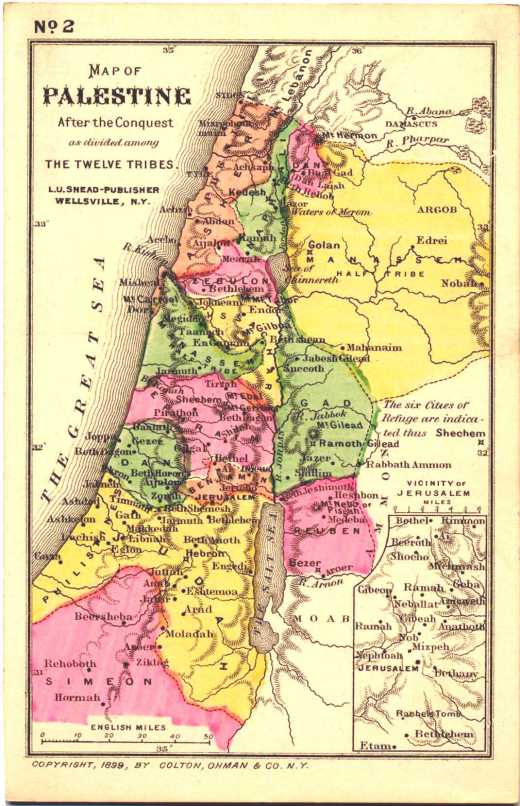
Balak, Numbers 22:2-25:9

Link to Parsha: http://www.hebcal.com/sedrot/balak

The Other

By Leanne Stillerman

At the opening of parshat Balak, Bnei Yisrael are encamped at the plains of Moab in the desert. They have recently emerged victorious against the Emorite people, after being refused peaceful passage through the Emorite lands. Their formidable victory against the Emorites and their seemingly inexplicable exodus from Egypt have inspired fear in the now neighbouring Moabite people, who join with their king, Balak, in enlisting the help of Bilaam, a seer from Mesopotamia with reported powers to bless and curse. The people of Moab approach Bilaam in the hope that he will curse Bnei Yisrael, and that this curse will weaken the nation and assist the Moabites in chasing them from their lands.

The text suggests that the people of Moab’s plan to curse is motivated by no less than terror of dispossession by a nation they perceive as mightier and more numerous than themselves. The text uses the phrase “vayagor Moab” (Bamidbar 22:3), which, in its plain meaning, is translated as “And Moab became terrified”. The Midrash Rabba comments on the root of the word “vayagor”, and suggests that the people already saw themselves as “gerim” – strangers – in their own land; they already visualized their own expulsion at the hands of Israel.

The text conveys the way in which the Moabites perceive B’nei Yisrael as an almost supernatural force, which they cannot hope to confront without external help. The metaphors used by the Moabites reflect a sense of the people of Israel as an almost non-human mass; the Moabites exclaim: “Now this horde will lick clean all that is about us as an ox licks up the grass of the field,” and Balak refers to them as having “covered the eye of the earth”, a phrase used to describe swarms of locusts. Whether seen as a herd of oxen or a swarm of locusts, it is clear that the perceptions of the people hover between super-human and sub-human. It is here that our text provides us with a classic xenophobic narrative, reflecting a fear of dispossession and a characterization of the “other” as less than human, a narrative which has repeated itself throughout human history.

The text describes the way in which Bilaam continues to attempt to curse the people through techniques of divination, despite signs which suggest that his attempts will be blocked. The first night when Bilaam is visited by Balak’s messengers, God visits him in a dream and tells him” “you will not curse this people, for they are blessed.” However, Bilaam does not convey this message to the messengers. Instead, he simply tells them to return to Moab, because “God will not let me go with you”. Bilaam does not play the role of a true prophet, conveying the divine message, and fails to suggest that God opposes this mission altogether. Had Bilaam conveyed the message, he might have facilitated an authentic dialogue, and assisted the Moabites in perceiving the people of Israel more accurately. Instead, the narrative suggests that Bilaam resists an awareness of what is, attempting to manipulate and alter reality.

It is only at the end of the narrative, when Balak takes Bilaam to the final vantage point from which he hopes Bilaam will curse the people, that Bilaam sees “that it is good in the eyes of God to bless Israel”. At this point, the text tells us, Bilaam does not go out to seek divinations, as he had on previous occasions. Instead, he looks out towards the wilderness, and then lifts his eyes and sees the people encamped according to their tribes. It is only at this point that Bilaam encounters “ruach Elokim” – the spirit of God. On the previous two occasions, God placed a blessing in his mouth, which he forcibly delivered. This time, the blessing flows freely from Bilaam through his encounter with God. Bilaam has finally surrendered his attempts to manipulate reality according to his perceptions, and turns to a genuine perception of what is, which leads to the famous blessing, “mah tovu ohalecha Ya’acov, mishkenotecha Yisrael”. Perhaps, in part, this narrative challenges us to drop our preconceptions of reality and the “other”, and genuinely listen and see the signs around us.

Stillerman, Leanne. "Balak 5770." Limmud on One Leg. (Viewed on July 5, 2014). http://limmud.org/publications/limmudononeleg/5770/balak/


Our Eternal Battle with the Ideology of Pe’or

By Rabbi Yehuda Amital (summarised by Joey Shabot)

The last section of our parasha tells the story of Am Yisrael succumbing to the sin of worshipping the diety of the Moav.

Two verses describe this idol-worship: “And they called the people to the sacrifices of their gods and the people ate and bowed down to their gods. And Yisrael joined itself to Ba’al Pe’or, and the anger of Hashem was kindled against Yisrael” (Numbers 25:2-3).

Apparently, these verses describe two distinct groups of idol worshippers. We know from other places in Torah that the main deity of Moav was not Pe’or, but rather Kemosh. Kemosh was worshipped through sacrifices and genuflection, as described in the first verse. Pe’or, however, was worshipped in a very different manner: not through sacrifices but rather through undressing in front of and defecating on the idol figure.

It is significant that the latter verse, discussing the worship of Pe’or, tells us of Hashem’s anger. Furthermore, whenever the Torah refers to the sin with the women of Moav, it refers to it as “the matter of Pe’or” (Numbers 25:18, 31:16), a clear indication that Pe’or represented the essence of the sin. The number of people who died as a result of this sin was 24,000. Even the sin of the Golden Calf resulted in no more than 3,000 deaths! What precisely was so bad about Pe’or per se, and why does Pe’or receive such prominence as the central sin in this story?

The key to this question lies in the answer to another, more straightforward problem: what was it that made Benei Yisrael, just praised by Bil’am for not adopting perverse and foreign elements (23:9, 21, 23) succumb to this particularly bizarre form of idol worship?

Let us think for a moment beyond the specific manner in which Pe’or was worshipped, and consider the ideology behind it. Pe’or represents an ideology still fashionable today, containing two elements: man living and behaving as he would in his most natural state, and as a result, losing the feeling of common shame (busha) that would otherwise characterize man as distinct from the animals.

According to this ideology, there is no reason for man to feel shame. What is natural is good! Why should fulfilling his most basic and natural physical functions be any cause for hiding? In fact, one would expect the opposite from a God-fearing nation – that man, in celebration of a perfect creation (his wondrous body, and a perfect natural world around him), should do nothing less than embrace nature just as it is, proudly flaunting it as God made it, without adding or taking away. And therefore, it would be perfectly appropriate for these ideas to find expression in nothing less than the very worship of the divine, in the culture of such a nation. Viewed from such a perspective, the manner of Pe’or-worship is indeed articulate poetry, expressing a developed philosophical stance – a stance, however, that Judaism strenuously rejects.

The Torah opens with the theme of the tension between pure nature and shame. The effect of eating from the tree of knowledge, it will be remembered, was to “know the difference between good and bad” (Genesis 2:17). Immediately after tasting from this tree and thus now having the ability to distinguish, Adam and Chava’s first action is to cover their nakedness, fashioning makeshift clothing from the first material in sight (3:7). Adam clearly articulates his first reaction to realizing that he was not dressed: “I was afraid because I was naked…” (3:10). Later, it is Hashem Himself who clothes Adam and Chava (3:21).

The Kabbalists express this idea as central to the whole of creation. Jumble the letters of the first word of the Torah, “Bereishit,” and you can get “Yere boshet” – mindful of shame, which represents the antithesis of unharnessed nature and the antithesis of Ba’al Pe’or. It is man’s job not to be merely part of nature, but to transcend it and perfect it.

Between the days of Ba’al Pe’or and our times, there have been yet others who questioned the theological assertion that man must to a certain degree alter God’s creation. In the well-known midrash (Tanchuma, parashat Tazria), Turnus Rufus, a Roman ruler, questions R. Akiva: “Whose actions are more becoming, God’s or man’s?” R. Akiva, preempting him, asserts that man’s actions are more becoming, and as evidence he illustrates that wheat is useless until man bakes bread with it, and flax is useless until man weaves it. Here, the Roman is really questioning the Jews’ audacity in circumcising their males – how do we dare alter what God made? Indeed, R. Akiva provides an articulate response. His point resounds through the mitzvot, starting from circumcision and extending to such mitzvot as orlat ilan (waiting three years before enjoying the fruit of a tree) and the concept of tzniut (modesty). The same God who created the world also commanded human beings that the world’s natural state is not always perfect or good, and that it is left to man to perfect the world.

The rejection of Pe’or’s “natural” ideology finds expression not only in the Torah’s opening and various mitzvot, but also at its very end. In describing Moshe Rabbeinu’s burial place, the Torah reads “in the valley in the land of Moav against (mul) Beit Pe’or” (Devarim 34:6). Immediately, one cannot help but wonder if the Torah could not find a more complementary manner in which to describe the location, and if it could not have closed with prettier imagery than Pe’or? The Torah’s purpose in summoning associations of the incident described in our parasha, as well as the strategic placement of the grave of Moshe, who can be seen as the embodiment of Torah, becomes obvious in light of the above. The Torah’s challenge to Pe’or’s ideology, and the CONFRONTATION it presents, is clearly symbolized here by the pure contrast: Moshe and his Torah, vs. Pe’or and its temple. Moshe remains eternally poised against Pe’or.

One of the tenets of our Torah is that not everything that is natural is wholesome. And in effect, all of Torah is sandwiched, from Bereishit to Ve-zot Ha-berakha, between reminders of this value.

Amital, Yehuda. "Our Eternal Battle with the Ideology of Pe'or." The Israel Koschitzky Virtual Beit Midrash.  (Viewed on July 5, 2014). http://vbm-torah.org/archive/sichot/bamidbar/40-62balak.htm

Chukat, Numbers 19:1-22:1

Link to Parsha: http://www.hebcal.com/sedrot/chukat

Dvar Tzedek

By Rabbi Rachel Kahn-Troster

As the Israelites wind down their adventures in the desert and prepare to enter the Promised Land as a free generation, they must again confront their faith in God’s ability to protect and provide for them. At the heart of Parashat Chukkat is the puzzling episode of Moses and the rock that yields water. Through Moses and the costly mistake that he makes, this parashah teaches us the proper way to express trust in God. The challenges that Moses and the Israelites face in finding the right way to engage in and express their belief in God challenge us to think about the ways we demonstrate commitment to our values in the public sphere.

In this episode, the people complain of thirst and of feeling abandoned by God. Moses is commanded by God to assemble the people and to order a specific rock to yield water. This is constructed as a highly visible spectacle: God specifies that the miracle must take place l’ayneihem, before the very eyes of the people. Instead of immediately obeying God’s commandment and speaking confidently to the rock—showcasing the miraculous benevolence of the Divine—Moses chastises the people and asks, “Will we get water for you from this rock?!” This question shifts the focus away from God to God’s human agents, and does so in an exceedingly public forum. Moses proceeds to hit the rock, making it appear that he is the cause of the water that gushes forth. The desired immediate result—salvation from thirst—is achieved, but the theological goal—demonstrating God’s power to the people—is not. God’s rebuke to Moses, that he “did not trust Me enough to affirm my sanctity in the sight of the Israelite people,” emphasizes that through his public outburst Moses squanders an opportunity to reinforce the faith of the people and inspire them to trust in God.

A midrash notes that Moses had doubted and challenged God prior to this episode, but until now had done so only in private and therefore without censure. The confrontation at the rock, however, is impossible for God to overlook. Moses is punished not for lacking personal faith, but for not inspiring faith in the Israelites. Here, Moses allows the Israelites to see the cracks and fissures in his own faith in God. This weakness is reflected in the Israelites’ future poor behavior and outbursts against God. Indeed, later in the parashah, the people complain again about the difficulty of life in the desert. They have not learned to trust in God.

This passage suggests that our public actions, ones in which we commit our names and our reputations, can have significant impact, and that they need to be constructive in order to be effective. As social justice activists we need the courage to declare the importance of bringing justice to the world. Learning from Moses, we should make sure that our declarations are positive, have substance and invite participation. We must project and inspire confidence. We must speak to the rock.

Yet, much of what passes for “action” or activism today is superficial, even though in this age of Google it sometimes seems like nothing is private and that everything we do—from the petitions we sign to the donations we make—is part of the public record forever. We go onto Facebook and become fans of many different causes with a few mouse clicks. We wear a T-shirt with a cute slogan or slap on a bumper sticker. These forms of discourse are public but they are shallow. A public display with little to back it up is not that different from Moses’s outburst in the desert. It may deliver water, but does not inspire larger, more lasting results or change the consciousness of our audience.

To truly make a difference, we have to be willing to engage our values in public in a way that has meaning. We can call or write to our elected officials. We can attend a rally or a speech, and text our friends to join us there. We can write a letter to the editor or an op-ed. When we make donations to causes we believe in, we can allow those organizations to use our names in their lists of supporters. Or we can take a real risk with our Facebook friends and online followers, and actively engage them in an in-person conversation about the causes we believe in. Real engagement requires more than a mouse click.

We need to take up the challenge given to Moses by God to sanctify God’s name publicly and in a substantive way. There is real risk involved in taking a confident stand in the sight of others, but there are also real rewards.

Kahn-Troster, Rachel. "Dvar Tzedek 5774." American Jewish World Service. (Viewed on June 28, 2014). http://ajws.org/what_we_do/education/publications/dvar_tzedek/5774/chukkat.html

Miriam – Water Under the Bridge?

By Rabbi Bradley Artson

Careers of public figures take on a life of their own, ebbing and flowing with shifts in public opinion and the latest values.

One Jewish figure whose popularity is at an all-time high is the prophet Miriam, the sister of Moses and Aaron.

While featured prominently in the Torah, Miriam’s claim to fame always paled in the face of her more visible brothers. After all, Aaron was the first Kohen Gadol (high priest), the link between the Jewish people and their religion, and Moses was the intimate friend of God, transmitting sacred teachings to the people.

Compared to those two leaders, Miriam simply faded into the background. True, we celebrate her beautiful song at the shores of the Red Sea, but even that poem is overshadowed by Moses’ far-lengthier song. Today, Miriam’s fame rests less on any specific accomplishment and more on the fact that she was a woman.

miriam bible

Three thousand years ago–and in most parts of the world even today–being a woman was itself disqualification from public recognition or accomplishment. With so few female heroes, Miriam stands out precisely because we are now more sensitive to just how difficult it is for a woman to gain public recognition. Today’s parasha comments on the death of this prophet, that “Miriam died there and was buried there, and the community was without water.”

Rashi (11th Century, France) noticed the strange juxtaposition of Miriam’s death and the shortage of water, and assumed that there must be a connection between the two. “From this we learn that all forty years, they had a well because of the merit of Miriam.” Miriam’s Well entered the realm of Midrash as testimony to the greatness of this unique leader.

As the Jews wandered through the wilderness, lacking adequate water would have been fatal. However, the power of Miriam’s integrity, piety and caring was such that God provided a moving well of water, one which followed the people throughout their wanderings until the moment of her death. Without Miriam, there was no more water.

Miriam’s place in Jewish legend points to two lessons we can carry with us through our own personal wildernesses. While male prophets emphasize the power of words, the centrality of rules of conduct, of sanctity and of justice, Miriam’s prophecy was one of deed. Rather than stirring speeches or administration of justice, Miriam focused on teaching her people how to sing in moments of joy, and she saw to their sustenance during their period of exposure and fragility.

Miriam’s example, paralleled by countless women after her, is one of action–deeds of love and support. Without Miriam’s efforts, no one would have been able to listen to the words of Moses or to study God’s Torah. Acts of caring and love–that is the special gift that women give humanity. Notice, also, that no one comments on her well, on how important and valued her contribution is until after she has died.

The tragic reality is that for most women, after-the-fact recognition is often the only kind that is given. The women who work in the homes raising children, the women who work in the schools teaching students, the women who work in hospitals tending the sick, these and countless other women perform the difficult, tedious tasks that sustain and make human life possible.

While medallions and press releases accompany the splashier achievements of some men, many women quietly provide wells of nurturing and support without public attention or commendation. Only when they are no longer able to serve are their services noticed, and then only because they are missed. Why didn’t anyone notice Miriam’s well while she was still alive?

It may be too late to change Miriam’s status among her own generation, although many Jewish men and women are now, belatedly, giving her the prominence that her compassion and nurturing deserve. But it is not too late for our generation to re-examine its own values and heroes today.

Do we sufficiently honor those whose contribution is quiet support of others? Do we still relegate such vital care to one specific group, or have we each undertaken to make ourselves not only disciples of Aaron, not only children of Moses, but also personifications of Miriam–using our hands and hearts, just as she did, to irrigate the lives of our people and of all people?

Artson, Bradley. "Miriam - Water Under the Bridge?" MyJewishLearning.com. (Viewed on June 28, 2014). http://www.myjewishlearning.com/texts/Bible/Weekly_Torah_Portion/hukkat_artson5762.shtml?p=0

Korach, Numbers 16:1-18:32

Link to Parsha: http://www.hebcal.com/sedrot/korach

Brass Pans

By Rabbi Lazer Gurkow

As recounted in this week’s Torah portion, Korach led a rebellion against Moses and Aaron. Two hundred and fifty of Korach’s followers brazenly performed the rite of incense offering—a rite reserved only for the high priest. They were punished, but the brass pans they used in their misguided offering were salvaged. G‑d instructed that they be utilized as a covering for the altar. Why would a sinner’s pan be incorporated into the altar of atonement?

The simple reason given is that this would serve as a reminder to the nation never to engage in rebellion again. Yet there must be a deeper dimension, a positive aspect, to this remarkable twist in the tale.

The chassidic masters point out that every metal used in the building of the Tabernacle represented a human character trait. Gold is indicative of awe, silver of love, and brass of conviction and strength of character. Korach and his men were indeed made of brass, prepared as they were to sacrifice their life on the altar of conviction.

They backed the wrong horse, but they sure knew how to run. Their conviction was laudable though their choice was tragic. So G‑d instructed that the brass pans be incorporated into the altar itself, but the hot coals within it—also used to perform the incense rite—be discarded. This demonstrates that G‑d did not approve of the nature of their sacrifice, but appreciated the sacrifice itself.

The message to the nation was simple. Do not repeat Korach’s mistake, but do take a lesson from the manner in which he pursued it. Find that strength within yourself, but harness it to the service of G‑d.

Korach was given a gift, but he abused it. We need to utilize that very gift in a positive sense. Strength of character is handy when, for example, skeptics and detractors beset us and question our values.

When doubts cross our mind, when questions plague us, conviction sustains us till such time as we discover the answers. When our strength is eroded by temptations and craven delights, we rely on our inner reserves till our moment of weakness passes.

In short, when the ego, heart or mind loses enthusiasm, an unshakable faith will carry the day.

This Torah portion comes on the heels of the story we read last week, in which the nation was handed a forty-year sentence to wander the desert. It would take patience and long-term commitment to overcome this long and trying period. This strength of character was born out of the ashes of Korach’s tragedy.

Though Korach’s rebellion was ill-fated, it sparked a fire deep within the Jewish soul. If Korach could feel such conviction, then so could we. Buoyed by this conviction, the nation resolved to overcome the forty-year sentence and enter the promised land.

We too would do well to tear a page out our ancestors’ playbook. We too have been wandering for many years, and we too await the promise of return. With the conviction of a faith unshaken, let us resolve to anticipate the coming redemption speedily in our days, Amen.

Gurkow, Lazer. "Brass Pans." Chabad.org. (Viewed on June 21, 2014). http://www.chabad.org/parshah/article_cdo/aid/395376/jewish/Brass-Pans.htm

Servant Leadership

By Rabbi Jonathon Sacks

“You have gone too far! The whole community are holy, every one of them, and the Lord is with them. Why then do you set yourselves above God’s congregation?” (Num. 16: 3).

What exactly was wrong in what Korach and his motley band of fellow agitators said? We know that Korach was a demagogue, not a democrat. He wanted power for himself, not for the people. We know also that the protestors were disingenuous. Each had their own reasons to feel resentful toward Moses or Aaron or fate. Set these considerations aside for a moment and ask: was what they said, true or false?

They were surely right to say, “All the community are holy.” That, after all, is what God asked the people to be: a kingdom of priests and a holy nation, meaning, a kingdom all of whose members are (in some sense) priests, and a nation all of whose citizens are holy.

They were equally right to say, “God is with them.” That was the point of the making of the Tabernacle: “have them make Me sanctuary for me, and I will dwell among them” (Ex. 25: 8). Exodus ends with the words: “So the cloud of the Lord was over the tabernacle by day, and fire was in the cloud by night, in the sight of all the Israelites during all their travels” (Ex. 40: 38). The Divine presence was visibly with the people wherever they went.

What was wrong was their last remark: “Why then do you set yourselves above God’s congregation?” This was not a small mistake. It was a fundamental one. Moses represents the birth of a new kind of leadership. That is what Korach and his followers did not understand. Many of us do not understand it still.

The most famous buildings in the ancient world were the Mesopotamian ziggurats and Egyptian pyramids. These were more than just buildings. They were statements in stone of a hierarchical social order. They were wide at the base and narrow at the top. At the top was the king or pharaoh – at the point, so it was believed, where heaven and earth met. Beneath was a series of elites, and beneath them the labouring masses.

This was believed to be not just one way of organising a society but the only way. The very universe was organised on this principle, as was the rest of life. The sun ruled the heavens. The lion ruled the animal kingdom. The king ruled the nation. That is how it was in nature. That is how it must be. Some are born to rule, others to be ruled.

Judaism is a protest against this kind of hierarchy. Every human being, not just the king, is in the image and likeness of God. Therefore no one is entitled to rule over any other without their assent. There is still a need for leadership, because without a conductor an orchestra would lapse into discord. Without a captain a team might have brilliant players and yet not be a team. Without generals an army would be a mob. Without government, a nation would lapse into anarchy. “In those days there was no king in Israel. Everyone did what was right in their own eyes” (Judges 17:6, 21:25).

In a social order in which everyone has equal dignity in the eyes of heaven, a leader does not stand above the people. He serves the people, and he serves God. The great symbol of biblical Israel, the menorah, is an inverted pyramid or ziggurat, broad at the top, narrow at the base. The greatest leader is therefore the most humble. “Moses was a very humble man, more humble than anyone else on the face of the earth” (Num. 12:3).

The name to this is servant leadership, and its origin is in the Torah. The highest accolade given to Moses is that he was “the servant of the Lord” (Deut. 34:5). Moses is given this title eighteen times in Tanakh as a whole. Only one other leader merits the same description: Joshua, who is described this way twice.

No less fascinating is the fact that only one person in the Torah is commanded  to be humble, namely the king:

When he takes the throne of his kingdom, he is to write for himself on a scroll a copy of this law, taken from that of the Levitical priests. It is to be with him, and he is to read it all the days of his life so that he may learn to revere the Lord his God and follow carefully all the words of this law and these decrees and not consider himself better than his fellow Israelites … (Deut. 17: 18-20)

This is how Maimonides describes the proper conduct of a king:

Just as the Torah has granted the him great honour and obligated everyone to revere him, so too it has commanded him to be lowly and empty at heart, as it says: ‘My heart is a void within me’ (Psalm 109:22). Nor should he treat Israel with overbearing haughtiness, as it says, ‘he should not consider himself better than his fellows’ (Deut. 17:20).

He should be gracious and merciful to the small and the great, involving himself in their good and welfare. He should protect the honor of even the humblest of people.

When he speaks to the people as a community, he should speak gently, as in ‘Listen my brothers and my people…’ (King David’s words in I Chronicles 28:2). Similarly, I Kings 12:7 states,  ‘If today you will be a servant to these people…’

He should always conduct himself with great humility. There is none greater than Moses, our teacher. Yet, he said: ‘What are we? Your complaints are not against us’ (Exodus 16:8). He should bear the nation’s difficulties, burdens, complaints and anger as a nurse carries an infant.

The same applies to all positions of leadership. Maimonides lists among those who have no share in the world to come, someone who “imposes a rule of fear on the community, not for the sake of Heaven.” Such a person “rules over a community by force, so that people are greatly afraid and terrified of him,” doing so “for his own glory and personal interests.” Maimonides adds to this last phrase: “like heathen kings.”[5] The polemical intent is clear. It is not that no one behaves this way. It is that this is not a Jewish way to behave.

When Rabban Gamliel acted in what his colleagues saw as a high-handed manner, he was deposed as Nasi, head of the community, until he acknowledged his fault and apologised. Rabban Gamliel learned the lesson. He later said to two people who declined his offer to accept positions of leadership: ‘Do you think I am giving you a position of honour [serarah]? I am giving you the chance to serve [avdut].” As Martin Luther King once said “Everybody can be great…because anybody can serve.”

C. S. Lewis rightly defined humility not as thinking less of yourself but as thinking of yourself less. The great leaders respect others. They honour them, lift them, inspire them to reach heights they might never have done otherwise. They are motivated by ideals, not by personal ambition. They do not succumb to the arrogance of power.

Sometimes the worst mistakes we make are when we project our feelings onto others. Korach was an ambitious man, so he saw Moses and Aaron as two people driven by ambition, “setting themselves above God’s congregation.” He did not understand that in Judaism to lead is to serve. Those who serve do not lift themselves high. They lift other people high.

Sakcs, Jonathon. "Servant Leadership." OU.org. (Viewed on June 21, 2014). http://www.ou.org/torah/parsha/rabbi-sacks-on-parsha/servant-leadership/

Sh’lach, Numbers 13:1-15:41

Link to Parsha: http://www.hebcal.com/sedrot/shlach

The Blue of the Ocean, the Sky, and the Tzitzit

By Elizabeth Richmond

“Speak to the Israelite people and instruct them to make tzitzit for themselves on the corners of their garments through all the ages; let them attach a cord of blue to the tzitzit of each corner. That shall be your tzitzit; look at it and recall all of God’s commandments and observe them… Thus shall you be reminded to observe all My commandments and to be holy to your God.  I the Lord am your God, who brought you out of the land of Egypt to be your God… (Numbers 15: 38-41). ”

Parashat Sh’lach concludes with these famous instructions to attach tzitzit (fringes) to the corners of our clothing as a reminder of and a directive to keep God’s commandments. The instruction of tzitzit is seen as a reminder of the entirety of religious practice. Our Sages believed that it was so important that they incorporated it verbatim into the Shema, one of the most central prayers in Judaism.

The Rabbis wondered why God commanded the inclusion of one blue thread among the white threads of the tzitzit. Tractate Menahot of the Babylonian Talmud reports Rabbi Meir asking “Why is blue different from all other colors?” and then answering, “Because blue resembles the sea, and the sea resembles sky, and the sky resembles God’s Throne of Glory…as it is written: ‘Above the sky over their heads was the semblance of a throne, like sapphire in appearance…'”

In other words, Rabbi Meir hypothesizes that the blue thread in tzitzit is meant to guide its wearers through a chain of associations beginning with immediate visualization of tzitzit and ending with the expansiveness of God. But why didn’t Rabbi Meir simply say that the color blue reminds us of God’s throne? Why do we first need to think of the ocean and the sky?

Rabbi Meir is alluding to the intimate connection between our religious actions and the real world. Our relationship with the Divine must also encompass a relationship with the world that surrounds us: the ocean, the sky, and the rich variety of life that dwells in between. We must learn to truly see, and thereby to know, the full world that God has created, from the depths of the ocean to the heights of the sky and the vastness of earth.

Indeed, we are not permitted to merely contemplate the world–we must be part of it. Immediately preceding Rabbi Meir’s comment, the Talmud asks why we are told to look at tzitzit and remember God’s commandments. The Talmud offers the answer that “seeing leads to remembering and remembering leads to doing.”

Seeing or reading about tzitzit is meant to remind us to act. This is true as much today as it was when these words were written. Perhaps thinking of the blue of the ocean and the sky can serve as a reminder to care for the earth and make choices that lead to sustainable development. Perhaps remembering those who inhabit the expanse of land between ocean and sky, and recalling our communal redemption story, should remind us of our obligation to build a world that honors the dignity and equality of all people.

We can see the earth differently by traveling and interacting with a diversity of people, visiting the developing world, or simply walking down the streets of our own cities, eyes wide open, speaking with those who need help. If we look carefully enough, what we see may remind us, like the Shema does, of our ancient and modern family stories.

Ours are stories about slavery, poverty, immigration, environmental degradation, suffering, and, in many cases, redemption. Our stories can help us to see the stories of others and to act in ways that will bring about redemptive endings. As the Rabbis imply in their teaching about tzitzit and its place in the Shema, when we look around we are challenged to make empathic connections between ourselves and the world around us. These connections obligate us to act.

The color blue that reminds us of ocean, sky, and God’s throne also reminds of this connection. The particular shade of blue to be used in tzitzit is called tekhelet. Ramban (Nahmanides) suggests that tekhelet was chosen because its spelling is very close to the word takhlit, which means purpose or goal.

The relationship between the two words summarizes the Talmud’s teaching on tzitzit. The purpose of our religious rituals is to truly see and engage with the world and its people. This engagement with the world leads us into relationship with the Divine. Only then, as the end of Parashat Shlah tells us, we will be holy to our God.

* The Blue Thread: The Torah says that of the four threads at each corner, one should be of “techeilet.” Techeilet is a blue dye made from the blood of the chilazon, a sea creature found on the coast of northern Israel. Why don’t we use the blue thread today? This particular blue dye was very precious and because of its value, the Romans (who conquered Israel in 63BCE) decreed that only “blue-blooded” royalty could wear the color techeilet. This caused the Jewish dyers to go underground. By 639 CE, at the time of the Arab conquest, the secret of techeilet was lost all together. It is interesting that the series of stripes (usually black or blue) on just about every Tallit Gadol may have their origin as a reminder of the “strand of techeilet” once worn as part of the Tzitzit. In the late 19th century, a massive international search was made to rediscover the original chilazon, the snail used to make techeilet. Since then, several species of snails have been suggested by researchers, but much controversy remains about the matter. Today, while some scholars advocate the wearing of “techeilet strings” from these snails, most scholars remain unconvinced. Consequently, most observant Jews wear only white Tzitzit. The Tzitzit are still fit for use, even if they are all white, without the blue string.
Richman, Elizabeth. "The Blue of the Ocean, the Sky, and the Tzitzit." MyJewishLearning.com. (Viewed on June 14, 2014). http://www.myjewishlearning.com/texts/Bible/Weekly_Torah_Portion/shlah_ajws.shtml?p=0

Shelach Lecha: Name Change

By Rabbi Jay Kelman

Of the 12 leaders sent to Israel to help prepare the people for their imminent entry into the land, only Yehoshua is previously known to us. He was Chief of Staff during the Jewish people’s first war, when Amaleki terrorists attacked the women and children of Israel soon after the Exodus.

However, Yehoshua was not just a great military man, a trait that made him a most appropriate leader of the Jewish people when they eventually did enter the land of Israel. He was a spiritual giant, accompanying Moshe at Sinai. “And Moshe and his aide Yehoshua set out, and Moshe ascended G-d’s mountain” (Shemot 23:13). He was also there forty days later, ready to assist Moshe as he descended from Sinai to the sight of the golden calf. Presumably, it was these displays of leadership that led to a name change (in the footsteps of Abraham, Sarah and Yaakov), with a yud being added to his original name, Hoshea. Our Sages, in fact, declared that the yud that was taken from the end of Sarai’s name when it was changed to Sarah was the “same yud” that was added to the beginning of Yehoshua. Abraham and Sarah began Jewish history by leaving their homeland and going to the land of Israel; Yehoshua was the one to lead their descendants, as a nation, into that land.

According to many commentaries, Yehoshua’s name had been changed much earlier—he is actually called by his “new” name in the above mentioned instances—but the Torah first records it here, as he readied himself to join the scouting expedition to Israel. Strangely, our Sages view this name change, as it is mentioned here, in a negative light. Moshe’s addition of the letter yud, making the first two letters of his name equivalent to one of the possible spellings of G-d’s name, is said to have been meant as a prayer that “G-d should save you (Hoshea) from the advice of the meraglim“.

It appears that Moshe had a pretty good premonition of what was in store for this doomed mission, yet he did not want to abort it. If the Jewish people were going to be able to enter the land of Israel, he reasoned, they would need a team of inspirational leaders. The spoon-feeding that they received in the desert—free food, drink, housing, clothing and the like—was going to have to give way to the hard work of building a new nation. G-d would no longer provide for them with nothing required. The mission of the meraglim was a most necessary test of the readiness of the Jewish people to establish a State. While Moshe had a hunch that they were not yet ready, he understood that he must send them in any case. Knowing the risks involved, he hoped and prayed even more that the mission would be a success.

It was this fear that led him to pray for Yehoshua especially. “Amalek lives in the Negev area” was one of the opening salvos of the meraglim. By invoking fears of the dreaded Amalek, the meraglim hoped to dissuade the Jewish people from entering the land. Living in Israel, they not-so-subtly explained, would mean ongoing wars and terrorism. Yehoshua, as the one who led the successful battle against Amalek just a few months earlier, was the key to a successful mission. That first battle took place in the desert, but fighting them on their own territory might be a different story. Urban warfare is never easy.

As the Meshech Chochma so brilliantly points out, it was crucial to morale that Yehoshua, at least, did not succumb to fear. If our highest-ranking military officer said that Amalek could not be defeated, then the battle truly was lost.

Moshe’s best hope for a successful mission rested in the ability of Yehoshua to convince his colleagues that, with proper preparation and G-d’s help, they could conquer the land “flowing with milk and honey” (13:27). Alas, this was to be an impossible task. Our Sages, commenting on a textual anomaly, note that the meraglim basically had their minds made up even before they left on their mission. Their unwillingness to see things from a different perspective when they visited the land doomed the nation to years of wandering (perhaps generations of wandering, as many of our commentaries claim). May we merit, like Yehoshua, to see G-d in front of all of our names; a G-d who demands that we take the first step of our journey, but is always there to support us.

Kelman, Jay. "Shelach Lecha: Name Change." Torah in Motion. (Viewed on June 14, 2014). http://torahinmotion.org/discussions-and-blogs/shelach-lecha-name-change

Behaalotecha, Numbers 8:1-12:16

Link to Parsha: http://www.hebcal.com/sedrot/behaalotcha

Know What to Keep, Know What to Relinquish

By Elliott Malamet

A novice monk joins a monastery. The rules are quite simple. You are only allowed to speak two words every ten years. After ten years, he tells the head monk, the abbot, “Bed hard.” After another ten years, he says “Bad food.” Ten years later, after having been at the monastery for 30 years, he says “I quit.” The abbot looks at him and says, “I’m not surprised. You’ve been complaining ever since you got here.”

Our parsha narrates the basic human activity of complaining and does so in a very particular way. We are told that the Bnei Yisrael are “kemitonenim” (Numbers, 11:1). In most English translations of this word, we are told that they were “complainers”, a transposition from the Hebrew word “mitlonenim.” But Rav Shimshon Raphael Hirsch (19th cent. Germany) interprets the verse differently: the people are not simply complainers, but rather they are like “onenim”, they are “like mourners.” An onen, in Jewish law, is a person who is in a state of limbo, having suffered a loss but not yet buried their loved one.

What would the Jewish people be mourning? Is it simply, as the subsequent verses suggest, the loss of the imaginary food they claimed they ate in Egypt? Why does the verse say “kemitonenim” – what does it mean that they were like mourners, almost as if they are pretending to be devastated? How does their plight mirror our world and our lives?

The Jews in the desert, though under God’s providence and heading for the Land of Israel, act as if they are undergoing a tragedy, as though someone has died. By mourning a false picture of our lives, by complaining over the fact that not every day will be paradise, that the meal we just ate wasn’t quite to our liking, that not every situation works out perfectly – when we act as if something is tragic when it is minor, and then overlook what is truly significant, we become “kemitonneim”: pseudo-mourners.

The fuel for false mourning is false desire, where we feel bad about not having what in fact we do not require. The language in the Torah is very specific: the mixed multitude in their midst “hitavu taaveh” – literally appetited an appetite, or desired a desire. This is a very unusual grammatical construction, meant to tell us something unique and problematic about human beings. Unlike animals, who only respond to tangibly felt appetites, humans can not only imagine a given pleasure but we may consciously bring ourselves to desire something, what the French philosopher Emmanuel Levinas calls “the temptation of temptation.”

I believe that the key to understanding this is to contemplate the idea of renunciation. As one therapist commented to an indecisive patient: “Decisions are expensive. They cost you everything else.” To decide is to renounce. To decide is step forward into the future in a particular direction and to say goodbye to other directions. To live in this city and not that one. To take that job and not that one. And, of course, this partner and not that one. The psychoanalyst Allan Wheelis, states the issue quite poignantly:

“To proceed with awareness and imagination is to be affected by the memory of crossroads which one will never encounter again. Some persons sit at the crossroads, taking neither path because they cannot take both, cherishing the illusion that if they sit there long enough the two ways will resolve themselves into one and hence both be possible. A large part of maturity and courage is the ability to make such renunciations.”

To know what to keep; to know what to relinquish. To give up on the illusion that is not my portion and embrace the life that is mine. And to do all of this with an awareness of time passing – that is the liberation that comes with renouncing the inessential and getting to what matters.

Malamet, Elliott. "Beha'alotcha 5772." Limmud On One Leg. (Viewed on June 7, 2-14). http://limmud.org/publications/limmudononeleg/5772/behaalotecha/#another

Power or Influence?

By Rabbi Jonathon Sacks

There is a lovely moment in this week’s parsha that shows Moses at the height of his generosity as a leader. It comes after one of his deepest moments of despair. The people, as is their wont, have been complaining, this time about the food. They are tired of the manna. They want meat instead. Moses, appalled that they have not yet learned to accept the hardships of freedom, prays to die. “If this is how you are going to treat me,” he says to God, “please go ahead and kill me right now – if I have found favour in your eyes – and do not let me face my own ruin.” (Num. 11: 15)

God tells him to appoint seventy elders to help him with the burdens of leadership. He does so, and the divine spirit rests on them. But it also rests on two other men, Eldad and Medad, who were not among the chosen seventy. Evidently Moses had selected six men out of each of the twelve tribes, making 72, and then removed Eldad and Medad by lot. Nonetheless they too were caught up in the moment of inspiration.

Joshua, Moses’ deputy, saw this as a potential threat. Moses replies with splendid magnanimity: ‘Are you jealous for my sake? I wish that all the Lord’s people were prophets and that the Lord would put His spirit on them!’ (Num. 11: 29)

This contrasts sharply with his conduct later when his leadership was challenged by Korach and his followers. On that occasion he showed no gentleness or generosity. To the contrary, in effect he prayed that the ground would swallow them up, that “they go down alive into the realm of the dead” (Num. 16: 28-30). He is sharp, decisive and unforgiving. Why the difference between Korach on the one hand and Eldad and Medad on the other?

To understand it, it is essential to grasp the difference between two concepts often confused, namely power and influence. We tend to think of them as similar if not identical. People of power have influence. People of influence have power. But it is not so. The two are quite distinct and operate by a different logic, as a simple thought experiment will show.

Imagine you have total power. Whatever you say, goes. Then one day you decide to share your power with nine others. You now have at best one-tenth of the power you had before. Now imagine that you have a certain measure of influence. Then you decide to share that influence with nine others whom you make your partners. You now have ten times the influence you had before, because instead of just you there are now ten people delivering the same message.

Power works by division, influence by multiplication. Power, in other words, is a zero-sum game: the more you share, the less you have. Influence is a non-zero game: the more you share, the more you have.

Throughout his forty years at the head of the nation, Moses held two different leadership roles. He was a prophet, teaching Torah to the Israelites and communicating with God. He was also the functional equivalent of a king, leading the people on their journeys, directing their destiny and supplying them with their needs. The one leadership role he did not have was that of High Priest, which went to his brother Aaron.

We can see this duality later in the narrative when he inducts Joshua as his successor. God commands him:

‘Take Joshua son of Nun, a man of spirit, and lay your hand on him … Give him some of your honour [hod] so that the whole Israelite community will obey him. (Num. 27: 18-20)

Note the two different acts. One, “lay your hand [vesamachta] on him,” is the origin of term semichah, whereby a rabbi ordains a pupil, granting him the authority to make rulings in his own right. The rabbis saw their role as a continuation of that of the prophets (“Moses received the Torah from Sinai and transmitted it to Joshua; Joshua to the elders; the elders to the prophets; and the prophets handed it down to the men of the Great Assembly,” Avot 1: 1). By this act of semichah, Moses was handing on to Joshua his role as prophet.

By the other act, “Give him some of your honour,” he was inducting him into the role of king. The Hebrew word hod, honour, is associated with kingship, as in the biblical phrase hod malkhut, “the honour of kingship” (Dan. 11: 21; 1 Chronicles, 29: 25).

Kings had power – including that of life and death (see Joshua 1: 18). Prophets had none, but they had influence, not just during their lifetimes but, in many cases, to this day. To paraphrase Kierkegaard: when a king dies his power ends. When a prophet dies his influence begins.

Now we see exactly why Moses’ reaction was so different in the case of Eldad and Medad, and that of Korach and his followers. Eldad and Medad sought and received no power. They merely received the same influence – the divine spirit that emanated from Moses. They became prophets. That is why Moses said, “I wish that all the Lord’s people were prophets and that the Lord would put His spirit on them.” Prophecy is not a zero-sum game. When it comes to leadership-as-influence, the more we share the more we have.

Korach, or at least some of his followers, sought power, and power is a zero-sum game. When it comes to malkhut, the leadership of power, the rule is: “There is one leader for the generation, not two.  In kingship a bid for power is an attempted coup d’etat and has to be resisted by force. Otherwise the result is a division of the nation into two, as happened after the death of King Solomon. Moses could not let the challenge of Korach go unchallenged without fatefully compromising his own authority.

So Judaism clearly demarcates between leadership as influence and leadership by power. It is unqualified in its endorsement of the first, and deeply ambivalent about the second. Tanakh is a sustained polemic against the use of power. All power, according to the Torah, rightly belongs to God. The Torah recognises the need, in an imperfect world, for the use of coercive force in maintaining the rule of law and the defence of the realm. Hence its endorsement of the appointment of a king should the people so desire it. But this is clearly a concession, not an ideal.

The real leadership embraced by Tanakh and by rabbinic Judaism is that of influence, above all that of prophets and teachers. That is the ultimate accolade given to Moses by tradition. We know him as Moshe Rabbenu, Moses our teacher. Moses was the first of a long line of figures in Jewish history – among them Ezra, Hillel, Rabban Yohanan ben Zakkai, Rabbi Akiva, the sages of the Talmud and the scholars of the Middle Ages – who represent one of Judaism’s most revolutionary ideas: the teacher as hero.

Judaism was the first and greatest civilization to predicate its very survival on education, houses of study, and learning as a religious experience higher even than prayer. The reason is this. Leaders are people able to mobilise others to act in certain ways. If they achieve this only because they hold power over them, this means treating people as means, not ends; as things not persons. Not accidentally the single greatest writer on leadership as power was Machiavelli.

The other way to achieve it is to speak to people’s needs and aspirations and teach them how to achieve these things together as a group. That is done through the power of a vision, force of personality, the ability to articulate shared ideals in a language with which people can identify, and the capacity to “raise up many disciples” who will continue the work into the future. Power diminishes those on whom it is exercised. Influence and education lift and enlarge them.

Judaism is a sustained protest against what Hobbes called the “general inclination of all mankind,” nameless “a perpetual and restless desire of power after power, that ceaseth only in death.”  That may be the reason why Jews have seldom exercised power for prolonged periods of time, but have had an influence on the world out of all proportion to their numbers.

Not all of us have power, but we all have influence. That is why we can each be leaders. The most important forms of leadership come not with position, title or robes of office, not with prestige and power, but with the willingness to work with others to achieve what we cannot do alone; to speak, to listen, to teach, to learn, to treat other people’s views with respect even if they disagree with us, to explain patiently and cogently why we believe what we believe and do what we do; to encourage others, praise their best endeavours and challenge them to do better still. Always choose influence rather than power. It helps change people into people who can change the world.

Sacks, Jonathon. "Power or Influence?" OU Torah. (Viewed on June 6, 2014). http://www.ou.org/torah/parsha/rabbi-sacks-on-parsha/power-influence/

Naso, Numbers 4:21-7:89

Link to Parsha: http://www.hebcal.com/sedrot/nasso

The Law and Lore of the Wayward Woman

By Adina Roth

Torah—with its rich narratives and poetry, glimpses of the Divine and profound wisdom—is a text we turn to for inspiration, intellectual stimulation and meaning. Yet there are moments in the Bible when culturally located prejudices come to the fore and the reader is left struggling with the tension between timeless writing and context-bound oppression. One such moment is the law of the sotah—or wayward woman—found in Parashat Naso.

The law reads as follows: If a man has suspicions (also translated as “jealousy” or “zealous indignation”) that his wife has had an affair, he brings her before the kohen (priest), who makes her drink a mixture of holy waters and earth. He removes her head covering (which implies shaming) and warns her that if she has indeed been with a man other than her husband, the ingested waters will cause her thigh to collapse and her stomach to distend. The sages are divided on whether this refers to miscarriage or the explosion of her uterus and genitals. Either way, the gruesome punishment seems to be a direct response to the alleged crime: sexual ‘waywardness’ is followed by sexual shaming and maiming. Alternatively, if the woman is revealed to have not been with another man, she returns home with her husband to bear a child—an uncomfortable consolation prize for one who has just been publicly defamed.

Having heard the kohen’s warning and just before drinking the water, the woman must answer “Amen, Amen.” In this context, we realize that ‘Amen,’ despite its benign, comforting associations today, actually means to submit to God’s will. ‘Amen’ is sinister here, as the woman is forced to surrender her fate to forces beyond her control.

It’s ironic that in this rare instance when a woman is given the opportunity to speak in a biblical ritual, she is simultaneously restricted in what she can say; these robotic and depersonalized words silence any defense she might have offered of her guilt or innocence. The subservient quality of ‘Amen’ also contrasts with her alleged waywardness. If she has been wayward, ‘Amen’ signifies the beginning of her return to compliance. If not, it is her forced acceptance that this shaming ordeal is God’s will despite her innocence.

In contrast to the passivity of the woman’s ‘Amen,’ the text places all of the agency and power among men. Her husband brings her to the male kohen, who administers the ritual. And the rite itself carries out the will of a Deity who is characterized as masculine in a biblical context. In this web of husband, priest and God controlling her fate, the woman’s story is absent.

In fact, it could be argued that the patriarchal nature of the ritual depends on the absence of her authentic voice and story. Her story—with all of its intricate details of how she got married, the nuanced unfolding of her relationship with her husband and her private desires and hopes—would identify the woman as an individual. In expressing her individual, lived experience, the woman’s complex story could pose a challenge to the unequal power dynamics and absolutes that the law attempts to enforce.

If the suppression of the woman’s story enables the oppression of women in the sotah ritual, it makes me think that the telling of women’s stories in their own voices can be a powerful antidote to oppression. Women’s stories are, in their own way, forms of “waywardness”—positive, powerful rejections of the status quo. By telling stories, we can challenge sexual norms, question the entire patriarchal system and develop women’s agency over their lives. Stories can serve as activist tools to help women in all cultures move beyond ‘Amen Amen’—and into empowerment.

Women across all cultures are working to author their own stories. Whether it is the sharing among Jewish women in a Rosh Chodesh circle or the oral narratives of women travelers in sub-Saharan Africa, stories are being used to make room for today’s wayward women’s voices to be heard.

Consider the story of Mukhtaran Bibi, a courageous warrior woman in Pakistan. After a tribal council determined that she should be gang raped to redress a family honor crime, Mukhtaran did not shrivel up in despair or commit suicide. Instead, she chose to step forward and, at great risk to herself and her family, she told her story. It created ripples, which turned into waves, and generated such interest that she became an activist, building schools and establishing networks to empower women further. She prosecuted her rapists and her courage gave strength to other women in similar situations to speak out and tell their stories. Individual stories are so powerful that they can inform and inspire activism and even bring about policy change.

It is worth contemplating how women’s waywardness is still punished in overt and subtle ways in the 21st century. The law of sotah in Parashat Naso invites us to consider how women’s stories have been suppressed and controlled by patriarchal conventions—and how unlocking them can lead to change in our own time. Storytelling, with its complex portrayals of humanity, helps shift women from the subservience of ‘Amen’ to the power of having a voice. Only then do they have the freedom to author their own lives.

Roth, Adina. "Parashat 5774: The Law and Lore of the Wayward Woman." American Jewish World Service. (Viewed on May 31, 2014). http://ajws.org/what_we_do/education/publications/dvar_tzedek/5774/naso.html

Tasting Life’s Bitter Waters

By Chana Weisberg

You are intensely committed, to a vision, a goal, a dream. You are devoted to this vision because you know it will make the world a better place for yourself and everyone else. You believe that regardless of the effort it takes, following through with this goal will ultimately make your life more fulfilling, more altruistic, loftier.

Then along comes life. And with it the ups and downs, the challenges and the obstacles. You’re not sure of the cause, but at some point you find that you have swerved from your path, strayed from your morals. It might have been restlessness or boredom with the monotony of the day-to-day minutiae. Or perhaps it was a spirit of impulsiveness, a rebellion against the swerves that life has thrown you.

Maybe you can be blamed for losing your vision and forgoing your ideals. Or maybe you couldn’t ever have been expected to rise above the harsh circumstances of your life. Whatever the case, you wake up one morning to the realization that you have changed. You are no longer leading the life that you had always believed you would. You have strayed from your moral vision. You have betrayed your dream.

You may ask yourself: If I do change paths now, what will be the end result?Is there a path of return? Do I want to take it? Are the costs too high? Is it worth the effort? If I do change paths now, what will be the end result? Will I ever fully succeed?

Common wisdom, laced with its jaded cynicism, says there’s no turning back the clock. Move on with life, leave your childish idealism behind and face the reality of adulthood. Life is not a bed of roses; you need to look out for yourself and your needs. Forget your lofty ideals; a path of sacrifice is not where you will find fulfillment. And anyways, once you have already veered off the path, it can never be the same. It’s simply too late.

Torah wisdom, of course, asserts the opposite.

This week’s Torah reading discusses the law of the ishah sotah, the “wayward wife” who is suspected of adultery.

Moralists see the story of the ishah sotah as expressing the sanctity and holiness of marriage in Judaism.

Others see G‑d’s willingness to erase His holy name for the sake of marital harmony as an indication of the importance of peace between man and wife, and amongst mankind in general. It is a question here of simple existence, whether the marriage will or will not continue

Kabbalists see the story as a cosmic metaphor of the “marriage” between G‑d and the “wayward” Jewish people, who are tested and eventually exonerated through the “bitter waters” of exile.

But perhaps we can also see, in the story of the sotah, a promising lesson for each of us in the personal sojourns of our own lives.

The ishah sotah is labeled a wayward wife because she has “strayed,” deviated from the prescribed moral road, even if she has not been implicated in actual adultery. Her husband has warned her in the presence of two witnesses not to seclude herself with her suspected lover. She has ignored this warning. Her behavior prevents the marriage from being permitted to continue.

At this point, the husband or the wife can decide to terminate the marriage, without any admittance of guilt. Neither the husband nor the wife can be forced to have the test of the bitter waters. But should they wish to resume their marriage, the suspecting husband brings his wife to the Holy Temple, where the kohen enacts the ceremony of the bitter waters. The husband then brings an offering for his wife, making it clear that he wishes to continue the marriage should his wife be vindicated.

The offering consists of unsifted, coarse barley flour, the commonest grain, without the oil or incense that accompany other grain offerings. It is a question here of simple existence, whether the marriage will or will not continue. An animal food—barley—is brought to signify the wife’s questionable moral standing: even if her guilt has not reached the point of actual adultery, she has veered from the pure path and followed her animalistic instincts.

Relevant passages from the Torah were written on a scroll and dissolved in the “curse-bearing waters.” The name of G‑d appeared in these passages, and in the process it would be erased. If the woman was guilty of actual adultery, the waters would cause her an accursed death. If not, she would be blessed with offspring, and her marriage would enjoy a newfound commitment and happiness.

But since the ishah sotah had strayed from the proper path—even if she had not actually committed adultery—why was she blessed so abundantly?The ishah sotah, like each of us struggling with the vicissitudes of our own lives, has never really entirely strayed

Because in truth, the ishah sotah, like each of us struggling with the vicissitudes of our own lives, has never really entirely strayed. We are still “married” to our ideals and vision, since they are so much a part of our soul. We simply need to be reunited with our true, inner self.

Like the ishah sotah on her path of exoneration and return, this takes effort. It takes strength of character. It might involve humiliation or sacrifice. But if our resolve is firm enough, if our character is up to the challenge, if we persevere in what we know is true and right, ultimately we will succeed.

G‑d stands at our side. Once we have demonstrated our commitment, He will defend us, even allowing His own name and honor to be “erased” while assisting us in our endeavor. Moreover, not only will we succeed at realigning our own life to what it was originally, but our commitment and the fruits of our commitment will be more productive and more blessed, leading to greater yields and to a more mature relationship with ourselves and with our world.

Because we haven’t just returned to what we were. We have grown through the process. True growth is not about only persevering on one straight path. Only after tasting of the bitter waters of life, only after struggling and stumbling and standing up against the darker forces of our world, does one become a greater, more courageous and enriched human being. Only after straying and then rebounding are we driven with a stronger yearning for inner unity and divine life. Only after experiencing the darkness of life’s night and the desolation of its winters do we attain an even more intense and meaningful bond with G‑d.

The lesson of the ishah sotah to each of us, man or woman, is that though our path may be a difficult and twisted one, when we victoriously face down the wearying struggles and tempting choices we emerge as greater individuals, and as a redeemed people, in a redeemed world.

Wesiberg, Chana. "Tasting Life's Bitter Waters." Chabad.org. (Viewed on May 31, 2014). http://www.chabad.org/parshah/article_cdo/aid/390606/jewish/Tasting-Lifes-Bitter-Waters.htm

Bamidbar, Numbers 1:1-4:20

Link to Parsha: http://www.hebcal.com/sedrot/bamidbar

Naming Names

By Rabbi Eric Yoffie

The Children of Israel had recently escaped from slavery. How might a census have been a way of rehabilitating slaves and restoring to them a sense of their self-worth and pride?

This is perhaps the first census in human history. There is little to suggest that this was a common practice at the time. What was the purpose of the census?

If the purpose of the census had been purely administrative, wouldn’t estimates have been enough? Does the text suggest that these numbers were merely estimates?

Who ordered the census?

Why did God need a census? Did the God of the Burning Bush, the God who sent the plagues to Egypt, the God who parted the Sea of Reeds need someone to count the Israelites? Could not this God have produced an exact number?

For whose sake was the census conducted?

Why was it necessary for the census to have been organized according to families or clans rather than individual by individual?

Because of [Israel’s] love for God, God numbered them. (Rashi on Numbers 1:1)

Israel has been compared to a heap of wheat. As the measures of wheat are counted when carried into the barn, so, said the Holy One, blessed be He, shall Israel be numbered on all occasions. (Numbers Rabbah I:4)

“Take a census of the whole Israelite community…b’mis’par shemot”–literally, “according to the number of names.” What is the meaning of “according to the number of names?” Everyone said his name and wrote it in a book, and afterward they counted the names and knew how many people there were. (Malbim on Numbers 1:2)

“Take a census [S’u et rosh–literally, “Lift up the head”] of the whole Israelite community.” The words’u is only used when the intention is to indicate greatness [that is, holding high one’s head]. (Ramban on Numbers 1:2)

“According to the number of names…” For at that time, every one of that generation was designated by his name, which indicated and reflected stature and character. (Sforno on Numbers 1:2)

As Rashi indicates, the census was clearly done not for God’s sake but for the sake of the Children of Israel. In what way is the carrying out of a census a sign of God’s love for Israel?

The manner of conducting the census as described in the Torah and as further explained by Malbim is enormously cumbersome. Why have everyone write his name in a book rather than simply have all the people line up and do a count?

According to the Rambam, in what way does the census contribute to the “greatness,” that is, the self-esteem, of the people of Israel?

The first census in human history was ordered by God as a sign of God’s love and concern for the people of Israel and as an instrument for enhancing their confidence and feelings of self-worth. Not a single person was to be forgotten. A mass of oppressed slaves, who in Egypt had no individual worth whatever, were now to merit an individual count.

And why was the mechanism of counting to record their names in a book used? Because, according to Sforno, everyone from that generation would then be thought of by his name and thus by his own unique, personal qualities. And why was the count organized according to families? Because slaves are denied the security of family life, while for civilized people the family is the instrument for building identity, ethical commitment, and devotion to tradition.

Does this obsession to know the former slaves by their individual names seem excessive? Not at all. What is more important than being known by our right name? Is anything more connected to the depth of our being than our name? If you wish to connect to another person, what is the first important thing you do? You learn his or her name. And what do people expect of their synagogues and their synagogue leaders? That we know their names.

Note: The most trusted servant of God was Moses, and what did God say to Moses? “I have singled you out by name” (Exodus 33:17). What we should aspire to in our synagogues is that our members cease to be an undifferentiated mass and that just as God knew Moses, we know them–each and every one–by name.

Yoffie, Eric. "Naming Names." MyJewishLearning.com. (Viewed on May 24, 2014). http://www.myjewishlearning.com/texts/Bible/Weekly_Torah_Portion/bmidbar_uahc.shtml?p=0

Parashat Bamidbar 5774 

By Rabbi Joshua Rabin 

To the Burmese government, the Rohingya Muslims do not exist. This group of approximately 1.2 million people living in western Burma has been referred to by the United Nations as “one of the most persecuted minorities in the world.” The Rohingya consider themselves a distinct ethnic minority, but the Burmese government disputes this claim. In addition to refusing to recognize the group’s identity, the government has also inflicted widespread human rights violations against the Rohingya, including restricting marriage and child-bearing, depriving them of freedom of movement, and forcing them to live in deplorable conditions in internally displaced persons camps. The human rights organization, Fortify Rights, argues that the government intends “to make life so intolerable that they [the Rohingya] will leave the country.”

This past month, when the Burmese government conducted the first national census in thirty years, census takers were forbidden from allowing people to identify themselves as Rohingya. Given the systematic oppression of this group, exclusion from the census seems far from the most pressing issue; however, a census is not a mere counting of heads. The United Nations Population Fund (UNFPA) argues that an accurate census helps countries monitor progress in achieving the UN’s Millennium Development Goals to eradicate poverty. The census also gives local communities access to data as a means of advocating on their own behalf, and helps individuals hold civil authorities accountable for how goods and services are allocated nationwide. Perhaps just as importantly, denying a group’s right to self-identification in a national census is tantamount to saying that the group does not exist at all. 

The Torah also understands the importance of getting an accurate count of people. At the very beginning of Sefer Bamidbar, God commands Moses to “Take a census of the whole Israelite community by the clans of its ancestral houses, listing the names, every male, head by head.” Our commentators offer a variety of explanations for why God commands Moses to take a second census of the Israelites in Parashat Bamidbar, as one was already taken inParashat Ki Tissa. Some commentators explain that a census was required for the practical realities of governing the Israelites, while the Rashbam, a medieval commentator, and Jacob Milgrom, a modern commentator, state that the census was necessary to know how many Israelites could be conscripted into military service when the nation enters Canaan. While the census from our parashah was far from a complete picture of the Israelite nation, as it completely excluded women, our commentators argue that it enabled the Israelites to form a functioning society. 

Taking a mystical approach, Rabbi Levi Yitzhak of Berditchev, an 18th-century Hasidic Master, writes that the very act of ensuring that each Israelite is properly counted is a matter of cosmic significance, for each Israelite symbolizes each word of the Torah: 

God gave the Torah to Israel and the souls of Israel form the body of the Torah. There are 600,000 Jewish souls, parallel to the number of letters in the Torah. Israel, in other words, are the Torah. Each one of us constitutes one of Torah’s letters. By counting Israel, therefore, Moses was learning the Torah…


In Levi Yitzhak’s commentary, each time Moses counted an individual Israelite, he was reminded that every individual is precious to God, and is an essential representation of God’s clarion call to the Israelite nation and all of humanity. Far from the utilitarian purpose of military conscription or equitable resource allocation, our parshah recognizes that counting someone is a statement of a person’s existence and an affirmation that they matter. In contrast, when a person is excluded from a census—when who they are, what they need, and what their group represents remains unacknowledged—it is the ultimate affront to human dignity. 

In a speech about the exclusion of the Rohingya from the Burmese census, Wai Wai Nu, the director of Women Peace Network Arakhan, an organization working for the rights of Rohingya women, said that the government is sending the message that “Rohingyas are no longer regarded as human beings.” Parashat Bamidbar reminds us that ensuring that people are accurately counted not only enables the leaders of their nations to provide practical goods and services, but also attests that their dignity and humanity are respected. 

As Burma makes a challenging transition to democracy and peace, AJWS supports 28 grassroots organizations in the country that are working to hold the government accountable for its actions, particularly against women and oppressed minorities. Groups like Fortify Rights have worked to research and document human rights violations that continue to take place. While Fortify Rights and other critics of the census were not successful in ensuring that the census included all minority populations in Burma, they continue to advocate for an end to oppressive government policies against the Rohingya. We can support their efforts to ensure that, even in the absence of an accurate counting, every person in Burma truly counts. 

Rabin, Joshua. "Bamidbar 5774." American Jewish World Service. (Viewed on May 24, 2014). http://ajws.org/what_we_do/education/publications/dvar_tzedek/5774/bamidbar.html

Bechukotai, Leviticus 26:3-27:34

Link to parsha: http://www.hebcal.com/sedrot/bechukotai

The Impossible World

By Cantor Sarah Sagor

There is something profoundly unsettling about B’hukotai. It seems to posit a world that we know, empirically, does not exist. It claims that there is a direct correlation between our actions and the natural order of the universe. Leviticus 26:3-5 promises unambiguously: “If you follow My laws and faithfully observe My commandments, I will grant you rains in their season … you shall eat your fill of bread….” Verses 14-16 warn just as clearly: “But if you do not obey Me and do not observe all these commandments … I will wreak misery upon you ….” The seeming system of reward and punishment that these biblical passages proclaim appears to contradict the troubling reality that we witness, in which good people suffer, and evil people often prosper.

Passages like these seem to provide justification for those who reject both faith and God. How often do we hear, in the face of personal trauma or tragedy, “I can no longer believe in God” or “I can’t believe in a God who would do this”? How are we to understand God’s threats and promises?

According to the biblical scholar Nehama Leibowitz, our ancestors regarded blessings and curses, such as those in B’hukotai, as forms of prayer: these are the things that people hoped for, even willed to happen, in their longing for a world in which justice would visibly prevail. Perhaps this parashah is telling us, in its own theological language, that there is a moral order to the universe that is intrinsically connected to the natural order of the universe–and that the two orders are mutually dependent. In these teachings, it is as if God gives humankind every opportunity to discern that human action is intrinsic, and essential, to the proper functioning of the cosmos.

Over and over again, the Torah enjoins us to act, to do, and to be because we “were slaves to Pharaoh in Egypt” (Deuteronomy 6:21), because we “know the feelings of the stranger” (Exodus 23:9), and through these experiences have been given the opportunity to glimpse this truth. This is why we were chosen to bear witness to God’s revelation that “I, your God, am holy” (Leviticus 19:2).

We are created in God’s image and we, as God’s partners, were chosen for a sacred task. This is our heritage and our responsibility; this is what it means to complete the work of Creation. But what if we forget, neglect, or ignore our sacred task of following the commandments?

The catalogue of threats and promises is a biblical way to explain how intimate the connection of the natural realm of the universe is to the moral realm. The two realms do not function independently of each other. There is a moral order to the universe as surely as there is a more easily observable natural order of “rains in their season.”

And it is in the moral realm where God cannot function alone. God never could–and so kept looking for partners. What did we expect of a God who created the natural universe? That the moral dimension was an afterthought? Our sages believed it pre-existed. God did not neglect the moral realm. On the contrary, humankind did. God kept expecting humankind to behave morally and was constantly disappointed with Adam, with Noah, with the generations after the Flood. Finally, God found Abraham, the person who engaged God as an equal on ethical ground: “Must not the Judge of all the earth do justly?” (Genesis 18:25), and the process of Revelation began.

The essential unity of all aspects of God’s Creation appears as well in Lurianic Kabbalah’s formulation of the universe. Isaac Luria’s theory of Sb’uirat Hakeilim (Shattering of the Vessels) seeks to explain the brokenness of our world, and to advance the means to restore it to its original unity. For Luria in the 16th century, it was the great cosmic shattering that had brought about our exile from God and from God’s Creation. Luria not only understood the primordial unity of God’s intention but also yearned for a return to it. In God’s promise of “rains in their season [and presence] in your midst,” Luria could see the opportunity for humankind to repair the world, to release the sparks, to play a role in the restoration of the universe through the performance of mitzvot.

In Judaism, the mystic does not seek to transcend or deny the material world. Rather, the mystic’s goal is the objective of this Torah portion: to restore the world, materially and spiritually, to a “single divine reality.” As Lawrence Fine describes that goal in his study of Luria, Physician of the Soul, Healer of the Cosmos (2003), it is the “dream that collective human effort can mend a broken world.” This is the vision of B’chukotai.

In these final verses of the book of Leviticus, God describes-in the most tactile, physical, understandable terms possible-the relationship between God’s Creation and humankind’s responsibility. It is simultaneously bribe and promise, exhortation and encouragement. At the foundation of it all is the essential understanding of Torah: the physical and ethical dimensions of God’s Creation are wholly dependent upon each other, and we ignore that relationship at our peril. There is no quid pro quo for individuals in the world–God’s scheme is far grander and more subtle than that. The issue is not one of personal reward and punishment. It is the unity of God, the unity of the prophetic vision as rendered in the Reform liturgy: “On that day, all the world shall be One and God’s name shall be One” (Zechariah 14:9).

It is the ultimate fulfillment of Torah–as expressed in Leviticus 26:46: “These are the laws, rules, and torot that God established beino uvein b’nei Yisrael (in relationship with the Children of Israel).” This is the partnership that must one day bring about the fulfillment of our hopes, dreams, and strivings-the sparks released as heaven and earth, heart and mind and soul are united at last.

Sager, Sarah. "The Impossible World." MyJewishLearning.com. (Viewed on May 17, 2014). http://www.myjewishlearning.com/texts/Bible/Weekly_Torah_Portion/urj-bhukotai.shtml?p=0

The Walking Tour

By Rabbi Tzvi Hersh Weinreb

I am the type of person who has always believed that the only way to learn about something important is to buy a book about it. For example, it has been my good fortune to have traveled widely in my life and to have visited many interesting cities. Invariably, I bought guidebooks before each such visit, with detailed itineraries describing the “not to be missed” sites in those cities.

Eventually, I learned that there is a much better way to come to know a new city than to read a book about it. It is more interesting, more entertaining, and more inspiring to simply walk around the city aimlessly. I have even stopped buying those books which provide maps of walking tours around the city. Instead I just wander, and have never been disappointed in the process.

The list of cities which I have aimlessly explored has grown quite long over the years. It includes my own native New York, the holy city of Jerusalem, numerous cities in the United States, and several in Europe such as London, Rome and Prague.

Despite the diversity of these cities, I inevitably end up in one of two destinations: either a used bookstore, or a small park, usually one in which children are playing.

The last time I had this experience, I was quite taken aback and muttered to myself, “I guess my feet take me where my heart wants me to go.”

As soon as those words occurred to me, I realized that they were not my own words at all. Rather, I was preceded in that reaction by two very glorious figures in Jewish history: the great sage Hillel, and no one less than King David. That brings us to this week’s Torah portion, Parshat Bechukotai (Leviticus 26:3-27:34).

The parsha begins: “If you follow My laws and faithfully observe My commandments, I will grant your rains in their season…”

That is the standard translation of this opening verse. But a more literal translation would begin not, “If you follow My laws,” but rather, “If you walk in My laws.” Most translators understandably choose the word “follow” over the literal “walk” in this context.

But the Midrash takes a different approach. It retains the literal “walk,” and links it to the phrase in Psalms 119:59 which reads, “I have considered my ways, and have turned my steps to Your decrees”. After linking the verse in our Torah portion with this verse from Psalms, the Midrash continues, putting these words into the mouth of King David: “Master of the universe, each and every day I would decide to go to such and such a place, or to such and such a dwelling, but my feet would bring me to synagogues and study halls, as it is written: ‘I have turned my steps to Your decrees.’”

Long before this Midrash was composed, but long after the life of King David, the rabbinic sage Hillel is recorded by the Talmud to have said, “To the place which I love, that is where my feet guide me.” (Sukkah 53a)

The lesson is clear. Our unconscious knows our authentic inner preferences very well. So much so that no matter what our conscious plans are, our feet take us to where we really want to be. To take myself as an example, I may have told myself when I visited some new city that I wanted to see its ancient ruins, its museums, its palaces and Houses of Parliament. But my inner self knew better and instructed my feet to direct me to the musty old bookstores where I could browse to my heart’s content. Or to off-the-beaten-path, leafy parks where I could observe children at play.

This Midrash understands the opening phrase of our parsha, “If you walk in my laws,” as indicating the Torah’s desire that we internalize God’s laws thoroughly so that they become our major purpose in life. Even if we initially define our life’s journey in terms of very different goals, God’s laws will hopefully become our ultimate destination.

There are numerous other ways suggested by commentaries throughout the ages to understand the literal phrase, “If you walk in my ways.” Indeed, Rabbi Chaim ibn Atar, the great 18th century author of Ohr HaChaim, enumerates no less than 42 explanations of the phrase.

Several of his explanations, while not identical to that of our Midrash, are consistent with it and help us understand it more deeply.

For example, he suggests that by using the verb “walk,” the Torah is suggesting to us that it is sometimes important in religious life to leave one’s familiar environment. One must “walk,” embark on a journey to some distant place, in order to fully realize his or her religious mission. It is hard to be innovative, it is hard to change, in the presence of people who have known us all of our lives.

Ohr HaChaim also leaves us with the following profound insight, which the author bases upon a passage in the sourcebook of the Kabbalah, the Zohar:

“Animals do not change their nature. They are not ‘walkers.’ But humans are ‘walkers.’ We are always changing our habits, ‘walking away’ from base conduct to noble conduct, and from lower levels of behavior to higher ones. ‘Walking,’ progressing, is our very essence. ‘Walking’ distinguishes us from the rest of God’s creatures.”

The phrase “to walk” is thus a powerful metaphor for who we are. No wonder, then, that this final portion of the Book of Leviticus begins with such a choice of words. All of life is a journey, and despite our intentions, we somehow arrive at Bechukotai, “My laws,” so that we end our journey through this third book of the Bible with these words:

“These are the commandments that the Lord gave Moses for the people of Israel on Mount Sinai.”

Weinreb, Tzvi Hersh. "The Walking Tour." OU.org (Viewed on May 17, 2014). http://www.ou.org/torah/parsha/rabbi-weinreb-on-parsha/rabbi-weinrebs-parsha-column-bechukotai-walking-tour/

Behar, Leviticus 25:1-26:2

Link to Parsha: http://www.hebcal.com/sedrot/behar

Who Does the Land Belong To?

By Lori H. Lefkovitz

In Parashat B’har, God declares to Moses that the land is a sacred trust and commands the people to observe periods of comprehensive release. This parashah invites us to consider how, in each generation, we can best serve as guarantors of this trust, respect the duty to rest ourselves and our natural resources, and experience “release.” The legislation in B’har presumes the value of balance and regulates a balance among productivity, rest, and relinquishment.  

Inasmuch as punctuating productivity with long pauses lends perspective to life and encourages us to express gratitude for the earth’s bounty, we may wonder what regulations we require today to help us nurture ourselves, one another, and the planet. As women join men in leadership positions and in the work force, it is becoming a Jewish communal priority to effect social and institutional adjustments that allow for a healthy balance between people’s needs and obligations. 

B’har affirms that the land belongs to God, and it must be permitted to observe its Sabbaths. The sensibility that the Land of Israel has a responsibility all its own to the Creator recognizes nature’s independence from humanity. The land must be permitted, just like human servants, to praise creation through Shabbat. In the psalmist’s words: kol han’shamah t’halel Yah, “All that breathes praises God” (Psalm 150). The earth must speak its own gratitude. 

In the Torah, the earth is an expressive organism. We read that when Miriam died, “the community was without water” (Numbers 20:2). Observing, as it were, its mourning for a heroine whose miracles were all associated with water, the earth dries up. To hear the speech of the earth is a blessing; but if we do not listen, the consequences of our deafness to the planet are traumatic. The ecology movement reminds us of what our biblical forebears understood: the independent consciousness of nature. 

Nature’s independence is trumpeted on Yom Kippur after a 50-year countdown. This is when we must (as the Liberty Bell translates the verse) “proclaim Liberty throughout all the land unto all the inhabitants thereof” (Leviticus 25:10). We more closely translate dror (“Liberty”) as a proclamation of “release,” a letting go. Counting toward release, we can celebrate release-or we can live in fear of it. And so the liturgy tells us limnotyameinu, to count our days (Psalm 90:12), by which we are meant to understand that since our days are numbered, the trick is to make them count.  

Our duty is not to scramble tirelessly, but to be grateful and generous, to assume our small place in creation, and to join the trees in praise. Underlying the laws of B’har is an obligation to take care of each other, to leave no one homeless: “Do not wrong one another, but fear your God” (Leviticus 25:17).

The laws of the sabbatical year echo biblical Creation. The rhythm of the work week undergoes a cosmic magnification: People, imitating the Creator, are productive for six days and then rest. Nature is productive for six years and rests; and then geometrically, after the land has maintained this rhythm for seven cycles of seven: jubilee. The yovel, the jubilee, is a call to restore primal order: Indentured servants are freed, debts are forgiven, and property is restored to its original owners.  

Here is a caution against struggling to amass more, and against warring over real estate reminding us that all things are, eventually, released (one way or another) from our possession and control. After the divine promise to Noah that humanity would never again be destroyed by a flood, God devises the jubilee as a peaceful strategy for restoring the world to its original state. 
 
Appreciating that freedom must be learned, a midrash teaches that the Israelites wandered in desert circles for 40 years to make the short trip from Egypt to Canaan because it took that long for the slave population to learn how to manage its freedom. Today, it behooves us to reflect on the substantial gains of the women’s movement and admit that, as B’har teaches, we suffer the consequences of depletion if we do not adequately regulate our hard-won freedoms. Not only do many of us live unbalanced lives, but schools and charities have not corrected for the absence of an earlier generation of volunteer women, to the detriment of children and the poor.  

Society needs to effect adjustments so as to make two-career families more viable; and we risk perpetuating conditions of stress at work and home if we do not emphasize to rising generations the need to change existing institutional structures and correct continued gender inequities. 

One wonders whether, in the years since the onset of the contemporary women’s movement, we have been panting from exertion without having paused often enough to ask about the meaning of life. High- achieving adolescents too often suffer from depression, and teenage girls suffer from diminished self-worth. Perhaps we have been communicating an unbalanced definition of adulthood-adulthood without sabbatical and jubilation. 

The land, our possessions, our bodies, our children, and we ourselves are a sacred trust, and it is not our right to be infinitely demanding on them. We are commanded to rest, not when we are exhausted or having a breakdown, but regularly, as we count the days to Shabbat, to the seven years to the land’s sabbatical, and to the forty-nine years to the releases of jubilee.

Lefkovitz, Lori H. "Who Does the Land Belong To?" MyJewishLearning.com. (Viewed on May 10, 2014). http://www.myjewishlearning.com/texts/Bible/Weekly_Torah_Portion/urj-bhar.shtml

Putting Shmita Back On The Jewish Map

By Nigel Savage

Cycles of time are central to Jewish life, and they are amongst the most significant of our contributions to the world around us. The modern weekend of western tradition is simply the extension of the Sabbath from one day to two; without the Sabbath there would be no weekend. And without the Torah, and the Shabbat of Jewish tradition, there would be no Sabbath. In practice, today, Shabbat remains central to Jewish life, though Jewish people observe Shabbat differently from each other. But it’s literally impossible to imagine Jewish life without Shabbat.

And just as Shabbat punctuates the week, so too the chaggim – the holidays – punctuate the year. Tu b’Shvat and Purim and Pesach herald the spring. Shavuot marks early summer. Rosh Hashanah and Yom Kippur provoke self-reflection as a new Jewish year begins. Succot celebrates the harvest and the end of summer. Chanukah offers light in the darkness and the knowledge that a new natural cycle will shortly begin.

In recent years there’s been a flowering of interest and awareness in the rhythms of the calendar. The every-28-years blessing of the sun was a big deal when it happened in 2009; I hope I’ll be around to celebrate the next one in 2037. More people probably count the omer, today, than did so a dozen years ago. New books have come out looking at the entire period from Rosh Chodesh Elul, through to Simchat Torah, as a single period of time, focused on teshuvah. More people each cycle seem to be learning daf yomi – a seven-and-a-half cycle of Jewish life that is an early twentieth-century innovation, but one which shows signs of lasting for a long time to come.

The one long cycle of Jewish life that remains relatively unexplored is the cycle of Shmita. The sabbatical year is no less central in the Torah than is Shabbat itself. Six days you should work, and on the seventh you should rest; six years you should work the land, and engage in commerce; in the sixth year (somehow) the land should rest, you should rest, and debts should be annulled. After 49 days, seven cycles of seven, the 50th day is Shavuot. And after 49 years, seven cycles of seven, the 50th is Yovel – the Jubilee year.

In a formal halachic sense – in terms of Jewish law – Shmita only applies in Israel. In practical terms, therefore, Shmita becomes headline news once every seven years when, invariably, there are arguments about how it should be observed in practice in the modern land and state of Israel. There is a good deal of work in Hebrew about Shmita, what it means, how it can and should be observed, and so on.

Even so, inside Israel Shmita is mostly the intellectual property of the orthodox and ultra-orthodox. Until perhaps very recently, few non-orthodox Israeli Jews have much engaged with Shmita, either as an idea or as a potential range of practices. Outside Israel, Shmita remains obscure. In the last two Shmita cycles – in 2000-2001, and in 2007-2008 – I’m aware of a number of synagogues, mostly orthodox, which held study sessions on Shmita. Beyond a few one-off learning sessions: not much.

It was in response to this, in December 2007, following a keynote given by Nati Passow of Jewish Farm School at Hazon’s second Food Conference at Isabella Freedman, that I said that Hazon would launch a Shmita Project. Its goal would be – and remains – simply to put Shmita back on the agenda of the Jewish people; and in due course, through us, to start to seed it as an idea in wider public awareness, beyond the bounds of Jewish life.

There are, I think, two broad – and somewhat distinct, albeit overlapping – ways for us to engage with Shmita. One is, in a sense, instrumental; the second has a deeper kind of intellectual integrity, but may also be vaguer.

The instrumental use is simply about putting Shmita literally back on the calendar. Non-orthodox synagogues may well not observe Shabbat in a halachic way; yet Shabbat is nevertheless different from other days of the week. Jews go to a Seder, or eat matzah on Pesach, even if they don’t keep all of the halachot of Pesach. So Shmita ought, in the first instance, to come back into active Jewish life as a distinct time-frame – regardless of the content with which we actually mark it. I mean by this, things like:

  • Using the time from now until the next Shmita year (which starts at Rosh Hashanah 5775, i.e. on September 24th 2014) as a distinct time-period in relation to Shmita: learning about it, getting people excited about, thinking about how the Shmita year could be different; and doing this in advance of the year itself. This involves publicly framing the Shmita year as a year distinct in the life of a particular Jewish institution. How could or should we be different, during this year, than during the other six years of the cycle?
  • Then using the Shmita year itself not merely to be different, in some way, than in the previous years; but also – for the first time in modern Jewish history; perhaps for the first time since Second Temple times – using the Shmita year itself partly to start a public conversation about the entire next seven-year Shmita cycle;
  • and then entering into a full seven-year cycle, from 13th September 2015 to 25th September 2022, with Shmita firmly on the calendar of Jewish life – with a sense of seven-year goals for institutions, being worked on through the full seven-year period, and with the seventh year itself being both a celebration, a culmination, and a period of rest and reflection, following the preceding six years.

The second way for us to engage Shmita is indeed to engage intellectually (and indeed emotionally, creatively and spiritually) with the texts themselves: the primary, secondary and tertiary texts that introduce, explicate, and commentate on the various ideas encompassed by the idea of “Shmita.”

I have been learning Shmita texts steadily for the last five and a half years. The longer I have learned them the more fascinated I have become by Shmita. The primary texts are models not only of brevity but also of unclarity and contradiction. What exactly were you meant to eat in the Shmita year? How do the different aspects of Shmita stand in relation to each other? If the Jewish people bequeathed to human history only these primary texts, what theory of Jewish tradition – of our values and aspirations – might we derive from them? The prozbul and the heter mechira: are these in some sense regretful compromises, which dilute the pureness of the original biblical texts? Or are they vital innovations in Jewish life which should be celebrated because they are grounded in the reality of human behavior and the necessity to place central human needs (in the economies both of land and of money) above abstract aspiration?

These questions are open questions. Shmita is the public property of the Jewish people – and a gift from us to the whole world. So please read about Shmita – learn its various texts – and share them. I, and everyone at Hazon, hope that this exploration and internalization of Shmita will enrich your life; and in due course play some role in creating a healthier and more sustainable Jewish community, and a healthier and more sustainable world for all.

Visit Hazon online to learn more about the Shmita Project and to find-out more about the background, practices, and spiritual significance of the Shmita tradition, as well as its rich potential to transform our lives.
Savage, Nigel. "Putting Shmita Back on the Jewish Map." Hazon. (Viewed on May 10, 2013). http://hazon.org/shmita-project/overview/about/putting-shmita-back-on-the-jewish-map/

Emor, Leviticus 21:1-24:23

Link to Parsha: http://www.hebcal.com/sedrot/emor

Why Do We Count?

By Rabbi Shmuel Goldin

In the midst of the Torah’s discussion concerning the festival cycle, immediately after the commandment concerning the Omer offering (a barley offering in the Temple which marks the beginning of the harvest and allows the use of that season’s grain), the following mandate is found:

“And you shall count for yourselves – from the day after the Sabbath, from the day you bring the waved offering of the Omer – seven weeks; complete shall they be. Until the day after the seventh Sabbath, shall you count fifty days; and you will offer a new meal offering to the Lord.”

As codified by the rabbis, this mitzva, known as the mitzva of Sfirat Ha’omer, the Counting of the Omer, obligates each Jew to verbally count the days and weeks from the second day of the holiday of Pesach until the first day of the holiday of Shavuot. What possible purpose can there be in verbally counting the days and weeks between Pesach and Shavuot? The Torah offers no explanation for this mitzva.

Most obviously, the Counting of the Omer is perceived by many scholars as an act of linkage between the two holidays that border the mitzva, Pesach and Shavuot. Through the act of counting we testify that the Revelation at Sinai (commemorated on Shavuot) was the goal and purpose of the Exodus from Egypt (commemorated on Pesach). This relationship is established at the outset when God informs Moshe at the burning bush: “And this is your sign that I have sent you: when you take the people out of Egypt, you shall serve God on this mountain.”

On a deeper level, our counting consequently affirms that the physical freedom of the Exodus is incomplete without the spiritual freedom granted by God’s law; a truth mirrored in the famous rabbinic dictum: “No one is truly free other than he who is involved in the study of Torah.”

By counting the days between Pesach and Shavuot, many scholars continue, we also are meant to re-experience the sense of excitement and anticipation that marked this period for the Israelites, newly redeemed from Egypt. Just as we would “count the remaining days” towards an extraordinary event in our personal lives, so too we should feel a real sense of anticipation each year as we again approach the holiday that marks the Revelation at Sinai.

Other authorities choose to view these days primarily as a period of “purification from” rather than “anticipation towards.”

By the time of the Exodus, the Israelites have been defiled from centuries of immersion in Egyptian society and culture. Numerous sources, in fact, maintain that they have descended to the forty-ninth of fifty possible stages of defilement and are on the verge of becoming irredeemable. With haste, at the last moment, God pulls the nation back from the brink. The newly freed slaves, however, must now undergo a process of purification before they can encounter God and receive the Torah at Sinai. Forty-nine days – to counter each level of defilement experienced – must elapse before Revelation can take place.

By counting the days between Pesach and Shavuot each year, we remember and mark this refining journey. Just as a married woman monthly counts the days leading to her immersion in a mikva we must count and spiritually prepare ourselves for our reunion with God at Sinai.

Based on this approach, the Ohr Hachaim explains why Sfirat Ha’omer begins each year on the second day of Pesach, rather than on the first. The Exodus, he observes, occurs on the first day of the festival. For a portion of that day, therefore, the Israelites yet remain in Egypt and the journey of purification cannot yet begin.

Rabbi Joseph Soloveitchik perceives yet another lesson embedded in the act of Sfirat Ha’omer. The Rav suggests that, in Jewish experience, an individual can perform the act of counting within two realms: the realm of Sfira and the realm of minyan (the root of each of these terms means “to count”).

When you count in the realm of minyan, the Rav explains, all that matters is the attainment of the ultimate goal, the endpoint of your counting. Nine upstanding, righteous Jews can assemble for a prayer service but, without a tenth, there is no minyan.

When you count in the realm of Sfira, however, things are different. Although you still count towards a goal, each individual unit in the calculation becomes a goal, as well. While someone counting precious diamonds, for example, is certainly interested in the total number of diamonds he has, he also pauses and holds each gem up to the rays of the sun, admiring its unique facets, color and shape.

The act of Sfirat Ha’omer teaches us to “count our days in the realm of Sfira” – to see each day as a goal unto itself.

Too often, we live exclusively goal-oriented lives; moving from accomplishment to accomplishment, from milestone to milestone, rarely stopping to appreciate the significance of each passing day. And yet, when all is said and done, the quality of the journey, in large measure, defines our lives – and the ordinary moments spent with family and friends are as significant, if not more significant, than the milestones themselves.

The Rav’s observation may also be mirrored in two versions of the verbal formula for Sfirat Ha’omer which have developed over the years. Some communities recite, “Today is the —-day la’Omer (literally “to the Omer”)” while others count “ba’Omer (literally “in the midst of the Omer”).” Taken together, these two versions form the balance that should mark our approach to life. On the one hand, without goals our lives are aimless. We therefore count la’Omer, towards the endpoint of the Omer count. On the other hand, never losing sight of the journey’s value, we also count ba’Omer, in the midst of the Omer.

Goldin, Shmuel. "Why Do We Count?" YUTorah Online. (Viewed May 2, 2014). http://www.yutorah.org/lectures/lecture.cfm/760527#

Perfection

By Rabbi Steven Greenberg

For Jews, the body is no mere container of the soul. We are, as is the Creator, invested in the creation. We have drunk in the words of Genesis, “and God saw all that God had made and behold it was very good” and remain intoxicated by the manifold power of the material world. According to the sages, man and woman provide the blood, bones and tissues and God contributes the spirit, the seeing of the eye, the hearing of the ear, consciousness and understanding. The whole of the body/soul is what we call, human.

Creation is the ground of Jewish ethics and theology. From this creation-centered beginning, we have become not only a people of the book but a “people of the body”. We are asked to love life as much as does God. For such a people, the state of the body carries meaning. It matters not only what comes out of one’s mouth, but what goes in. Our bodies are meeting places between earth and heaven, literal Temples. As such, the body is a text of sorts. Its form, and consequently, its deformity as well, have meaning.

This identification of body with meaning has a potentially threatening consequence. It shapes a particularly challenging picture of disability. This week’s Torah portion begins with list of the physical deformities and disabilities that would disqualify a priest from serving in the sanctuary. A priest with extra or broken limb, a blind or lame, blind or deaf could not serve. Contact with death would temporarily disqualify a priest, but the loss of a finger would do so permanently. Scholars explain that the special tasks of the priest required perfection. The Temple and its sacrificial service was the conduit of connection between the upper and lower worlds. The priestly officiant needed to mediate between the perfect and eternal upper world and the broken and temporal lower world. To stand at that nexus was dangerous and so required a wholeness of both body and spirit.

After the destruction, the laws of the priesthood largely collapsed into irrelevance. However, there is one halakhic detail in which the bodily wholeness of the priest survives. In synagogues in Israel commonly and in the diaspora on holidays, cohanim bless the congregation. A person with blemished hands, and even blemished feet or facial appearance is disqualified. A priest whose hands have blemishes may not raise his hands [in the priestly blessing]. Even if his hands were discolored, as those engaged in work of dying textiles would have been, he may not bless the congregation. The mishna in tractate Megillah 4:7 explains the reason. People would gaze at him and one may not look at the priest in the midst of the blessing. Whether it was feared that such a gazing was dangerous (holiness can be lethal) or that the appearance of blemish could undermine trust in the blessing, the preoccupation is not primarily with the priest, but with the people who see him. The Tosefta expands the limitation beyond hands to the face and feet of the priest, the exposed areas of the body, but it also permits a priest who is well known to his community, whose blemishes had become familiar to them, the participate in the blessing. Once a community has become attuned to the blemished or disabled person, once the they are no longer troubled or frightened by a person’s difference, even the rarified demand for priestly perfection disappears.

The movement of any disability away from the fear and revulsion, the sense of loss and vulnerability it may generate is about just this, familiarity. Once we know the person, the gazing and gawking diminish and relationship grows. It is the work of all communities to make the different familiar in the service of compassion. Grounding ethics in the realness of the body is a challenging affair, in part because the body is not fair. Its abilities are not evenly distributed and its graces are randomly given to kind and cruel. It is the distinction of Jewish ethics to remain with the body in its varied and socially complex meanings and to push both toward compassion and toward wholeness.

Greenberg, Steven. "Emor 5770." Limmud on One Leg. (Viewed on May 3, 2014). http://limmud.org/publications/limmudononeleg/5770/emor/#another

Kedoshim, Leviticus 19:1-20:27

Link to Parsha: http://www.hebcal.com/sedrot/kedoshim

Being Holy

By Marion Lev Blumenthal

Parshat Kedoshim provides us with a code of rituals and of ethical acts to live by. The first two verses of Parshat Kedoshim read, “God spoke to Moses saying; Speak to the gathered Israelite community and say to them: ‘You shall be holy, for I, your God YHWH, am holy.'” These powerful words immediately raise several intertwining questions: Why be holy? What does holiness mean? And, perhaps most importantly, how are we to be holy?

Underlying the answer to all these questions is the key feature of holiness: Holiness is an attribute of God. We are commanded to act like God, (imitatio dei) for each of us has the capacity to be like God. Ramban states that to imitate God by being like Him, we must separate ourselves from the profane as He does by being holy.

Much of Leviticus gears its message to the priests. In contrast, the Holiness Code of Parshat Kedoshim in Leviticus 19 obligates each and every Israelite. Thus, the obligation to be holy devolved not only upon Moses, nor upon the priests alone, but upon all the People of Israel. This was a democratic and radical concept for its time.

But the command is also a message of difference. The Holiness Code that follows the opening verses in this Parasha encompasses laws governing man’s behavior to other humans (ben adam lahavero) and behavior of humans to God (ben adam lamakom). It details what God wants from us as covenantal partners. Its panoply of laws and commandments encompasses rites and ethics and includes sacrificial practices, family relations, obligations to the less fortunate, commerce, and more. Holiness is to touch every aspect of one’s daily life. God instructs Moses to relay the code to the “the gathered Israelite community.” The injunction to be holy therefore is directed not merely to each individual acting alone, nor to an aggregate of individuals. Rather, it is addressed to the Jewish People acting collectively, as a nation.

Being holy means being set apart, separate from the ordinary; it means being consecrated, sacred or, in short, divine. According to Sifra, the Israelites, by virtue of their ritual practices and way of life, are to be set apart as a holy nation. If we act differently (with holiness), we’ll be different from others; and if we are different from others (as a holy nation), we’ll act differently. Holy deeds and holy separation are inextricably intertwined. By acting holy we create a sacred space for God to dwell in our midst.

Today we live in unprecedented times. Never before have we been more accepted by the larger society and more integrated into the wider culture. But our personal freedom challenges our ability to live lives of holiness, of sacred difference, not only as individuals, but as a people as well. How do we maintain our distinctive religious tradition whilst living in a universalistic culture? Sifra teaches that it is not sufficient for us to maintain the commandments as individuals. We must seek to be a holy community.

By repeatedly coming together for sacred purposes – be it worship, learning, or tikkun olam – in communities of shared meaning, we reinforce our communal identity, enabling us to strive for holiness. Thus, when we come together as a community of learners at a conference on Jewish life, when we pray together as a congregation, when we attend to the needs of vulnerable populations, we fulfill our commandment to be a Holy people acting in the image of God. It is through our actions informed by the Holiness Code, as individuals and as a people that we honor the heritage of our ancestors who stood at Sinai.

Blumenthal, Marion Lev. "Kedoshim." Limmud on One Leg. (Viewed on April 19, 2014). http://limmud.org/publications/limmudononeleg/5771/kedoshim/

Holy Nation

By Rabbi Label Lam

You shall not revenge nor bear a grudge against the children of your people and love your neighbor as your-self, I am HASHEM! (Vayikra 19:18)

Rabbi Akiva says, “Love your neighbor as your-self.” This is the great-general principle of the Torah!

How is “loving your neighbor” the big idea in the Torah? That may well be so for mitzvos between man and man but what of the many mitzvos between man and God? How is being a loving neighbor a holy matter? Why is it included in the litany of mitzvos following the mandate to “be holy?” It seems like a very pragmatic and common sense idea that anyone can easily figure out. Why is the verse punctuated with the statement “I am HASHEM?” What does that add to the mandate to love your neighbor?

 A senior colleague in Israel told us that that when he was yet a young man and pursuing his doctorate in philosophy his professor made the following bold declaration; “The Jewish Bible is the source of human rights in the world!” All of the students diligently wrote it down in their notebooks but this curious fellow who was the only Jew in the class, promptly approached the teacher and challenged him, “Where is it written so in the Jewish Bible? Where is that verse that promises human rights?” The professor was a little startled and he asked his student if he in fact agreed with his claim that the Jewish Bible is the source of human rights in the world. The student agreed wholeheartedly with the statement but he was merely curious as to what the source might be. This was a case of the student giving the teacher a homework assignment. And so it was the professor went to work scanning the Bible and looking for that verse that grants human rights, but his search proved fruitless. A week later he came back to class and admitted that he could not find a single verse that supported his statement.

 He also confessed how mystified he was because everybody in the history department, and the literature department, and the sociology department agreed with him. How could this be so? So he fed the question back to his student, “Maybe you have the answer!”

 This budding young Talmud scholar answered as follows: “Let’s take for example one verse that Rabbi Akiva refers to as the “great-general principle in the Torah” and that is “And you should love your neighbor as your-self!” The implication of that statement is that everyone has a right to be loved. When I walk into a room where you are obligated to love your neighbor, I have a right to be loved! The only difference is that the Torah never came as a “bill of rights” but rather as a “bill of responsibilities.” Now imagine how much more love exists in a relationship when both parties know what they owe in love as opposed when each demands that their rights be met. How much more love is in the room when every member of a family knows that they are duty bound to love and happily contribute? How much greater an entire community or a nation can be when it is composed of individuals who live up to this universal notion and categorical imperative to “love your neighbor as your-self!” Compare that to a world of persons seeking only their rights.

Rabbi S. R. Hirsch ztl writes, “…when one directs his love to the well-being of his neighbor, loves him as a being equally a creation of G-d…He proclaims his love of G-d, by his love to His creatures.”  Where people seek their “human rights” while blind to their obligation of love we can only hope for a barely civil society. However, looking to establish a new world order, HASHEM offered the Torah to the Jewish People on the condition that we would become an example of “a kingdom of priests and a holy nation,” obligated to give love and worthy of love in return.

Lam, Label. "Holy Nation." Torah.org. (Viewed on April 19, 2014). http://www.torah.org/learning/dvartorah/5771/kedoshim.html

Counting the Omer

Omer-Calendar

Counting of the Omer is a verbal counting of each of the forty-nine days betweenthe holidays of Passover and Shavuot. This practice derives from the Torah commandment to count forty-nine days beginning the from the day on which the Omer, a sacrifice containing an omer-measure of barley, was offered in the Temple in Jerusalem, up until the day before an offering of wheat was brought to the Temple on Shavuot. The Counting of the Omer begins on the second day of Passover, and ends the day before the holiday of Shavuot, the ‘fiftieth day.’

Continue reading Counting the Omer

Passover and Personal Liberation

The Passover narrative: the seder, the retelling of the Exodus – the story of liberation and freedom. Liberation can be understood in a myriad of ways: in its broadest sense, liberation recognizes that all human beings are born free and equal in dignity and rights, that they are endowed with reason and conscience and should act towards one another in a spirit of unity. In a more narrow sense, liberation can be understood to refer to one’s ability to fulfill his or her potential and affective needs. At Passover, we are all required to feel as if we have personally left Egypt: the Exodus story is not only about the freedom of the Jewish people, it is also the archetype through which we can examine what binds and enslaves us in our own lives and consider what liberation might look like and require. We do not ‘commemorate’ the Exodus at Passover; instead, we consider the possibilities that arise from its remembrance.  Continue reading Passover and Personal Liberation

Would I Risk My Life?

Purim: a fun holiday marking a serious moment, the moment a woman put her life at risk to save her people. Would I be as brave as Esther? For what would I be willing to risk my life? I would like to say that I would be willing to risk my life for my principles and my core beliefs. I have certainly taken important personal and professional risks to stand-up for what I believe in and consider myself to be a person of strong ideals, motivated by ethical considerations. My colleagues, friends and family would attest to the fact that values and ethics play a central role in my life. I have been very committed to speaking-out on issues of social injustice, racism, and gender discrimination. I have questioned my thinking and examined the privileged place from which I come, complete with its particular worldview and all of its biases. I have tried hard to recognise that I have not earned all of have in my life, but have instead been randomly lucky to be born where I was, to a particular family in a particular age.

Continue reading Would I Risk My Life?

Is Jewish Critique Possible?

Is it possible to be a Jewish intellectual?
How do concepts such as ‘ahavat Israel’ and ‘solidarity for the Jewish people’ square with the need for intellectuals to remain detached from their national or religious group to retain their moral integrity?

By Professor Eva Illouz

In a famous exchange between Gershom Scholem and Hannah Arendt, the scholar of Jewish mysticism accused the political theorist of not having enough “ahavat Israel” (love for the Jewish nation and people). What did Arendt do to deserve such a supreme insult? She had written a series of articles for The New Yorker on the Eichmann trial, published in 1963 as a short book called “Eichmann in Jerusalem.”

Continue reading Is Jewish Critique Possible?

Achrei Mot, Leviticus 16:1-18:30

Link to Parsha: http://www.hebcal.com/sedrot/achreimot

Making Sense of the Prohibitions of Leviticus

How do progressive, liberal Jews reconcile the apparent prohibition against homosexuality in Leviticus with the Jewish values of b’ tzelem elohim (respect for human beings as made in God’s image) and a commitment to inclusion and equality?  On this issue, the Reform position is clear, and succinctly stated by Rabbi Janet Marder, past President of the Central Conference of American Rabbis:

In my view, the Jewish condemnation of homosexuality is the work of human beings – limited, imperfect, fearful of what is different, and, above all, concerned with ensuring tribal survival. In short, I think our ancestors were wrong about a number of things, and homosexuality is one of them…. In fact, the Jewish values and principles which I regard as eternal, transcendent and divinely ordained do not condemn homosexuality. The Judaism I cherish and affirm teaches love of humanity, respect for the spark of divinity in every person and the human right to live with dignity. The God I worship endorses loving, responsible and committed human relationships, regardless of the sex of the persons involved.

There are many ways to analyse this parsha within the context of LGBTQ rights.  SOJOURN, a network that provides resources, education, and support for lesbian, gay, bisexual, and transgender individuals and their families, has produced an amazing resource guide to explore the biblical text of Leviticus and deepen this understanding.  I would strongly recommend reading it: SOJOURN Resource Guide on Leviticus.  To support inclusion in your Jewish practice, look-out for welcoming Jewish communities that proudly display the following logo:

Keshet SafeZone


The Sanctity of Elemental Relationships

By Rabbi Shimon Felix

This week’s parashah, called Ahare Mot–“After the Death of”–begins by telling us that “God spoke to Moses after the death of the two sons of Aaron, when they came near before God and died.” The parashah then goes on to describe the rather long and complicated ritual which is meant to take place in the Temple every Yom Kippur–the sacrifices, fasting, and prayers, the scapegoat, and, as a climax to the day, the offering, by the High Priest, of the incense in the Holy Of Holies, directly in front of the Holy Ark, in the intimate presence of God.

The reference to the deaths of Nadav and Avihu, the sons of Aaron, which we discussed a couple of portions ago, in parashat Shmini, seems to be introduced here in order to give added weight and authority to the extreme sensitivity concerning the high priest entering the Holy of Holies on Yom Kippur. This, the Torah tells us, is an extremely dangerous interaction–“Speak to Aaron your brother that he should not come at any time to the Holy [of Holies]…so that he does not die. Only in this way [by carefully following the ritual of Yom Kippur] may Aaron come into the Holy [of Holies]…” Only once that ritual has been done according to all its details, on this one day of the year, may the High Priest enter the Holy of Holies, and experience the intimate, immediate presence of God.

After the Yom Kippur ritual is detailed, the parashah goes on to prohibit the offering of sacrifices anywhere but in the Temple; this act is seen as one of disloyalty, and is termed an act of “whoring,” terrible infidelity to God and His Temple. After this, the Torah moves along the following path:

– Do not offer sacrifices outside of the Temple.
– If you sacrifice or slaughter an animal, its blood must either be offered ritually on the altar, or, if it is not a sacrifice, the blood must be covered by dirt.
– In no circumstances is blood to be eaten.
– The parashah then concludes with a long list of prohibitions against certain sexual relations–incest, adultery, and others.

On Yom Kippur, in the morning, the custom is to read the first part of the parashah, that which describes the ritual of the day. Interestingly, the custom on Yom Kippur is to also read, at Mincha, the afternoon prayer, the end of the parashah, the part detailing forbidden sexual relations. Although the first custom makes obvious sense, what lies behind the practice of reading, on Yom Kippur, about the forbidden relationships? Moreover, how is the first part of the portion connected with the end of it?

I think it is important to note that the first and last sections are connected by more than the fact that we read them both on Yom Kippur: The opening section, detailing the Yom Kippur ritual, and, specifically the climactic moment of the high priest entering the Holy of Holies, uses words denoting coming near and entering.

First, we are reminded of how Nadav and Avihu died “b’korvatam lifnay hashem“–“when they came near before God.” We are then told how Aaron may enter the sanctuary–“Bezot yavo“–“with this he may enter.” The same word that was used regarding Nadav and Avihu’s coming near God is used over and over in regards to the sacrifices which must be brought on that day–“V’hikriv Aharon“–“and Aaron shall bring near” (i.e. offer, sacrifice).

So, too, in the section at the end of the parashah, detailing the forbidden relationships, we see the same key words. The section opens with the following words–“Every man should not come near (“lo tikrevu“) to their own flesh [close relatives] to reveal their nakedness.” The same root “karov,” to be near, is used to describe what happens on Yom Kippur in the Holy of Holies, and also to describe the relationships–the “coming near”–which the Torah forbids.

This connection between the ritual of Yom Kippur and the forbidden unions communicates to us a remarkable insight about the nature of intimate relationships. The Torah is clearly paralleling the intimacy one achieves with God in the Holy of Holies with intimate sexual relations. Just as the one must not be promiscuous, casual (“Speak to Aaron your brother that he should not come AT ANY TIME to the Holy [of Holies]…so that he doesn’t die.”), so too, our sexual relationships must not be that way.

The coming near to, the entering of, the Holy of Holies, God’s presence, described in the first section as an act which demands sanctification, ritual, and loyalty (remember the warning afterwards not to go “whoring” after other Gods by making offerings outside the Temple–outside the relationship) is paralleled by a similar view of sexuality. Our intimate relationships must also be sanctified, must be seen as something to be entered into with appropriate ritual, and to the exclusion of other unions.

It is, I think, startling to realize that the Torah, by equating these two things, is saying something radical about the ultimate importance of our intimate personal relationships. Just as our relationship with God is not to be taken lightly, and is of great, even cosmic importance–is, in fact, life-threatening in its significance–so, too, must we understand the nature of our intimate relationships.

The Torah sees human sexuality as something that closely parallels our relationship with God. Just as Eve, upon the birth of her first son, Cain, gave him his name because, as she said “Caniti ish et hashem“–“I have gotten a man, like (or with) God,” we, too, are meant to see the procreative act as somehow divine, as linking us with God. Hence the concern, on the part of the Torah, that we approach that act, and the relationship pertaining to that act, with the same care, commitment, seriousness and sense of sanctity with which we approach our intimate moments with God.

This is paralleled with the prohibitions against spilling animal blood without the attendant ritual of burying it, and against eating blood, which function as the bridge between the opening and closing sections of the parashah. Blood, the life force, the symbol of life itself, must be related to with dignity, respect, and care, just as our intimate relationship with God, and our intimate human relationships must be.

The Torah, in these three sections, is delineating for us an attitude, a world view, which relates to the most basic and powerful acts in our lives with sanctity, respect, attention, and spirituality. To relate to these elemental relationships and experiences in a casual, off-handed fashion would, in effect, define our lives themselves as casual, and of little significance.

Felix, Shimon. "The Sanctity of Elemental Relationships." MyJewishLearning.com. (Viewed on April 12, 2014). http://www.myjewishlearning.com/texts/Bible/Weekly_Torah_Portion/aharemot_bronfman.shtml?p=0

A Tichel, a Mechitza, and My People

As a Reform Jew, I was nervous before attending my first service at an Orthodox synagogue. I had to travel to Cape Town, South Africa, for business. The city is home to a sizeable Jewish community with a long and interesting history. There is a Reform community in Cape Town, but they had no events planned during the brief time I would be visiting. Arriving on a Sunday afternoon, with limited time to explore the city, I decided to attend Ma’ariv service at one of the oldest and most beautiful Orthodox synagogues in South Africa.

Continue reading A Tichel, a Mechitza, and My People

Metzora, Leviticus 14:1-15:33

Link to Parsha: http://www.hebcal.com/sedrot/metzora

Reappropriating the Taboo

By Rabbi Elyse Goldstein

Theologian Elizabeth Dodson Gray notes: “Women’s bodies may be the hardest place for women to find sacredness” (Sacred Dimensions of Women’s Experience, 1988, p. 197). Our society sends negative messages to women from earliest childhood about the expected perfection of their physiques and the disappointments of any flaws in the female form. Parashat M’tzora, then, with its focus on menstrual impurity (15:19-24), seems to impart the same kind of unfavorable sense. Rejecting our own received biases and patriarchal assumptions about menstruation, however, can help us form a contemporary view of these so-called taboos.

What the Torah deems as tamei (“impure”) or tahor (“pure”) is not actually attached to cleanliness, even though they are often translated as “unclean” and “clean.” These Hebrew words are ritual terms, meant to designate those in a physical and spiritual state unable to enter the Mishkan (Tabernacle; and in later times, the Temple), or those able to do so. Those who are considered tamei are taboo (which is not what we think of as “bad”), meaning that they cannot enter the sacred space; and the thing that causes them to be ineligible to enter is also understood to be taboo.

Anthropologists note that taboos are the system by which a culture sets aside certain objects or persons as either sacred or accursed. Such objects or persons inspire both fear and respect. Penelope Washbourn writes: “Menstruation symbolizes the advent of a new power that is mana. . . ‘sacred.’ … A taboo expresses this feeling that something special, some holy power, is involved, and our response to it must be very careful” (in Woman Spirit Rising, 1989, p. 251). This mixed message of fear and power, contact and avoidance, actually dominates all the Torah’s passages around blood.

Blood, which is to be avoided in the realm of eating and sex, is the same substance that atones for the community in the sacrificial system, and it binds the individual male child to the Israelite covenant through circumcision. Blood both sustains and endangers; it is the medium of plague or deliverance. Thus blood–like every potent symbol–has the double quality and the twin potential of birth and decay, purity and impurity.

So too with menstrual blood. We who are often uninspired and unaffected by our bodies should reject the negative connotation of taboo–and explore, instead, the positive and sacred aspect. Surely a religion that has a blessing for an activity as mundane as going to the bathroom should have a blessing for the coming and going of menstruation. Since the male composers of the liturgy, living in a world where modesty was central and women’s bodies were a mystery at best, were not able–or more likely, not willing–to imagine such a blessing, we must be the first generation to do so.

More than thirty years ago, I did just this: I wrote a blessing for menstruation and have been writing about it and teaching it ever since. When I crafted my b’rachah, I reappropriated the difficult and offensive morning blessing in the traditional prayer book, which reads: “Blessed are You, Adonai our God, Ruler of the Universe, who has not made me a woman.” (Traditionally, women say instead, “who has made me according to Your will.”) Each month, when I get my period, I say: “Baruch atah Adonai, eloheinu melech haolam, she’asani ishah: Blessed are You, Adonai our God, Ruler of the Universe, who has made me a woman.” Saying the blessing becomes a revolutionary moment, for this slight change in wording–changing the negative “who has not made me a woman” into the positive “who has made me a woman”–affirms my holiness and sanctity within the context of menstruation, not despite it.

I believe it is possible to rescue the aspects of mystery inherent in menstruation. While we reject menstrual huts, a separation from the sancta, and antiquated notions of cleanliness, we can still emerge with a sense of the overwhelming mystery of life and death that is embodied in our corporeal female selves. While many women associate menstruation with physical pain and discomfort, the experience nonetheless involves a degree of power. We should reject the notion that menstruation makes a woman “unclean” and instead think of this time as a period of intense electrical charges-the charge of life and death-pulsing through our bodies. Blu Greenberg urges us to focus more on the positive, “to restore that element of holiness to our bodies, our selves” (On Women and Judaism, 1981, pp. 118-120).

We can also consider a connection between menstruation and covenant. The prophet Zechariah speaks to “daughter Jerusalem” and “daughter Zion” about “your covenant of blood” as that which releases prisoners from the dry pit (9:9-11). It does not say “the covenant of blood,” as most translations render it, but rather emphasizes that blood is the focus of the covenant. The address to the feminine persona suggests that all “daughters of Zion” have that covenant of blood. It is through menstruation–from puberty when we accept our responsibilities as Jews, through the elder years when bleeding stops and deep wisdom starts–that the entire world is saved from the dry pit of death, in which there is no water, no womb, no regeneration, no rebirth.

See menstrual blood, then, as women’s covenantal blood–just as the blood of b’rit milah (ritual circumcision) is men’s. The possibilities for rituals around this abound. For women too have a b’rit (covenant) inscribed in our flesh as an “everlasting covenant” (Genesis 17:19): not just once, at eight days old, but every single month. And M’tzora, in its ancient and perhaps awkward way, attempts to remind us.

Goldstein, Elyse. "Reappropriating the Taboo." MyJewishLearning.com. (Viewed on April 6, 2014). http://www.myjewishlearning.com/texts/Bible/Weekly_Torah_Portion/URJ--metzora.shtml?p=0

Dvar Tzedek

By Sigal Samuel

Parshat Metzora lays out the biblical prescriptions regarding menstruation, a topic more steeped in critique and apology than almost any other area in Jewish law. Contemporary readers seeking to reconcile the Torah’s approach to menstruation with their own sensibilities typically run up against a few uncomfortable facts. First, the text discusses this natural bodily process in the same breath as tzara’at, a skin disease traditionally viewed as punishment for sin, and seminal emissions, a phenomenon that rendered Israelite men ritually impure. Second, the text explains that a menstruating woman is impure for seven days, and that she communicates this impurity to anyone who touches her and anything she sits or lies on.

In addition, women in Israelite society were likely forced to withdraw from the public sphere during their periods, both because of their impure status—which prevented them from entering sacred spaces or eating sacred foods—and because they may have lacked the means to effectively contain menstrual blood.

For millions of girls and women in developing countries today, menstruation still stands as a barrier to women’s inclusion in society. Because feminine hygiene products are not always available or affordable, girls use rags, newspapers, leaves and mud instead. But these are relatively ineffective methods, forcing girls to withdraw while they are menstruating. Girls’ school attendance suffers as a result. According to an Oxford University study, in rural Ghana, many girls miss up to five school days each month because of their periods. Afraid to risk the humiliation of bloodstains on their clothes, they stay at home, often falling behind in class or dropping out entirely.

This reality is especially troubling when we realize that women are critical drivers of community development, which means that girls’ inability to complete their educations constitutes a great loss, not only for them as individuals, but also for their families, communities and countries.

While many organizations are starting to do the important work of providing poor women access to affordable sanitary pads, we must also look at the root of this problem, which is the fact that menstruation is taboo in many developing nations. It is rarely discussed openly, making its deleterious effects on girls’ school attendance difficult to see and address. Without a higher profile and increased visibility, the problem will continue to go largely unacknowledged.

In this regard, Parshat Metzora may provide a helpful model for the international development community. Despite some of the potentially negative aspects described above, there is one remarkably positive aspect to the biblical treatment of menstruation: as far as the Torah is concerned, this bodily process is neither private nor unmentionable. Instead, it is quite public: people often know when a woman has her period, and if she experiences any irregular bleeding, she must bring two birds to the tabernacle for the priest to sacrifice on her behalf. Far from being hidden or ignored, the rites of menstruation are dealt with by the priest: the person in the highest position of all. On an even more basic level, menstruation receives ample attention and acknowledgment in the text, and is treated with surprising frankness.

If families, schools, communities and governments in the Global South would begin acknowledging menstruation and discussing it candidly, we could remove the underlying stigma that prevents women from accessing the sanitary solutions they need to come out of hiding and achieve greater inclusion in society overall.

This destigmatization process needs to be undertaken, not only by people in developing countries, but by us as well. While we may have access to physical amenities like pads and tampons, many of us still view menstruation as private and unmentionable. We should, instead, address this bodily function with a sort of biblical openness, insisting not only that it be public but that the stigma associated with the normal functioning of women’s bodies be removed.

In discussing the priestly rites that accompany menstruation, ourparshah speaks of the sanctuary as the “tabernacle that is betocham.” While betocham is typically translated as “in their midst,” it can also be read quite literally as “in them”—in their bodies. I would like to propose that, this week, we choose to read the verse this way, and to recognize that the Divine sanctuary resides in us: physical, embodied beings. It is only by fully internalizing this notion that we will feel moved to ensure that girls’ and women’s bodies everywhere are freed from stigma and, by extension, that we will succeed in empowering girls and women as agents of change.

Samuel, Sigal. "Dvar Tzedek." American Jewish World Service. (Viewed on April 6, 2014). http://ajws.org/what_we_do/education/publications/dvar_tzedek/5772/tazria-metzora-1.html

Tazria, Leviticus 12:1-13:59

Link to Parsha: http://www.hebcal.com/sedrot/tazria

Life, Death, and Impurity

By Rabbi Lauren Eichler Berkun

My spiritual and intellectual journey as a teacher of Torah began with the purity system in Leviticus.

Perhaps this was a strange place to begin my life’s passion — exploring genital discharges, corpse contamination and leprosy. However, the study of biblical purity laws yielded for me a profound appreciation for the beauty and wisdom of our tradition.

As a young feminist college student, I discovered that the ancient Jewish laws of menstrual impurity were not an example of gender discrimination or blood taboo. Rather, the Torah teaches that all genital discharges, female and male, are sources of tumah (ritual impurity).These laws are part of a broader symbolic system, which highlights the power of confronting mortality and the subsequent need to ritualize the reaffirmation of life.

Many scholars concur that life/death symbolism is the underlying principle behind the biblical purity system. According to this theory, one becomes impure upon contact with death or with the loss of potential life. Indeed, the greatest source of impurity is a human corpse (Numbers 19). Leprosy, a scaly white skin disease which made one look like a corpse (see Numbers 12:12), is another severe form of impurity. Genital fluids, which represent the loss of generative material from the font of life, also cause impurity (Leviticus 15).

According to biblical theology, God is the Source of Life. The God of Israel embodies life, and only the living can praise God (Psalms115). Therefore, our encounters with death or symbolic reminders of death momentarily remove us from the life-affirming rituals of God’s abode in the Temple. Only after a symbolic rebirth through immersion in the “living waters” of the mikveh (ritual bath) could one return to a state of purity.

For many years, I have relished any opportunity to teach about the biblical purity system and the powerful purification ritual of the mikveh. However, year after year, I am challenged by the most paradoxical case of impurity in Leviticus. Parashat Tazria declares that a mother becomes impure following childbirth:

“When a woman at childbirth bears a male, she shall be impure seven days … she shall remain in a state of blood purification for thirty-three days … if she bears a female, she shall be impure two weeks …and she shall remain in a state of blood purification for sixty-six days” (Leviticus 12:2-5).

Why would a mother contract impurity upon bringing new life into the world if impurity is the result of the symbolic forces of death? Furthermore, why would a mother’s period of impurity double upon the birth of a female child?

Each time I read Leviticus Chapter 12, I consider the available responses to these persistent questions. There are several compelling suggestions. First, childbirth in the ancient Near East was fraught with danger to the mother and high infant morality rates. Thus, every childbirth was an encounter with potential death. Secondly, the pregnant woman is a vessel of abundant life. Following delivery, the mother experiences a loss of this powerful presence of life within. Her discharge of life leaves a void and creates the ritual necessity for purification. While neither of these answers perfectly reconciles the impurity of childbirth within the symbolic system, they both address the experience of childbirth as a nexus point between life and death.

In light of recent events, I have contemplated another possible explanation for the impurity of childbirth. In a haunting discussion about instability in the Middle East and the vulnerable state of world affairs, a colleague described the frightening experience of bringing a child into this world: “While I feel great joy in creating a new life,” he remarked,”I also know that I have created a new potential for death.” Every human being will die. Each birth brings another fragile, mortal being into the universe. In our precarious world, this reality quickly comes into sharp focus.

Herein lies one explanation for the double period of impurity following the birth of a female child. The baby girl embodies the potential to one day bear another new life. Each life that is brought into the world will also bring another death. Therefore, the Torah marks the birth of a girl, a future holy vessel for the creation of life, as fraught with twice the amount “death symbolism.”

Perhaps the laws of Leviticus Chapter 12 respond to the conflicting emotions of any new parent. A new birth brings joy and trepidation, awe and fear. A new parent has faith in the potential for life, yet dreads the possibility of death. The biblical purity system proclaims that our confrontations with the temporal nature of life leave a deep spiritual imprint–from conception to birth to illness to death. At every stage in life, we acknowledge and ritualize our encounters with death. Then we embrace and immerse in life anew.

Eichler Berkun, Lauren. "Life, Death, and Impurity." MyJewishLearning.org. (Viewed on March 29, 2014). http://www.myjewishlearning.com/texts/Bible/Weekly_Torah_Portion/tazria_jts.shtml?p=0

The Unbearable Lightness of Childbirth

By Rabbi Malka Drucker

What’s a feminist to do with the opening verses of this portion: “And Adonai spoke to Moses, saying, speak unto the children of Israel, saying, If a woman (conceives and) gives birth to a boy: then she shall be unclean seven days…and when the period of her purification is over, for a son, or for a daughter, she shall bring a lamb of the first year for a burnt offering, and a young pigeon, or a turtle dove, for a sin offering, to the opening of the meeting tent of the congregation to the priest.” (Italics mine.) Furthermore, the period of purification is twice as long for a girl baby.

According to the text, then, giving birth, no matter how one translates tamah, creates defilement or impurity, and furthermore it also requires a forgiveness of sin. Nehama Leibowitz calls the laws of purity concerning childbirth the “most perplexing phenomenon” of all such laws. If the first commandment is to procreate, why is the mother fulfilling the mitzvah made unclean? Abravanel flatly states that the mother certainly doesn’t need to bring a sin-offering, because she committed no iniquity.

So the meaning must lie deeper. Midrash Rabbah hints at it by its indirect response to the opening verses. R. Abba b. Kahana waxes lyric at the miracle of pregnancy and childbearing: “In the usual way, if a person holds a bag of money with the opening downwards, do not the coins scatter? Now the embryo has its abode in the mother’s womb, but the Holy One, blessed be God, guards it that it shall not fall out and die. Is this not a matter for praise?” He also goes on to remark that nature has placed udders where the womb is, but a woman “has her breasts in a beautiful part of her body, and her baby sucks at a dignified place.” Other rabbis remarked that the mother never expels the child after eating, and that menstrual blood is alchemically turned to milk for nursing. Furthermore, in utero the baby absorbs food through the navel, exactly what it needs, no matter what the mother eats, and it never needs to defecate. Finally, R. Aihu remarks on another aspect of God’s presence. When the baby is born and “full of ordure and all manner of nauseous substances,” everyone kisses and hugs the baby anyway, especially if it’s a male.

There is nothing ambivalent in our tradition about the birth of a child: It’s pure, cosmic joy that joins heaven and earth, because the Talmud tells us that every child has three parents. It is the most important event in Jewish life, so amazing that the one most intimately connected, the one giving birth, is transformed by it. The mother has come as close to the life/death nexus as anyone can, and both she and the newborn are in a temporarily separate place from the rest of the world. The reason the mother brings a dove for her sin-offering is because the dove is a symbol of homesickness. As the dove returns to the nest, so all who are kept from the sanctuary return to the “nest.” Leibowitz concludes that bearing new life makes the mother brilliantly aware of the greatness of God and at the same time, her own insignificance. She cites Isaiah’s amazement at witnessing the vision of God “sitting upon a throne, high and lifted up and God’s train filled the Temple.” (6, 1) His reaction was one of inadequacy: “I am a man of unclean lips, and I dwell in the midst of a people of unclean lips for my eyes have seen the King, the Lord of Hosts.”(Ibid. 6, 5)

The creative process tests boundaries. The world begins with God giving birth to the world; When we give birth, we create a world, too. Women live the primal creation in childbirth, yet few have added their oral Torah to how they understand a text that suggests something negative and perhaps dangerous about their experience.

Like the rabbis, when I carried my first child I was filled with astonishment that within me, a being of heart, soul and might was growing, eating, and maybe dreaming. And then, with the help of months of prenatal training, I rode the birth contractions with my son, and hours later, we met face to face in wonder. The midrash says, “In this world a woman bears children with pain, but of the Time to Come [see] what is written! Before she will travail, she will have brought forth; before her pain will come, she will have been delivered of a man-child.”(Isaiah, 66,7)

Maybe the pain isn’t only physical, but emotional. I look at my child; I’m a writer with no words for the first look at him. I look at my husband and male doctor and cannot tell them what this is, who I am now. I can’t even make eye contact with them, because I feel so sorry that they cannot experience this. And I’m feeling inchoate sadness that seems to be connected to the separation caused by my baby’s birth. We are now in a less intimate relationship. I’m embarrassed by my negativity. I remember that the rabbis understood the sin-offering to be for screaming between labor pains that we will never submit to our husbands again. Maybe I should make a sin-offering for my strange regret. That I am feeling so much paradox cannot be talked about with anyone, because I, like Isaiah, feel powerless in the presence of God.

The baby comes home, we fall asleep together, and I imagine him and me as one, not quite separated yet. He and I know something together, we’re bonded. I imagine myself in ancient Israel, having given birth with the assistance of the women in my village. We are left alone much of the time. I know to stay away from the community and I’m grateful, because I cannot tell you where I’ve been, that my whole life is now different, I am no one now except mother. Wife, daughter, sister, friend, I’ll be those again, but not yet. This baby and I are in love, and we know no one else. Maybe we stay outside the community like lovers do, and maybe I have to sacrifice something, make an offering for the sin of my temporary obsession and abandonment of everyone else.

The community is always like a little city that keeps itself centered, to be inclusive of its members. When a woman gives birth, she is in an altered state. For seven days, she keeps herself separate with her son, fourteen days with her daughter. The rabbis understood seven days for the boy so that the circumcision can take place on the eighth day. Most commentaries understand the doubling of time for the girl to be acknowledgment that the baby herself is a potential giver of birth and therefore doubly powerful: more time is needed to absorb the meaning. Neither mourners nor birth givers enter the Temple because they will unbalance the community which practices business as usual. The community provides stability and familiarity. Its very nature threatens those who have been brought closest to God by giving birth or those who feel disconnected from life and its source through death. Our liturgy provides a way for us to journey together towards God, yet the service doesn’t include these two extremes.

Abraham Joshua Heschel, when asked what it meant to believe in God, answered, “To have radical amazement.” Prayer, ritual, study and reaching out to each other are the whetstone for awakening radical amazement. Rather than reading this text narrowly as primitive, maybe misogynistic, and irrelevant to our moment, I suggest that it may be the opposite. In a time when women give birth on Monday, go home Tuesday and have a dinner party Thursday, Tazria gives us permission to enter the fluid, deep transcendence that giving birth offers us. A child is born, a woman becomes a joyful mother, and God is never so near. We are invited to withdraw briefly from the chatter and flow of everyday life to shake our heads and exclaim, “God is in this place and I’m staying here for a while!”

Drucker, Malka. "Parshat Tazria: The Unbearable Lightness of Childbirth." (Viewed on March 28, 2014). http://www.malkadrucker.com/birth.html

Shmini, Leviticus 9:1-11:47

Link to Parsha: http://www.hebcal.com/sedrot/shmini

Reticence vs. Impetuosity

By Rabbi Jonathon Sacks

It should have been a day of joy. The Israelites had completed the mishkan, the sanctuary. For seven days Moses had made preparations for its consecration. Now on the eighth day – the first of Nisan, one year to the day since the Israelites had received their first command two weeks prior to the exodus – the service of the sanctuary was about to begin. The sages say that it was in heaven the most joyous day since creation.

But tragedy struck. The two elder sons of Aaton “offered a strange fire, that had not been commanded” (Lev. 10:1) and the fire from heaven that should have consumed the sacrifices consumed them as well. They died. Aaron’s joy turned to mourning. Vayidom Aharon, “And Aaron was silent (10:3). The man who had been Moses’ spokesman could no longer speak. Words turned to ash in his mouth.

There is much in this episode that is hard to understand, much that has to do with the concept of holiness and the powerful energies it released that, like nuclear power today, could be deadly dangerous if not properly used. But there is also a more human story about two approaches to leadership that still resonates with us today.

First there is the story about Aaron. We read about how Moses told him to begin his role as high priest. “Moses [then] said to Aaron, ‘Approach the altar, and prepare your sin offering and burnt offering, thus atoning for you and the people. Then prepare the people’s offering to atone for them, as God has commanded’” (Lev. 9: 7).

The sages sensed a nuance in the words, “Approach the altar,” as if Aaron was standing at a distance from it, reluctant to come near. They said: “Initially Aaron was ashamed to come close. Moses said to him, ‘Do not be ashamed. This is what you have been chosen to do.’”

Why was Aaron ashamed? Tradition gave two explanations, both brought by Nahmanides in his commentary to the Torah. The first is that Aaron was simply overwhelmed by trepidation at coming so close to the Divine presence. The rabbis likened it to the bride of a king, nervous at entering the bridal chamber for the first time.

The second is that Aaron, seeing the “horns” of the altar, was reminded of the Golden Calf, his great sin. How could he, who had played a key role in that terrible event, now take on the role of atoning for the people’s sins? That surely demanded an innocence he no longer had. Moses had to remind him that it was precisely to atone for sins that the altar had been made, and the fact that he had been chosen by God to be high priest was an unequivocal sign that he had been forgiven.

There is perhaps a third explanation, albeit less spiritual. Until now Aaron had been in all respects second to Moses. Yes, he had been at his side throughout, helping him speak and lead. But there is vast psychological difference between being second-in- command, and being a leader in your own right. We probably all know of examples of people who quite readily serve in an assisting capacity but who are terrified at the prospect of leading on their own.

Whichever explanation is true – and perhaps they all are – Aaron was reticent at taking on his new role, and Moses had to give him confidence. “This is what you have been chosen for.”

The other story is the tragic one, of Aaron’s two sons, Nadav and Avihu, who “offered a strange fire, that had not been commanded.” The sages offered several readings of this episode, all based on close reading of the several places in the Torah where their death is referred to. Some said they had been drinking alcohol. Others said that they were arrogant, holding themselves up above the community. This was the reason they had never married. 

Some say that they were guilty of giving a halakhic ruling about the use of man-made fire, instead of asking their teacher Moses whether it was permitted. Others say they were restless in the presence of Moses and Aaron. They said, when will these two old men die and we can lead the congregation.

However we read the episode, it seems clear that they were all too eager to exercise leadership. Carried away by their enthusiasm to play a part in the inauguration, they did something they had not been commanded to do. After all, had Moses not done something entirely on his own initiative, namely breaking the tablets when he came down the mountain and saw the golden calf? If he could act spontaneously, why not they?

They forgot the difference between a priest and a prophet. A prophet lives and acts in time – in this moment that is unlike any other. A priest acts and lives in eternity, by following a set of rules that never change. Everything about “the holy,” the realm of the priest, is precisely scripted in advance. The holy is the place where God, not man, decides.

Nadav and Avihu failed fully to understand that there are different kinds of leadership and they are not interchangeable. What is appropriate to one may be radically inappropriate to another. A judge is not a politician. A king is not a prime minister. A religious leader is not a celebrity seeking popularity. Confuse these roles and not only will you fail. You will also damage the very office you were chosen to hold.

The real contrast here, though, is the difference between Aaron and his two sons. They were, it seems, opposites. Aaron was over-cautious and had to be persuaded by Moses even to begin. Nadav and Avihu were not cautious enough. So keen were they to put their own stamp on the role of priesthood that their impetuosity was their downfall.

These are, perennially, the two challenges leaders must overcome. The first is the reluctance to lead. Why me? Why should I get involved? Why should I undertake the responsibility and all that comes with it – the stress, the hard work, and the criticisms leaders always have to face? Besides which, there are other people better qualified and more suited than I am.

Even the greatest were reluctant to lead. Moses at the burning bush found reason after reason to show that he was not the man for the job. Isaiah and Jeremiah both felt inadequate. Summoned to lead, Jonah ran away. The challenge really is daunting. But when you feel as if you are being called to a task, if you know that the mission is necessary and important, then there is nothing you can do but say, Hineni, “Here I am.” In the words of a famous book title, who have to “feel the fear and do it anyway.” 

The other challenge is the opposite. There are some people who simply see themselves as leaders. They are convinced that they can do it better. We recall the famous remark of Israel’s first president, Chaim Weizmann, that he was head of a nation of a million presidents.

From a distance it seems so easy. Isn’t it obvious that the leader should do X, not Y? Homo sapiens contains many back seat drivers who know better than those whose hands are on the steering wheel. Put them in a position of leadership and they can do great damage. Never having sat in the driver’s seat, they have no idea of how many considerations have to be taken into account, how many voices of opposition have to be overcome, how difficult it is at one and the same time to cope with the pressures of events while not losing sight of long term ideals and objectives. The late John F Kennedy said that the worst shock on being elected president was that “when we got to the White House we discovered that things were as bad as we said they were.” Nothing prepares you for the pressures of leadership when the stakes are high.

Overenthusiastic, overconfident leaders can do great harm. Before they became leaders they understood events through their own perspective. What they did not understand is that leadership involves relating to many perspectives, many interest groups and points of view. That does not mean that you try to satisfy everyone. Those who do so end up satisfying no one. But you have to consult and persuade. Sometimes you need to honour precedent and the traditions of a particular institution. You have to know exactly when to behave as your predecessors did, and when not to. These call for considered judgement, not wild enthusiasm in the heat of the moment.

Nadav and Avihu were surely great people. The trouble was that they believed they were great people. They were not like their father Aaron who had to be persuaded to come close to the altar because of his sense of inadequacy. The one thing Nadav and Avihu lacked was a sense of their own inadequacy.

To do anything great we have to be aware of these two temptations. One is the fear of greatness: who am I? The other is being convinced of your greatness: who are they? I can do it better. We can do great things if (a) the task matters more than the person, (b) we are willing to do our best without thinking ourselves superior to others, and (c) we are willing to take advice, the thing Nadav and Avihu failed to do.

People do not become leaders because they are great. They become great because they are willing to serve as leaders. It does not matter that we think ourselves inadequate. So did Moses. So did Aaron. What matters is the willingness, when challenge calls, to say, Hineni, “Here I am.”

Sacks, Jonathon. "Reticence vs. Impetuosity." OrthodoxUnion.org. (Viewed on March 22, 2014). http://www.ou.org/torah/parsha/rabbi-sacks-on-parsha/reticence-vs-impetuosity/

Kashrut After Refrigerators

By Rabbi Bradley Artson

Without attempting to justify the elaborate Jewish dietary laws, the Torah provides a lengthy list of which foods are kosher and which are not.

Since the earliest stages of our history, Jews have understood the patterns of kashrut (the dietary laws) to be at the very center of our heritage. Jews have sacrificed their lives rather than desecrate themselves with ‘treif‘ (non-kosher) food. From the biblical and into the rabbinical period, new guidelines and restrictions developed as Jews encountered different cuisines and aesthetic standards, yet the core of kashrut has remained unchanged over the millennia. Some of our most stirring stories of Jewish martyrdom–of Jews who preferred to lay down their lives rather than abandon their Judaism–center around the laws of kashrut. Animals with cloven hooves and which chew their cuds are kosher. Fish with fins and scales are kosher. Birds which eat grain and vegetables, and which can fly, are kosher. Insects, shellfish and reptiles are not.

Thus, as early as the time of the Maccabees (167 B.C.E.), we have stories of Jews forced to eat pork by the Syrian oppressors. In those stirring tales, the Jews chose to die with their integrity intact, to expire still obedient to the dictates of God and Torah. They could not conceive of a Judaism without kashrut, so central were the dietary laws to the entire rhythm of Jewish living.

Yet, the Torah gives no justification for kashrut. Consequently, Jews throughout history have struggled to understand the reasons underlying kosher eating. One explanation, popularized by the Rambam (12th-century Spain and Egypt), is found in Sefer Ha-Hinnukh (The Book of Education). For this school of thought, God is a cosmic doctor, providing a prescription to ensure the health of the Jewish People. “God knows that in all foods prohibited to the chosen people, elements injurious to the body are found. For this reason, God removed us from them so that the souls can do their function.”

This view understands kashrut as a medical plan to ensure the health of individual Jews. God prohibited foods that were harmful, thus ensuring that Jews would be vigorous and fit. God, they tell us, was the first health-food freak, and kashrut was the macrobiotics of its time.

The problem with such a viewpoint (that pigs cause trichinosis and were prohibited for that reason, for example) is that it implies that God doesn’t care about the health of the rest of humanity. After all, kashrut applies only to the Jews. If God is the creator of all humankind, then isn’t it logical to expect God to care about everyone’s health?

Another understanding of kashrut, advanced by persons interested in abandoning the dietary laws, is that kashrut was an early compensation for unsanitary conditions. If the Jews of the Torah had invented refrigerators, they wouldn’t have required kashrut. Now, with modern technology, we don’t need these outmoded precautions.

My grandmother was one of the most devoted exponents of that opinion.  Now that we have homogenized milk and air-tight containers, we don’t need kashrut. Such a viewpoint has no basis in either science or religion. No sacred text links the practice of the dietary laws to a fear of epidemic, or to a need to avoid rotting meat. That viewpoint also ignores the fact that most of the world’s religions observe some form of dietary laws (Islam, Buddhism, and Hinduism, among them).

Why, then, is kashrut significant? If not health or physical well-being, what is the goal of the dietary laws? The answer is found in the Torah itself. “You shall sanctify yourselves and be holy, for I [the Lord] am holy.” 

Kashrut is a way of welcoming the holiness of Judaism into our daily lives. At each meal, we rededicate ourselves to the high standards of Jewish living and behavior. The network of Jewish values–loving our neighbor, caring for the widow and orphan, affirming a connection to the Jewish people, and establishing God’s rule on earth–gain strength and depth through the regular practice of kashrut.

Every form of effective pedagogy involves regular repetition and frequent exposure. Since we eat three times each day (at a minimum!), kashrut is the basic school to recall and reinforce a sense of living in brit (covenant) with God, to making the values of Judaism visible through our deeds and priorities. Affirming our Jewish commitments by adhering to kashrut cultivates a greater awareness and an unwavering commitment to the eternal values of Torah–justice and holiness.

Artson, Bradley. "Kashrut After Refrigerators." MyJewishLearning.org. (Viewed on March 22, 2014). http://www.myjewishlearning.com/texts/Bible/Weekly_Torah_Portion/shemini_artson5759.shtml?p=0


Tzav, Leviticus 6:1-8:36

Link to Parsha: http://www.hebcal.com/sedrot/tzav

Tzav 5774

By Ian Gamse

“So did Aaron and his sons, all the things which God had commanded by the hand of Moses.” (Vayikra, Leviticus 8:36)

The parasha ends with the account of the seven days during which the mishkan (the “tabernacle”) was dedicated – the culmination of six months of donations and crafstmanship. The eighth day will be the first day of Nisan, a new year and a new phase in the Israelites’ relationship with God. Rashi reads this final verse entirely positively: it comes to praise Aaron and his sons who have not deviated one iota from the instructions they were given.

Ramban, however, notices an oddity in the wording. The phrase that has been repeated many times in the account of the construction of the mishkan is “ka-asher tsivva”; here we have “asher tsivva”. The missing kaf makes a difference: whereas before everything had been done “just as God had commanded”, here it is merely “which God had commanded”. He accounts for the difference by reading forwards: on the next day, the eighth day, Aaron’s two elder sons will do something that they had not been commanded, bringing “strange fire” into the sanctuary and turning celebration into tragedy.

But what does he mean by making this comment at this stage? Presumably that the lapse was predictable and its cause already discernible – so we must ask what that cause was and why Aaron and his sons are appointed priests despite an apparent flaw.

I would like to suggest that what lies behind Ramban’s comment is an essential difference between Moses on the one hand and Aaron and his sons on the other. Moses – his head literally in the clouds – is able to exactly as God has commanded, with no interruption, no interference. The constant repetition of the phrase “just as God had commanded” is applied to things that Moses does himself and to the work done under his supervision. But the end of the seven days of dedicating the mishkan marks a transition: the mishkan moves from the world of Moses to the world of Aaron – a world that is fallible – a world in which the mishkan is not just an ever-present reminder of the immanence of God but an ever-present reminder of the golden calf, for which it atones.

Fallibility, however, may not be bad. The Kotsker rebbe cites Midrash Tanchuma: “Said the Holy One, blessed be He: if I wanted an offering, should I not instruct the angel Michael to offer Me an offering? But from whom do I ask? From Israel.” If what God wants is specific actions, says the Kotsker, He should ask the angels – beings without free choice who perform His will exactly. Instead, God instructs us, humans, who must put some effort into deciding to do what is required of us – and it’s that effort which is what God is looking for, even though it comes at the price of possible failure.

So perhaps we can read the Ramban’s words not as a critique of Aaron and his sons but as a celebration of the introduction of human fallibility, and thus human potential, into the pristine, sterile structure.

Gamse, Ian. "Tzav 5774." Limmud on One Leg. (Viewed on March 15, 2014). http://limmud.org/publications/limmudononeleg/5774/tzav/

On Not Trying to Be What You Are Not

By Rabbi Jonathon Sacks

The great leaders know their own limits. They do not try to do it all themselves. They build teams. They create space for people who are strong where they are weak. They understand the importance of checks and balances and the separation of powers. They surround themselves with people who are different from them. They understand the danger of concentrating all power in a single individual. But learning your limits, knowing there are things you cannot do – even things you cannot be – can be a painful experience. Sometimes it involved an emotional crisis.

The Torah contains four fascinating accounts of such moments. What links them is not words but music. From quite early on in Jewish history, the Torah was sung, not just read. Moses at the end of his life calls the Torah a song. Different traditions grew up in Israel and Babylon, and from around the tenth century onward the chant began to be systematized in the form of the musical notations known as taamei ha-mikra, cantillation signs, devised by the Tiberian Masoretes (guardians of Judaism’s sacred texts). One very rare note, known as a shalshelet (“chain”), appears in the Torah four times only. Each time it is a sign of existential crisis. Three instances are in Bereishit. The fourth is in our parsha. As we will see, the fourth is about leadership. In a broad sense, the other three are as well.

The first instance occurs in the story of Lot. Lot had separated from his uncle Abraham and settled in Sodom. There he had assimilated into the local population. His daughters had married local men. He himself sat in the city gate, a sign that he had been made a judge. Then two visitors came to tell him to leave. God was about to destroy the city. Yet Lot hesitates, and above the word for “hesitates” –vayitmahmah – is a shalshelet. (Genesis 19: 16). He is torn, conflicted. He senses that the visitors are right. The city is indeed about to be destroyed. But he has invested his whole future in the new identity he has been carving out for himself and his daughters. Had the angels not seized him and taken him to safety he would have delayed until it was too late.

The second occurs when Abraham asks his servant – traditionally identified as Eliezer – to find a wife for Isaac his son. The commentators suggest that he felt a profound ambivalence about his mission. Were Isaac not to marry and have children, Abraham’s estate would eventually pass to Eliezer or his descendants. Abraham had already said so before Isaac was born: “Sovereign Lord, what can you give me since I remain childless and the one who will inherit my estate is Eliezer of Damascus?” (Genesis 15: 2). If Eliezer succeeded in his mission, bringing back a wife for Isaac, and if the couple had children, then his chances of one day acquiring Abraham’s wealth would disappear completely. Two instincts warred within him: loyalty to Abraham and personal ambition. Loyalty won, but not without a deep struggle. Hence the shalshelet (Genesis 24: 12).

The third brings us to Egypt and the life of Joseph. Sold by his brothers as a slave, he is now working in the house of an eminent Egyptian, Potiphar. Left alone in the house with his master’s wife, he finds himself the object of her desire. He is handsome. She wants him to sleep with her. He refuses. To do such a thing, he says, would be to betray his master, her husband. It would be a sin against God. Yet over “he refused” is a shalshelet, (Genesis 39: 8) indicating – as some rabbinic sources and mediaeval commentaries suggest – that he did so at the cost of considerable effort. He nearly succumbed. This was more than the usual conflict between sin and temptation. It was a conflict of identity. Recall that Joseph was now living in, for him, a new and strange land. His brothers had rejected him. They had made it clear that they did not want him as part of their family. Why then should he not, in Egypt, do as the Egyptians do? Why not yield to his master’s wife if that is what she wanted? The question for Joseph was not just, “Is this right?” but also, “Am I an Egyptian or a Jew?”

All three episodes are about inner conflict, and all three are about identity. There are times when each of us has to decide, not just “What shall I do?” but “What kind of person shall I be?” That is particularly fateful in the case of a leader, which brings us to episode four, this time about Moses.

After the sin of the golden calf Moses had at God’s command instructed the Israelites to build a sanctuary which would be, in effect, a permanent symbolic home of God in the midst of the people. By now the work is complete and all that remains is for Moses to induct his brother Aaron and his sons into office. He robes Aaron with the special garments of the high priest, anoints him with oil, and performs the various sacrifices appropriate to the occasion. Over the word vayishchat, “and he slaughtered [the sacrificial ram]” (Leviticus 8: 23) there is a shalshelet. By now we know that this means there was an internal struggle in Moses’ mind. But what was it? There is not the slightest sign in the text that suggests that he was undergoing a crisis.

Yet a moment’s thought makes it clear what Moses’ inner turmoil was about. Until now he had led the Jewish people. Aaron his older brother had assisted him, accompanying him on his missions to Pharaoh, acting as his spokesman, aide and second-in-command. Now, however, Aaron was about to undertake a new leadership role in his own right. No longer would he be a shadow of Moses. He would do what Moses himself could not. He would preside over the daily offerings in the tabernacle. He would mediate the avodah, the Israelites’ sacred service to God. Once a year on Yom Kippur he would perform the service that would secure atonement for the people from its sins. No longer in Moses’ shadow, Aaron was about to become the one kind of leader Moses was not destined to be: a High Priest.

The Talmud adds a further dimension to the poignancy of the moment. At the burning bush, Moses had repeatedly resisted God’s call to lead the people. Eventually God told him that Aaron would go with him, helping him speak (Ex. 4: 14-16). The Talmud says that at that moment Moses lost the chance to be a priest. “Originally [said God] I had intended that you would be the priest and Aaron your brother would be a Levite. Now he will be the priest and you will be a Levite.”

That is Moses’ inner struggle, conveyed by the shalshelet. He is about to induct his brother into an office he himself will never hold. Things might have been otherwise – but life is not lived in the world of “might have been.” He surely feels joy for his brother, but he cannot altogether avoid a sense of loss. Perhaps he already senses what he will later discover, that though he was the prophet and liberator, Aaron will have a privilege Moses will be denied, namely, seeing his children and their descendants inherit his role. The son of a priest is a priest. The son of a prophet is rarely a prophet.

What all four stories tell us is that there comes a time for each of us when we must make an ultimate decision as to who we are. It is a moment of existential truth. Lot is a Hebrew, not a citizen of Sodom. Eliezer is Abraham’s servant, not his heir. Joseph is Jacob’s son, not an Egyptian of easy-going morals. Moses is a prophet not a priest. To say Yes to who we are we have to have the courage to say No to who we are not. There is pain and conflict involved. That is the meaning of the shalshelet. But we emerge less conflicted than we were before.

This applies especially to leaders, which is why the case of Moses in our parsha is so important. There were things Moses was not destined to do. He would not become a priest. That task fell to Aaron. He would not lead the people across the Jordan. That was Joshua’s role. Moses had to accept both facts with good grace if he was to be honest with himself. And great leaders must be honest with themselves if they are to be honest with those they lead.

A leader should never try to be all things to all people. A leader should be content to be what he or she is. A leader must have the strength to know what he cannot be if he is to have the courage to be himself.

Sacks, Jonathon. "On Not Trying to Be What You Are Not." Rabbi Sacks on Parsha, Orthodox Union. (Viewed on March 14, 2014). http://www.ou.org/torah/parsha/rabbi-sacks-on-parsha/trying/

Vayikra, Leviticus 1:1-5:26

Link to Parsha: http://www.hebcal.com/sedrot/vayikra

Bridging the Distance

By Rabbi Michael Pincus

How do we bring k’dushah, “holiness,” into our lives and into our world? The entire Book of Levitcus challenges us with this question, and it is through this lens we must view this portion. As we learned above, this question is not reserved for our leaders, but rather it is a challenge directed to each of us.

The sacrificial system of yesterday is not the only set of rituals that today have lost their sacred meanings. While we yearn for holiness in our lives many of us struggle to find it.

Maimonides suggests that perhaps these primitive rituals reflected the time in which they were given. In other words, the Torah offers these animal and meal offerings to humanity as an intermediary step between the physical world of idolatry that our ancestors came from and the world of ideas where our tradition sought to arrive.

We live in a world that is increasingly less physical and more virtual. (For example, our ideas, once written with paper and ink, are now read from dots that appear on a screen.) It is an era in which what is holy seems less and less real.

The korbanot, “sacrifices,” that make up the Torah’s sacrificial system perhaps gave our ancestors the opportunity to feel to close to the Divine. And for those who had committed a chet, a “sin,” the sacrifice may have offered a process to help them find their way back to feeling closer to God again. The root of the word korban means “to get close”; the word chet is related to a term that means “to miss the mark,” as an archer might miss a bull’s-eye. By extension, it can refer to anything that distances one from others, from God, and from one’s “true” self. Today, there are lots of distractions that can create distance, but do we have real ways that enable us to get closer?

This week’s Torah portion reflects the distance we have traveled from a physical way of dealing with our failings to a more abstract process. As we reread the text, may it guide us to find meaningful ways in our lives to express ourselves and draw closer to the holiness we seek in our lives.

Pincus, Michael. "Davar Acher: Bridging the Distance." Ten Minutes of Torah, ReformJudaism.org. (Viewed on March 8, 2014). http://www.reformjudaism.org/learning/torah-study/vayikra/looking-through-smoke-transparent-message

Dvar Tzedek

By Mollie Andron

She gently took my hand off of her back, looked me in the eye, and said: “Sarah, these laws are like sealed books to us: we comprehend neither their basic meaning nor the purport of their rules and regulations.” We must honor what is being asked of us. Today you must bring your offering of flour to the priest who will make expiation for you; even if your act was beshogeg (accidental).”

This was hardly the answer that I was seeking. While my mother was a person of complete faith who accepted the laws from Mt. Sinai without hesitations or questions, my sisters and I struggled. “Ema,” we would say, “we are from a different generation. We didn’t experience the miracles that happened when you left Egypt or the revelation at Sinai. We have only your words, but hearing about something is radically different than seeing it with your own eyes. You always taught us that it wasn’t until Moses saw the golden calf with his own eyes that he broke the tablets.”

She saw the truth in our argument, but she also fully believed in her relationship with the Divine. She trusted God even if God’s actions were beyond her human understanding. “Sacrifices,” she said, “are not only about atoning for a wrongful act; they are also a way to draw closer to God. “Remember,” she said, “even the word for sacrifice—korban—comes from the root karov—closeness. Sacrifices are a privilege, a way of communicating with God.”

“But I didn’t even do it on purpose,” I said. “It was beshogeg,” I muttered under my breath. I sat in the kitchen alone fixated on the laws of shogeg—accidental sins. “If a soul shall sin inadvertently against any of the commandments of the Lord concerning things that ought not to be done, and shall do any of them…”

After repeating the words to myself again and again, I suddenly noticed something strange in the language of the commandment. Why does God use the language of “soul—nefesh”? Why not “person—adam”? My accidental sin was a physical action, committed by my body, not my soul. So why then is God talking about souls? I always thought of my body and soul as two separate and opposite entities, but God seems to be suggesting that my soul and my body are one, and that human actions, which come from thoughts, reside in the soul. According to that logic, even if I sinned accidentally with my body, it came from my thoughts. That idea made me quiver. How could I have thoughts that I didn’t even know about?

I grew more and more upset and confused by the sacrificial system. Even if I agreed that I was responsible for my subconscious thoughts, why did I need to perform a physical ritual to atone for them? And also, how could the system guarantee that a physical act will cause an internal change? What about people who sacrifice just because they are told to do so? Or those who simply offer their sacrifice without actually changing their behavior or attitude?

Without noticing what I was doing, I snatched a jar from the kitchen counter and flung it across the floor. The jar immediately shattered into several tiny pieces and flour scattered across the floor. In disbelief, I looked down at my hands. How had I once again managed to do something that I hadn’t intended?

On one of my fingers a cut from the broken glass began to gently bleed. A few droplets of blood dripped into the flour. Looking at it, I realized that this flour on the ground—roughly a tefach—was the flour that had been intended for my sacrifice. I started to cry. There was none left for my offering. I had missed my chance.

As my tears touched the flour, they slowly started turning it into dough. I sat there cupping the dough in my hands and began to knead it, pressing and sculpting it with all of my strength. In those brief meditative moments, gazing down at the fragmented jar, I recognized the power of a physical action accompanying a verbal intention. This flour scattered across the floor was my offering, I realized, although it didn’t occur in the place that it was supposed to, or with a witness nearby. But it had the same intended effect: I experienced the power of a physical action causing an emotional transformation.

***

Author’s note: As I grappled with the notion of a shogeg, described in Parashat Vayikra, I was struck by two elements: the relationship between our subconscious thoughts and our actions, and the value of a physical atonement ritual. I wrote this story in order to explore the relationship between these two ideas. Drawing from the ideas of several commentators, I came to appreciate the significance of a system that asserts that we must be held responsible for our actions, even those actions that are motivated by thoughts that are somewhat hidden.

The prescription to engage in the physical act of sacrifice was about helping people pay attention. It was a way of reminding people of the danger that can come from not being mindful of one’s behaviors. Today, we engage in many acts that can unintentionally result in negative impacts on people around the world. We may purchase clothes that were produced by workers whose rights are violated or consume food from other countries that struggle to feed their own populations. In the absence of a sacrificial system, Parashat Vayikra reminds us to consider what physical actions we can take to help us be mindful of our thoughts, actions and their impact. By paying closer attention, we can simultaneously be drawn closer to ourselves and to one another.

Andron, Mollie. "Dvar Tzedek 5774 Vayikra." American Jewish World Service. (Viewed on March 8, 2014). http://ajws.org/what_we_do/education/publications/dvar_tzedek/5774/vayikra.html?autologin=true&utm_source=education&utm_medium=email&utm_campaign=20140303-E-DT

Pekudei, Exodus 38:21-40:38

Link to Parsha: http://www.hebcal.com/sedrot/pekudei

Avoiding Deification in Creating the Mishkan

By Rabbi Noa Kushner

For the first time in the Torah, with the completion of the Mishkan, the presence of God has a regular home, an earthly residence. And this home is not only for God; it is a “Tent of Meeting” for Israel as well. When God’s presence enters the Mishkan, it is clear that Israel’s work in building this sacred structure has been blessed. For the first time, by learning from past mistakes, Israel–all Israel–has a place to experience God.

In other words, the same Israelites who once sought to contain power and divinity within the idol of the Golden Calf (Exodus 32) now create the Mishkan (Exodus 35-40), which, while made of the same materials and by some of the very same processes, emphatically does not attempt to contain God. Having been given an explicit opportunity to fall again into the trap of deifying something material, having been handed the opportunity to make a cage for God, the people instead create the Mishkan and regard it only as a space, not as a stand-in or a container for God (Avivah Gottlieb Zornberg, The Particulars of Rapture, 2001, pp. 480-481, 330-333). Once this purpose is established, God’s presence dwells in the Mishkan, in their midst; the process of t’shuvah (repentance) is complete.

Given the prohibitions against making images of God, the disaster of the Golden Calf, and the lesson the Israelites have begun to learn that God cannot be represented physically, we might expect the presence of God in the Mishkan to be without form altogether, invisible. Wouldn’t God’s complete lack of form at this moment make perfect sense in light of the Israelites’ new-found awareness and understanding?

However, God’s presence is manifested in the Mishkan in not one but two different ways: as a cloud by day and fire by night. Why does God come to the Israelites (and to us, as we read) in these very common forms? Wouldn’t the lesson of the Golden Calf be more clearly enforced if now God’s presence remained untainted by any physical form?

Perhaps these manifestations exist precisely in order to teach the Israelites that an experience of God can exist within the visual and tangible realms. That is, the problem with worshipping the Golden Calf was not that the calf could be seen; it was that the Golden Calf was worshipped as if it contained God entirely, as if God was nowhere else. Here, the Israelites learn that an encounter with God does not have to be so abstract, so removed from their sensory experience that they are left without any means of comprehending or describing it. In other words, the divine experience can include things seen. However, it must also transform our grasp of the seen object, our understanding of God, and, by extension, the act of seeing and the seer.

Remember the narrative of the Burning Bush that was on fire but not consumed (3:1-4). This phenomenon is contrary to our understanding of what happens when a bush catches on fire. For Moses, the very existence of the Burning Bush not consumed awakens the possibility that there is something divine in that fire. God could just have easily come to Moses without a Burning Bush; however, this is what enables Moses to find evidence of God’s presence. Before God even addresses Moses, he sees the fire acting differently and realizes that there is more to the world than what he knows.

Later, we read about two pillars that accompany the Israelites as they leave Egypt: a pillar of cloud by day and a pillar of fire by night (13:20-22). The cloud is a signpost and the fire an illuminated guide in the darkness; both show Israel the path to follow on their journey through the wilderness. But note that neither object acts naturally. The cloud does not blanket and obscure, as we expect clouds to do; instead, it is contained in a pillar and provides direction for the Israelites. Similarly, the fire does not spread and destroy whatever is in its path, as we expect fire to do; like the cloud, the fire is contained, a giant torch. In both of these manifestations, the Israelites began to see, just as Moses saw in the bush, the possibility of natural things, things of-this-earth, being bent and shaped in unnatural, divine ways.

Focusing on our parashah (40:34-38), God’s presence now dwells in the completed Mishkan, not as something invisible to Israel, but as something very familiar. Just as before, God’s presence is manifested as a cloud by day and fire by night. Here, too, the familiar acts in an unusual way. The cloud remains in the Mishkan; it does not drift or dissipate. Even more remarkably, the fire burns night after night and does not consume anything; each morning, the Mishkan remains intact (Zornberg, p. 492). These manifestations–these miracles–allow Israel to find and perceive God’s presence but still remain aware that their perceptions cannot begin to encompass the totality of that presence.

Had God dwelt invisibly in the Mishkan, had the Israelites never seen God’s presence there, they might have assumed that seeking visual encounters with God is a form of idolatry. By appearing “in the view of all the house of Israel” (40:38), God teaches that the problem with worshipping idols is not the visual experience itself; the problem occurs when the act merely confirms our preconceptions about God (Zornberg, p. 482). The Israelites see God’s presence in natural, familiar forms that then transcend and undermine those forms. This seeing, and this dissonance, tests their understanding of the world and leads to a more complex relationship with God.

So it is for us: We need not be wary of looking for visual evidence of God’s presence in the world around us. Seeking God’s presence with our eyes is not idolatrous; it is only idolatry when we “know” in advance what we will see, when our expectations restrain us. Unfortunately, we may have been so afraid of making idols that we have limited ourselves to divine experiences that are abstract and often detached, expecting ourselves to develop a relationship with God without using our eyes. What would happen if we started looking for God’s presence in fire and clouds once more? How much do our relationships with God stand to gain from our actually seeing what may have been there all along? At the very least, we will benefit from the search alone, from our looking day and night. And at best, it is possible that if we look, we will see. And then, we will never see the same way again, for we ourselves will have changed.

Kushner, Noa. "Avoiding Deification in Creating the Mishkan." My Jewish Learning. (Viewed on March 1, 2014). http://myjewishlearning.com/texts/Bible/Weekly_Torah_Portion/Avoiding_Deification_in_Creating_the_Mishkan.shtml?p=0

Mindful Construction

By Rabbi Julian Sinclair

“Eleh Pekudei … These are the accounts of the sanctuary… as they were counted, according to the commandment of Moses.” (Exodus 38:21) With these words our sedra opens a detailed accounting of the materials that went into constructing the sanctuary. Rashi introduces his commentary on Pekudei: “In this parsha, all the values of all the voluntary contributions of gold, silver and copper are counted, together with a recounting of all the vessels for all the different service.” We learn that precisely twenty nine talents and seven hundred and thirty talents were needed; a hundred talents and one thousand seven hundred and seventy five talents of silver, and so on.

Who cares? Why does the Torah find it necessary to conclude the series of parshiot about the sanctuary by itemising the quantities of materials that went into building it? The sanctuary is a sort of a paradigm for all building in the world. Nehama Leibowitz demonstrates the literary parallels between the construction of the sanctuary and the creation of the world. For example, she compares the fact that “the heavens and earth were finished” to the completion of the work of the sanctuary. Through these comparisons, the Torah sets up the sanctuary as a microcosm of the created universe.

This idea is accentuated in the Hassidic tradition. The Sefat Emet, R. Aryeh Leib Alter from Gur (1841-1905), writes that the building of the sanctuary was meant to redeem all future doing in the world; to set up a model of physical building that would show the redemptive potential in all other acts of construction.

I’m struck by a similarity between this parsha’s accounts and those in another text about an act of model building. In his American wilderness classic, “Walden” (1854), Henry David Thoreau set out on a two year vacation from civilization and went to build a house on the shores of Walden Pond near Concord, Massachusetts, living a materially simple but spiritually rich life “by the labour of my hands only.”

Thoreau finds it necessary to regale the reader with precise details of all of his expenses, telling us that he spent $8.03½ on wooden boards, so much on bricks, lime, nails, etc, amounting to a total expenditure of $28.12½ on all the building materials for his house.

Thoreau wants to tell us that the truly spiritual life requires us to take responsibility for the material inputs that underpin that life, down to the minutest details. (He ridicules university students who bankrupt their parents with their thoughtless extravagance, while immersing themselves in the spiritual classics of civilization!) As a founding text of environmentalism, Walden’s message resonates powerfully today; you can’t live a genuinely religious life while heedlessly squandering the natural gifts that make your life possible.

Our parsha is making a similar point. The sanctuary is God’s house. A house fit for God to dwell needs to be constructed with mindfulness of the gifts that went into building it. So too, making our lives and our world fit for God to dwell in requires a careful and conscious accounting of the material resources we use in their creation.

Sinclair, Julian. "Pekudei 5768." Limmud on One Leg. (Viewed on March 1, 2014). http://limmud.org/publications/limmudononeleg/5768/pekudei/#another


Vayakhel, Exodus 35:1-38:20

Link to Parsha: http://www.hebcal.com/sedrot/vayakhel

Mirror, Mirror on the Wall, Who’s the Fairest of Them All?

By Rabbi Laura Geller

This week’s Torah portion, Vayakhel , is very familiar because much in it repeats what we read several weeks ago. In the earlier portions, God commands Moses to erect a Mishkan,a portable sanctuary, with all the ritual objects furnishing it, the Ark, the menorah, the sinks for the priests to wash before they begin their daily tasks, and then gives detailed instructions about the priestly vestments.

In this week’s portion, the Torah tells us that the people did exactly as God commanded Moses. But instead of reporting: “And Moses did as God commanded,” the text provides another very detailed description of each of the objects and clothes, repeating with great specificity everything we’ve already heard. Dr. Carol Meyers labels the earlier instructions “prescriptive Tabernacle texts” because they prescribe what is to be done, while our portions, which describe the implementation of the instructions, are called “descriptive Tabernacle texts” (see The Torah: A Women’s Commentary,ed. Tamara Cohn Eskenazi and Andrea L. Weiss [New York: URJ Press, 2008], p. 521). What separates the two accounts is the sin of the Golden Calf.

Why does there need to be such detail? Maybe it is to reassure us that even after such an egregious sin as the idol worship of the Golden Calf, not only has God forgiven us, but also, we’ve finally gotten it right. We shouldn’t worship a golden idol, but we can use gold and other valuable resources to symbolize God’s presence among us through the Mishkan. And apparently we did, as we read: “. . . all the artisans who were engaged in the tasks of the sanctuary came . . . and said to Moses, ‘The people are bringing more than is needed for the task entailed in the work that YHVH has commanded to be done.’ Moses thereupon had this proclamation made throughout the camp: ‘Let no man or woman make further effort toward gifts for the sanctuary’ ” (Exodus 36:4–6).

But perhaps we are simply meant to learn that attention to detail is important. Anyone who has ever remodeled a home or redecorated a room knows how many details are involved: color, texture, shape, size, material, and so on.

There is one detail that I have always found fascinating. “He made the laver [sink] of copper and its stand of copper, from the mirrors [mar’ot] of the women who performed tasks at the entrance of the Tent of Meeting” (38:8). B’mar’ot hatzov’ot literally means “the mirrors of legions,” but as The Women’s Torah Commentary explains, because hatzov’ot is grammatically feminine, the text must be talking about women (see The Torah: A Women’s Commentary, p. 536).

Rashi, the famous eleventh century commentator, notices that only here in the whole story of the making of the Mishkan do we have an account of a specific gift and what it was used for. He imagines a dialogue between Moses and God:

“Mirrors?” Moses demands of God, “The women are bringing mirrors? How dare they bring these trinkets of vanity into a holy place? I forbid it! Mirrors just lead to lustful thoughts!”

But God intervenes: “Accept them, for these are more precious to me than anything because through them the women set up many legions [i.e., through the children they gave birth to] in Egypt.” When their husbands were weary from backbreaking labor, the women would go and bring them food and drink. Then the women would take the mirrors and each one would see herself with her husband in the mirror, and she would seduce him with words, saying, “I am more beautiful than you.” And in this way they aroused their husbands’ desire and would copulate with them, conceiving and giving birth there, as it is said: “Under the apple tree I aroused you” (Song 8:5). This is [what is meant by] that which is said, “with the mirrors of those who set up legions, that is, the mirrors of those who had lots of children” (see Rashi on Exodus 38:8).

Imagine what it must have been like for the Israelite men forced to do backbreaking, demeaning work. Their spirits were destroyed; they had lost all hope for the future. It was the women who kept the men’s will to live alive. Even in those horrible circumstances, the women would beautify themselves with the help of these mirrors, using makeup from with whatever dyes and rouges they could find, making themselves attractive to their partner. When the men came home, exhausted and dehumanized, their wives would arouse them by flirting, by playing erotic games, by looking with their husbands into the mirrors, by teasing “which one of us is more attractive?”

These women didn’t give up hope for a different future. They were responsible for our spiritual survival. It was their initiative, courage, and faith that led to the next generation. Perhaps because of that the Talmud tells us: “It was because of the righteousness of the women that we were redeemed from Egypt” (Babylonian Talmud, Sotah 11b).

That detail about the mirrors reminds us of the special role that women played in the liberation of our people.

Geller, Laura. "Mirror, Mirror on the Wall, Who's the Fairest of Them All?" ReformJudaism.org. (Viewed on February 22, 2014). http://www.reformjudaism.org/mirror-mirror-wall-who%E2%80%99s-fairest-them-all

Team-Building

By Rabbi Jonathon Sacks

How do you remotivate a demoralized people? How do you put the pieces of a broken nation back together again? That was the challenge faced by Moses in this week’s parsha.

The key word here is vayakhel, “Moses gathered.” Kehillah means community. A kehillah or kahal is a group of people assembled for a given purpose. That purpose can be positive or negative, constructive or destructive. The same word that appears at the beginning of this week’s parsha as the beginning of the solution, appeared in last week’s parsha as the start of the problem: “When the people saw that Moses was so long in coming down from the mountain, they gathered [vayikahel] around Aaron and said, ‘Make us a god to lead us. As for this man Moses who brought us up out of Egypt, we don’t know what has happened to him.’”

The difference between the two kinds of kehillah is that one results in order, the other in chaos. Coming down the mountain to see the golden calf, we read that “Moses saw that the people were running wild and that Aaron had let them get out of control and so become a laughingstock to their enemies.” The verb פרע, like the similar פרא, means “loose, unbridled, unrestrained.”

There is an assembly that is disciplined, task-oriented and purposeful. And there is an assembly that is a mob. It has a will of its own. People in crowds lose their sense of self-restraint. They get carried along in a wave of emotion. Normal deliberative thought-processes become bypassed by the more primitive feelings or the group. There is, as neuroscientists put it, an “amygdala hijack.” Passions run wild.

There have been famous studies of this: Charles Mackay’s Extraordinary Popular Delusions and the Madness of Crowds (1841), Gustave Le Bon’s The Crowd: a study of the popular mind (1895), and Wilfred Trotter’s Instincts of the Herd in Peace and War (1914). One of the most haunting works on the subject is Jewish Nobel prize-winner Elias Canetti’s Crowds and Power (1960, English translation 1962).

Vayakhel is Moses’ response to the wild abandon of the crowd that gathered around Aaron and made the golden calf (the building of the Tabernacle was, of course, God’s command, not Moses. The fact that it is set out as Divine command before the story of the Golden Calf is intended to illustrate the principle that “God creates the cure before the disease” (Megillah 13b)). He does something fascinating. He does not oppose the people, as he did initially when he saw the golden calf. Instead, he uses the same motivation that drove them in the first place. They wanted to create something that would be a sign that God was among them: not on the heights of a mountain but in the midst of the camp. He appeals to the same sense of generosity that made them offer up their gold ornaments. The difference is that they are now acting in accordance with God’s command, not their own spontaneous feelings.

He asks the Israelites to make voluntary contributions to the construction of the Tabernacle, the Sanctuary, the Mikdash. They do so with such generosity that Moses has to order them to stop. If you want to bond human beings so that they act for the common good, get them to build something together. Get them to undertake a task that they can only achieve together, that none can do alone.

The power of this principle was demonstrated in a famous social-scientific research exercise carried out in 1954 by Muzafer Sherif and others from the University of Oklahoma, known as the Robbers’ Cave experiment. Sherif wanted to understand the dynamics of group conflict and prejudice. To do so, he and his fellow researchers selected a group of 22 white, eleven-year-old boys, none of whom had met one another before. They were taken to a remote summer camp in Robbers Cave State Park, Oklahoma. They were randomly allocated into two groups.

Initially neither group knew of the existence of the other. They were staying in cabins far apart. The first week was dedicated to team-building. The boys hiked and swam together. Each group chose a name for itself – they became The Eagles and the Rattlers. They stencilled the names on their shirts and flags.

Then, for four days they were introduced to one another through a series of competitions. There were trophies, medals and prizes for the winners, and nothing for the losers. Almost immediately there was tension between them: name-calling, teasing, and derogatory songs. It got worse. Each burned the other’s flag and raided their cabins. They objected to eating together with the others in the same dining hall.

Stage 3 was called the ‘integration phase’. Meetings were arranged. The two groups watched films together. They lit Fourth-of-July firecrackers together. The hope was that these face-to-face encounters would lessen tensions and lead to reconciliation. They didn’t. Several broke up with the children throwing food at one another.

In stage 4, the researchers arranged situations in which a problem arose that threatened both groups simultaneously. The first was a blockage in the supply of drinking water to the camp. The two groups identified the problem separately and gathered at the point where the blockage had occurred. They worked together to remove it, and celebrated together when they succeeded.

In another, both groups voted to watch some films. The researchers explained that the films would cost money to hire, and there was not enough in camp funds to do so. Both groups agreed to contribute an equal share to the cost. In a third, the coach on which they were travelling stalled, and the boys had to work together to push it. By the time the trials were over, the boys had stopped having negative images of the other side. On the final bus ride home, the members of one team used their prize money to buy drinks for everyone.

Similar outcomes have emerged from other studies. The conclusion is revolutionary. You can turn even hostile factions into a single cohesive group so long as they are faced with a shared challenge that all can achieve together but none can do alone.

Rabbi Norman Lamm, former President of Yeshiva University, once remarked that he knew of only one joke in the Mishnah, the statement that “Scholars increase peace in the world” (Berakhot 64a). Rabbis are known for their disagreements. How then can they be said to increase peace in the world?

I suggest that the passage is not a joke but a precisely calibrated truth. To understand it we must read the continuation: “Scholars increase peace in the world as it is said, ‘All your children shall be learned of the Lord and great will be the peace of your children’ (Isaiah 54: 13). Read not ‘your children’ but ‘your builders.’” When scholars become builders they create peace. If you seek to create a community out of strongly individualistic people, you have to turn them into builders. That is what Moses did in Vayakhel.

Team-building, even after a disaster like the golden calf, is neither a mystery nor a miracle. It is done by setting the group a task, one that speaks to their passions and one no subsection of the group can achieve alone. It must be constructive. Every member of the group must be able to make a unique contribution and then feel that it has been valued. Each must be able to say, with pride: I helped make this.

That is what Moses understood and did. He knew that if you want to build a team, create a team that builds.

Sacks, Jonathon. "Team-Building." OrthodoxUnion.org. (Viewed on February 22, 2014). http://www.ou.org/torah/parsha/rabbi-sacks-on-parsha/team-building/

Ki Tissa, Exodus 30:11-34:35

Link to Parsha: http://www.hebcal.com/sedrot/kitisa

Transformative Power

By Rabbi Ismar Schorsch

The story is told about Franz Kafka that the last time he visited Berlin, he chanced upon a little girl in a park awash in tears.

When he inquired as to the reason for her distress, she sobbed that she had lost her doll. Compassionately, Kafka countered that not to be the case. The doll had merely gone on a trip and, in fact, Kafka met her as she was about to leave. He promised that if the little girl would return to the park the next day, he would bring her a letter from her doll. And so Kafka did for several weeks, arriving each morning at the park with a letter for his new friend.

As his tuberculosis worsened, Kafka decided to return to Prague where he would soon die at age 41, but not before buying the girl another doll. Along with the doll came a letter in which Kafka insisted that this was the doll that belonged to his friend. Admittedly, she looked different, but then on her long trip the doll had seen many remarkable sights and gone through many searing experiences. Life had changed her appearance. (Jack Wertheimer, ed., The Uses of Tradition, p. 279).

Of the many meanings in this profound parable I wish to focus on the most obvious: that a transformative experience alters us externally as well as internally. This is the point of the closing narrative of our parashah. The second time that Moses ascends Mount Sinai to get the Ten Commandments–that is after the debacle of the golden calf–the Torah uncharacteristically gives us a profusion of details. In contrast to the brevity of description pertaining to his first ascent (Exodus 19:18-25; 24:1-4;31:18), the Torah now divulges that Moses stayed atop the mountain for 40 days and 40 nights without eating a morsel of bread or drinking a sip of water (34:28).

The intensity of this experience of the divine sets Moses’ face aglow permanently, striking his people with fear. Thereafter, Moses would cover his face with a veil, except when he entered the Tent of Meeting to talk with God or when he addressed the nation (34:29-35).

This exceptional passage is marked by vocabulary equally rare. While the noun keren–meaning “horn”–shows up often in the Tanakh, the verb karan (same consonants), meaning “to emit rays,” appears only here. Hence the mistranslation by the Vulgate to the effect that Moses came down with horns, a sign of sanctity. Similarly the noun for “veil” masveh, is unique to our narrative. Clearly, subject and language join to underscore the impact on Moses of being in God’s presence for an extended period of time.

The description interfaces with two earlier passages. As the Israelites grow uneasy over the delay in Moses’ return from Mount Sinai the first time, they suspect that he is but an ordinary, fallible mortal (33:1). Aaron, on the other hand, who serves as the Tabernacles’ chief priest, is distinguished by his ornate vestments. The radiance on Moses’ face counters both perceptions. Transformed by his experience, Moses stands out among mortals, a leader without need of special garments. The visible manifestation of his inner state sets him apart from the ordinary or conventional.

The midrash imagines the change to have occurred in one of two ways. One view suggests that God actually touched Moses as he cowered in the crevice of the rock. It was literally God’s hand that shielded Moses as God passed by to give him a glimpse of the divine presence (33:22). The other conjectures that as God instructed Moses atop Mount Sinai, Moses absorbed some of the divine sparks that emanated from God’s mouth (Tanhuma, Ki Tissa, no. 37). Either way, whether by physical or spiritual means, the aftermath of the golden calf effected a lasting transformation in the appearance of Moses.

To be sure, the external is only a reflection of a reality that is internal. Is that not the mark of a great portrait painter like Rembrandt that he makes the face reveal the soul of his subject? Grace should be visible. Thus when we find ourselves in the presence of a truly great scholar of Torah we thank God in a berakhah for having endowed someone who fears God with divine wisdom. The labor of a lifetime exudes an aura of equanimity.

On a smaller scale, what happened to Moses is replicated in our own lives each week with the observance of Shabbat, a topic taken up twice in our parashah (31:12-16; 34:21). As the light radiating from Moses’ face attested to his relationship to God, so integrating Shabbat into the rhythm of our lives infuses an extrasensory dimension of existence into our being. Both are a sign signifying the convergence of the holy and profane, of that which is eternal and that which is passing.

Janus-like the Sabbath reminds us of the cataclysms by which God created the cosmos, even as it provides us a tad of a foretaste of the peacefulness that awaits us in the world-to-come. By expressing our reverence in rest, we gain a measure of renewal. The combination of prayer and study, of food, family and friendship imbues us with an expansion of spirit, a veritable extra soul that leaves us only as the Sabbath fades away.

But we enter the work week illuminated and restored with a touch of eternity to carry us through the ordeal of the mundane. At best, the spiritual respite has transfigured our demeanor, like Kafka’s doll.

Schorsch, Ismar. "Transformative Power." My Jewish Learning. (Viewed on February 15, 2014). http://www.myjewishlearning.com/texts/Bible/Weekly_Torah_Portion/kitissa_jts.shtml?p=0

One G-d?

By Elisha Ancselovitz

Living can be painful. Economies can collapse. Does it matter whether people believe in one G-d, multiple gods, or no G-d? Does it matter whether the Jews in this week’s Torah portion serve the G-d who speaks through Moses or the merely superior god of a pantheon who rides on a young bull (Exodus chapter 32)?

Let us begin answering this question by acknowledging that Jewish mysticism has included various imageries of a multi-personality G-d and that Jewish philosophy has included a G-d without a personality, and that some Jews have even believed in Satan’s free choice. More importantly, let us acknowledge that if G-d cared about correct theology for His own sake, G-d would no longer be good, as in one who acts for the sake of others. In other words, let us begin answering by acknowledging that theology cannot be important for its own sake.

If theology is not important for its own sake, our other option for understanding the problematic of idolatry is to examine what G-d in Tanach ultimately desires of humans (however we imagine that G-d), to discover the contra to idolatry. In answer to that question, we turn to the three explicit prophetic statements of G-d’s desire. Each prophet states in oratorical parallelism that G-d desires goodness:

The first is: “He has told you, O man, what is good. And what does the Eternal require of you other than to act justly and to love mercy and to walk humbly with your G-d?” (Micah 6:8) The second is: “Let him who boasts boast about this: that he understands and knows me as the Eternal who exercises kindness, justice and righteousness on earth. For these things I desire, declares the Eternal.” (Jeremiah 9:24) The third is: “For I desire kindness and not sacrifice Knowing [or Internalizing] G-d over burnt offerings.” (Hoseah 6:6)

According to the prophets, the point is to live with one solitary G-d, an underlying source of reality that is Goodness and calls for Goodness. Sometimes we will find ourselves in a period of Revelation and we will hear and see G-d in thunder and lightning (Exodus 20:14). Sometimes, with a blink of an eye, we will feel ourselves abandoned in the desert, like the Israelites this week. Other times, we will find ourselves in a world of evil like Elijah the prophet, and we will not find G-d in powerful manifestations but rather in a thin silent voice:

“…Then a very strong – mountain and stone shattering before the Eternal – wind blew, but the Eternal was not in the wind. After the wind, there was an earthquake, but the Eternal was not in the earthquake. After the earthquake, there was a fire, but the Lord was not in the fire. After the fire, there was a quiet, gentle sound.” (1 Kings 19:12-13)

No matter what manifestation of G-d we experience and in whatever theological form, the Biblical commandment is to connect with and express the reality of Go[o]d[ness].

Ancselovitz, Elisha. "Ki Tissa 5769." Limmud On One Leg. (Viewed February 15, 2014). http://limmud.org/publications/limmudononeleg/5769/ki-tissa/

Tetzaveh, Exodus 27:20-30:10

Link to Parsha: http://www.hebcal.com/sedrot/tetzaveh

Dvar Tzedek

By Jonathon Soffer

Now that the Exodus narrative is over, the gripping accounts of our ancestors that pervaded the first two books of the Torah fade into distant memory and we begin reading the detailed guidelines for the construction and use of the Mishkan, the Tabernacle. While initially many of these details seem extraneous or irrelevant, they contain within them deep wisdom and insight into our lives and moral obligations as Jews.

The korban tamid, the continual offering, described in Parashat Tetzaveh, is a compelling example of the deep symbolic meaning that can be found in the details of ritual. Before the episode of the Golden Calf, God gives the commandment to offer the tamid: “Now this is what you shall offer upon the altar—two yearling lambs each day, regularly. […] It shall be a continual burnt-offering throughout your generations at the door of the tent of meeting before God, where I will meet with you, to speak there to you.”

On the surface, it appears that the korban tamid was a simple, perfunctory sacrifice, offered twice daily. Several commentators, however, suggest that the ritual contains important spiritual lessons. The Abarbanel, a 15th-century Portuguese Torah scholar, explains that we offer the tamid twice daily to correspond to the dual physical and spiritual freedoms which God provided by freeing us from slavery in Egypt, and engaging us in an eternal covenant at the revelation at Sinai.

The Maharal, Rabbi Judah Loew ben Bezalel, a prominent 16th-century mystic and Torah scholar, brings a remarkable anecdote in the introduction to his ethical work, the Netivot Olam, which looks at the tamid from another perspective:

Shimon ben Pazzai comes and says there is a verse that is even more significant and more meaningful and more inclusive than either of these two verses [referring to the Shma, and the commandment to love your neighbor]. What is the verse? ”And the one lamb you shall make in the morning.”

In this text, the Rabbis are debating which is the most fundamental sentence in the Torah. The first two suggestions—the Shma and the ‘love one’s neighbor’—are predictable and appropriate possibilities. The third option, “and the one lamb you shall make in the morning,” refers to thekorban tamid. This seems strange. What is the allure of this passuk that it could be the most important sentence in the Torah?

The Maharal, in elaborating on this ostensibly bizarre choice, suggests that this quote speaks to the need for consistent commitment and constant engagement in Jewish life. The korban tamid is so important because, as a sacrifice conducted every single day, it symbolizes our unwavering commitment to living a life replete with Yiddishkeit, without which other commandments become meaningless or irrelevant.

According to this perspective, a living Judaism cannot be limited to sporadic rites or cultural practice; it must be something that infuses our daily lives. Though not everyone’s Judaism needs to be identical (indeed, one of the glories of Judaism is the divergence of our expressions), any expression of Judaism should be perpetual. We need our tamid—an involvement that, in its own way, is shown daily.

While this message is personally relevant to me in the realm of traditional ritual observance, I believe that it issues a call in the realm of ethical mitzvot, as well. The Torah commands us to help people in need, to protect the widow and the defenseless and to empower the most marginalized. The tamid reminds us that these actions cannot be intermittent initiatives, but must instead be persistent features of our Jewish lives and identity. Every day we must strive to perfect this world, in the kingdom of Shadai [God].

The challenge is to find the constant inspiration and motivation to foster perpetual involvement. In the absence of the daily korban tamid, what can remind and encourage us to achieve a constant and consistent commitment to the ethical obligations of Judaism? Parashat Tetzaveh begins with another “tamid” (constant) which can serve in this role. The ner tamid, the eternal light, which still shines above the Holy Ark in our synagogues today, is a reliable reminder of our Ultimate responsibilities. In particular, this visual symbol can help us remember our responsibilities to respond to injustices in the developing world, which are sadly so often “out of sight, out of mind.” As we read the holy words of this parashah, it is our task to find our tamid—the eternal reminder of our Eternal calling.

Soffer, Jonathan. "Dvar Tzedek." American Jewish World Service. (Viewed on February 8, 2014). http://ajws.org/what_we_do/education/publications/dvar_tzedek/5774/tetzaveh.html

Incense

Tetzaveh 5774

By Joanna Bruce

At the end of this week’s portion, following the many intricate descriptions of the priests’ clothing and the even more specialised garments of the High Priest, we are led on an interesting detour into an account of the altar for the burning of incense.

1) You shall make an altar for bringing incense up in smoke; … 6) And you shall place it in front of the dividing curtain, which is upon the Ark of Testimony, in front of the ark cover, which is upon the testimony, where I will arrange to meet with you. (Exodus 30:1, 6)

This section seems out of place. It would make far more sense for this account to be placed when all the other artifacts used in the Temple service were described in last week’s portion. Why is the incense altar described here completely out of context?

The items described last week such as the Ark, Menorah, Table etc. seem to have a unity of purpose, one way or another they are all about revealing God and strengthening our connection to Him.

God commands Moses to ‘make me a house so I may dwell in it’ (Exodus 25:8) and the Menorah and the Table can be understood at its furniture, the offerings given on the altar are our house warming gifts. Is the incense offering so different? Is it not the potpourri or the smell of fresh coffee or baking bread? The smells that make us feel at home.

The fact that it has been placed in a separate section of the Torah would indicate that its function was connected with the Temple but has a different purpose from the other holy objects.

The function of the sacrifices in the Temple was as a vehicle for communication between the people and God. The people would ‘offer’ something of themselves either as a collective, in the form of a daily offerings, or as individuals when bringing a sin offering. This was our conversation with God, “I’m sorry”; “Thank you”, “Please help” and God’s reply was in the miraculous acceptance of the sacrifice.

The incense has a very different purpose. The incense was offered to God at the very heart of the Temple, right in front of the Holy of Holies where the Ark was kept. On Yom Kippur the ceremony went literally one step further and was given in the Holy of Holies itself. The incense would create a cloud of smoke that obscured the curtain and on Yom Kippur would fill the Holy of Holies.

Its purpose was to conceal rather than reveal, to create a distance between God and humanity rather than connection. It is the diametric opposite to all those other objects and ceremonies in the Temple and it is for this reason that it is described in a different place.

Concealment seems to be a necessary component of our relationship with God. There is an element of the Unknown and the Unknowable about God that is important and fundamental. The uncertainty that concealment creates is the basis of our capacity of free choice, when we choose to know and follow God we are overcoming the doubts we have because things are not perfectly clear. But our commitment is all the greater because we had to overcome that challenge.

Bruce, Joanna. "Tetzaveh 5774." Limmud. (Viewed on February 8, 2014). http://limmud.org/publications/limmudononeleg/5774/tetzaveh/

Terumah, Exodus 24:1-27:19

Link to Parsha: http://www.hebcal.com/sedrot/terumah

A Representation of the Mishkan

Mishkan

Parshah In-Depth

By The Lubavitcher Rebbe

The Ark containing the “Tablets of the Law” was the most secluded of the Mishkan’s vessels, hidden away in its innermost chamber, the “Holy of Holies.” This expresses the ideal that the Torah scholar (who serves as an “Ark” for the Torah) must remove himself from all worldly endeavors. At the same time, the Ark was also the most “portable” of the Tabernacle’s vessels. The Torah decrees that, “The carrying poles shall be in the rings of the Ark; they shall never be removed” (Exodus 25:15) — a law which applies exclusively to the Ark. If there is a soul somewhere in the ends of earth thirsting for the word of G-d, the Torah scholar must be prepared to leave his sanctum to transport the Torah to that place. Even as he sits in his “Holy of Holies,” he must be always at the ready to venture out, constantly aware of his responsibilities toward the world outside.

The Lubavitcher Rebbe. "Parshah In-Depth: From Our Sages." Chabad. (Viewed on February 1, 2014). http://www.chabad.org/parshah/in-depth/default_cdo/aid/36471/jewish/In-Depth.htm

Dvar Tzedek

By Evan Wolkenstein 

In Parashat Terumah, the Israelites receive the blueprints for a majestic tent—the mishkan—that will eventually house the magnificent Ark of the Covenant. As we read the vivid description, we can picture its grandeur. During the Israelites’ journeys through the desert, the mishkan serves as a portable temple, with the home of God’s indwelling, the Ark, at its center. The Israelite tribes camp around it, placing it at the heart of the nation.

While the detailed beauty of the Ark sounds stunning, the medieval commentator Abravanel wonders about its design. The first of the Divine Laws prohibits graven images of any kind, replications of any being, heavenly or earthly. But upon the cover of the ark perch two cherubim, winged human forms. It would seem that by including these forms, God is breaking God’s own Law.

There is a possible resolution to this seeming contradiction in the very details of space and shape that make this parashah and its focus on design so fascinating. “From above the cover,” says God, “from between the two cherubim that are on top of the Ark of the Covenant,” God will meet with humanity. The voice of God emerges not from the mouth of any graven image, but from the empty space between two faces.

From the place of human encounter emerges the Divine Voice. Certainly, in every act of true listening, of honest speaking, and thus in every act of compassion, in every heartfelt encounter, in every ethical interaction we can hear God’s voice. In other words, if idolatry is to hear the voice of God emerging from a block of gold, then the opposite of idolatry is to see God’s face in every human being, to hear God’s voice emerging from the relationship of any two beings, face to face, eye to eye, ish el achiv—from one person to another.

Yet the presence of the sacred in human interactions does not occur automatically in the encounter. There is a crucial foundation upon which this relationship takes place, a vital basis where our relationships must be rooted.

Taking a closer look at who or what resides in the mishkan, we find that God is not, in fact, the tent’s primary resident. Rather, at the center of this sacred structure is the Law—the two stone tablets chiseled during Revelation at Sinai, when the human and heavenly worlds met. Though the tablets contain only ten laws, they are the symbol of the covenantal relationship that guides Israel’s every behavior. The five laws on the right-hand tablet guide us in the realm ofben adam l’Makom—between humans and the Omnipresent—and the five laws on the left-hand tablet guide us in the realm of ben adam l’chavero—between humans and their brethren. In that sense, the core of the mishkan is a monument to Divine ethical vigilance. The Ark, then, is not a platform for God crowned by two idols, but a complex model for Divine relationship. God dwells among us when we build relationships that are founded on morality and focused on the encounter.

The mishkan, likewise, is a model. The Ark sits at its core, representing righteous relationship, and the mishkan places this relationship in the context of a building, an institution. For the nascent nation of Israel, the mishkan was not only the site of religious service, but also the seat of legislation, of conflict resolution and even of the military. It is not enough to strive for correct relationships one-on-one or even within our own homes—the mishkan challenges us to build our most important institutions in this same model.

To actualize its lesson, we must demand of our own governments an equivalent commitment to both the human encounter and the ethical foundations upon which it must rest. The parashah’s attention to detail speaks to the kind of vigilance our own society must have, ensuring that this ethical-relational commitment is present in our governing structures at all levels, in every aspect. We must use this as our model for the way elections are carried out, the way checks and balances are calculated, the commitment to truthful reports in all public communications and the way domestic and international policies are developed and implemented. All systems should exemplify this commitment, ensuring the safety, freedom and dignity of all people.

We invoke the mishkan by studying it, by building our world in its image. By choosing to adopt its particular architectural style and the values that it embodies, we make ourselves in the image of the Master Architect.

Wolkenstein, Evan. "Dvar Tzedek: Parashat Terumah 5774." American Jewish World Service. (Viewed on February 1, 2014). http://ajws.org/what_we_do/education/publications/dvar_tzedek/5774/terumah.html

WITH MY GRANDFATHER

Like our father Abraham
who counted stars at night,
who called out to his Creator
from the furnace,
who bound his son
on the altar –
so was my grandfather.
The same perfect faith
in the midst of the flames,
the same dewy gaze
and soft-curling beard.
Outside, it snowed;
outside, they roared:
“There is no justice,
no judge.”
And in the shambles of his room,
cherubs sang
of the Heavenly Jerusalem.

– Zelda
(translated by Marcia Falk)

Mishpatim, Exodus 21:1-24:18

Link to Parsha: http://www.hebcal.com/sedrot/mishpatim

We Are The Narrative

By Rabbi Dianne Cohler-Esses

Every year at this time it happens: I become disappointed in the Torah.

Thunder and lightning and voices of revelation at Sinai are followed by the plodding specificity of the civil and religious laws of Mishpatim. The Torah goes from narrative to endless laws and detailed instructions for a good portion of the remainder of the five books.

Going from Yitro to Mishpatim we come down the mountain with a real thud. Gone are the salacious family stories of Genesis and the dramatic national birth story of Exodus. Starting with this week’s parashah, sitting in synagogue week after week, one can hear yawns all around. What happened to the joy of sheer story? Why do we move from aggadah (narrative) to halakhah (law)?

To complicate matters further: after all the suffering of the Israelites in Egypt, the very first laws of Mishpatim concern slave ownership. Not the prohibition of owning slaves, as one might want and expect, but the rules detailing the treatment of a slave, slavery an institution that is simply presumed by the text. After all that, after all those years enslaved, after witnessing the plagues, after passing through the red sea to escape slavery, why in the world are the Israelites permitted the ownership of other human beings?

One can understand this shift from Sinai to laws concerning slavery in two interrelated ways:

Misphatim begins with the following law: “When you acquire a Hebrew slave, he shall serve six years; in the seventh year he shall go free.” (Exodus 21:2)

It’s almost as if they are given a law in which they are commanded to transform, to revolutionize their own consciousness. You can own a slave, but after seven years, you must set that slave free. You were a slave, and now you will be a master. And as a master you must liberate. As God liberated you, so must you set your slave free–a clear example of tzelem elokim (being created in the image of God), or to put it another words, imatatio dei (the imitation of God).

The shift from narrative to law begins to have meaning in the context of this same shift of power. Until this point in the text we are told a story. We are watching these events happen to others. But, where story becomes law we are told how to live our lives. We are supremely implicated.

The very first law captures the story that the Israelites had just experienced, and yet, at the same point tells them to take control of that narrative and perform it themselves–perform exodus, perform liberation. You may be masters, but you must become liberators. Every seven years.

Indeed, the narrative that frames and shapes these laws, the narrative that gives these legal details coherence, is the narrative of liberation.

Consider for example the following verses:

“You shall not wrong a stranger or oppress him, for you were strangers in the land of Egypt” (Exodus 22:20) and “You shall not oppress a stranger, for you know the feelings of the stranger, having yourselves been strangers in the land of Egypt” (Exodus 23:9).

This is what happened to the narrative. It didn’t disappear. Rather, shifting from narrative to law shifts the very nature of the text’s address. Beforehand we were reading a story that happened to others in history. Now I read the text, and I am commanded to become an actor and to act in a certain way. A way that liberates.

If I become the subject of these laws, the story doesn’t end at all. It’s just that I, the reader, I, the one addressed by this sacred text, am now at the very center of the story. It’s supremely personal. For much of the rest of the Bible we can no longer escape into a good story, because that story has become all about us. There is no escape, only exodus. Exodus and liberation. And the endless multiplying of story.

Cohler-Esses, Dianne. "We Are the Narrative." My Jewish Learning. (Viewed on January 25, 2014). http://www.myjewishlearning.com/texts/Bible/Weekly_Torah_Portion/mishpatim_bronfman.shtml?p=0

The Slow End of Slavery

By Rabbi Jonathon Sacks

In parshat Mishpatim we witness one of the great stylistic features of the Torah, its transition from narrative to law. Until now the book of Exodus has been primarily narrative: the story of the enslavement of the Israelites and their journey to freedom. Now comes detailed legislation, the “constitution of liberty.”

This is not accidental but essential. In Judaism, law grows out of the historical experience of the people. Egypt was the Jewish people’s school of the soul; memory was its ongoing seminar in the art and craft of freedom. It taught them what it felt like to be on the wrong side of power. “You know what it feels like to be a stranger,” says a resonant phrase in this week’s parsha (23: 9). Jews were the people commanded never to forget the bitter taste of slavery so that they would never take freedom for granted. Those who do so, eventually lose it.

Nowhere is this clearer than in the opening of today’s parsha. We have been reading about the Israelites’ historic experience of slavery. So the social legislation of Mishpatim begins with slavery. What is fascinating is not only what it says but what it doesn’t say.

It doesn’t say: abolish slavery. Surely it should have done. Is that not the whole point of the story thus far? Joseph’s brothers sell him into slavery. He, as the Egyptian viceroy Tzofenat Paneach, threatens them with slavery. Generations later, when a pharaoh arises who “knew not Joseph,” the entire Israelite people become Egypt’s slaves. Slavery, like vengeance, is a vicious circle that has no natural end. Why not, then, give it a supernatural end? Why did God not say: There shall be no more slavery?

The Torah has already given us an implicit answer. Change is possible in human nature but it takes time: time on a vast scale, centuries, even millennia. There is little doubt that in terms of the Torah’s value system the exercise of power by one person over another, without their consent, is a fundamental assault against human dignity. This is not just true of the relationship between master and slave. It is even true, according to many classic Jewish commentators, of the relationship between king and subjects, rulers and ruled. According to the sages it is even true of the relationship between God and human beings. The Talmud says that if God really did coerce the Jewish people to accept the Torah by “suspending the mountain over their heads” (Shabbat 88a) that would constitute an objection to the very terms of the covenant itself. We are God’s avadim, servants, only because our ancestors freely chose to be (see Joshua 24, where Joshua offers the people freedom, if they so chose, to walk away from the covenant then and there).

So slavery is to be abolished, but it is a fundamental principle of God’s relationship with us that he does not force us to change faster than we are able to do so of our own free will. So Mishpatim does not abolish slavery but it sets in motion a series of fundamental laws that will lead people, albeit at their own pace, to abolish it of their own accord. Here are the laws:

“If you buy a Hebrew servant, he is to serve you for six years. But in the seventh year, he shall go free, without paying anything . . . But if the servant declares, ‘I love my master and my wife and children and do not want to go free,’ then his master must take him before the judges. He shall take him to the door or the doorpost and pierce his ear with an awl. Then he will be his servant for life. (Ex. 21: 2-6)

What is being done in these laws? First, a fundamental change is taking place in the nature of slavery. No longer is it a permanent status; it is a temporary condition. A Hebrew slave goes free after seven years. He or she knows this. Liberty awaits the slave not at the whim of the master but by divine command. When you know that within a fixed time you are going to be free, you may be a slave in body but in your own mind you are a free human being who has temporarily lost his or her liberty. That in itself is revolutionary.

This alone, though, was not enough. Six years are a long time. Hence the institution of Shabbat, ordained so that one day in seven a slave could breathe free air: no one could command him to work:

Six days you shall labor and do all your work, but the seventh day is a sabbath to the Lord your God. On it you shall not do any work, neither you . . . nor your male or female servant . . . so that your male and female servants may rest, as you do. Remember that you were slaves in Egypt and that the Lord your God brought you out of there with a mighty hand and an outstretched arm. That is why the Lord your God has commanded you to observe the Sabbath day. (Deut. 5: 12-14)

But the Torah is acutely aware that not every slave wants liberty. This too emerges out of Israelite history. More than once in the wilderness the Israelites wanted to go back to Egypt. They say: “We remember the fish we ate in Egypt at no cost—also the cucumbers, melons, leeks, onions and garlic” (Num. 11: 5). As Rashi points out, the phrase “at no cost” [chinam] cannot be understood literally. They paid for it with their labour and their lives. “At no cost” means “free of mitzvot,” of commands, obligations, duties. Freedom carries a highest price, namely, moral responsibility. Many people have shown what Erich Fromm called “fear of freedom.” Rousseau spoke of “forcing people to be free” – a view that led in time to the reign of terror following the French revolution.

The Torah does not force people to be free but it does insist on a ritual of stigmatization. If a slave refuses to go free, his master “shall take him to the door or the doorpost and pierce his ear with an awl.” Rashi explains:

Why was the ear chosen to be pierced rather than all the other limbs of the body? Said Rabbi Yochanan ben Zakkai: …The ear that heard on Mount Sinai: “For to Me are the children of Israel servants” and he, nevertheless, went ahead and acquired a master for himself, should [have his ear] pierced! Rabbi Shimon expounded this verse in a beautiful manner: Why are the door and the doorpost different from other objects of the house? G-d, in effect, said: “The door and doorpost were witnesses in Egypt when I passed over the lintel and the two doorposts, and I said: ‘For to me are the children of Israel servants’ ” —they are My servants, not servants of servants, and this person went ahead and acquired a master for himself, he shall [have his ear] pierced in their presence.

A slave may stay a slave but not without being reminded that this is not what God wants for His people. The result of these laws was to create a dynamic that would in the end lead to an abolition of slavery, at a time of free human choosing.

And so it happened. The Quakers, Methodists and Evangelicals, most famous among them William Wilberforce, who led the campaign in Britain to abolish the slave trade were driven by religious conviction, inspired not least by the biblical narrative of the Exodus, and by the challenge of Isaiah “to proclaim freedom for captives and for prisoners, release from darkness” (Is. 61: 1).

Slavery was abolished in the United States only after a civil war, and there were those who cited the Bible in defence of slavery. As Abraham Lincoln put it in his second Inaugural: “Both read the same Bible and pray to the same God, and each invokes His aid against the other. It may seem strange that any men should dare to ask a just God’s assistance in wringing their bread from the sweat of other men’s faces, but let us judge not, that we be not judged.”

Yet slavery was abolished in the United States, not least because of the affirmation in the Declaration of Independence that “all men are created equal,” and are endowed by their Creator with inalienable rights, among them “life, liberty and the pursuit of happiness.” Jefferson, who wrote those words, was himself a slave-owner. Yet such is the latent power of ideals that eventually people see that by insisting on their right to freedom and dignity while denying it to others, they are living a contradiction. That is when change takes place, and it takes time.

If history tells us anything it is that God has patience, though it is often sorely tried. He wanted slavery abolished but he wanted it to be done by free human beings coming to see of their own accord the evil it is and the evil it does. The God of history, who taught us to study history, had faith that eventually we would learn the lesson of history: that freedom is indivisible. We must grant freedom to others if we truly seek it for ourselves.

Sacks, Jonathon. "The Slow End of Slavery." OU Torah. (Viewed on January 25, 2014). http://www.ou.org/torah/article/the_slow_end_of_slavery#.UuUIsdLFLDc

Yitro, Exodus 18:1-20:23

Link to Parsha: http://www.hebcal.com/sedrot/yitro

Women and Revelation

By Judith Plaskow

Read from a feminist perspective, Yitro contains one of the most painful verses in the Torah. At the formative moment in Jewish history, when presumably the whole people of Israel stands in awe and trembling at the base of Mount Sinai waiting for God to descend upon the mountain and establish the covenant, Moses turns to the assembled community and says, “Be ready for the third day: do not go near a woman” (19:15). Moses wants to ensure that the people are ritually prepared to receive God’s presence, and an emission of semen renders both a man and his female partner temporarily unfit to approach the sacred (see Leviticus 15:16-18). But Moses does not say, “Men and women do not go near each other.” Instead, at this central juncture in the Jewish saga, he renders women invisible as part of the congregation about to enter into the covenant.

These words are deeply troubling for at least two reasons. First, they are a paradigm of the treatment of women as “other,” both elsewhere in this portion and throughout the Torah. Again and again, the Torah seems to assume that the Israelite nation consists only of male heads of household. It records the experiences of men, but not the experiences of women. For example, the tenth commandment, “You shall not covet your neighbor’s wife” (20:14), presupposes a community of male hearers.

Second, entry into the covenant at Sinai is not just a one-time event, but an experience to be reappropriated by every generation (Deuteronomy 29:13-14). Every time the portion is chanted, whether as part of the annual cycle of Torah readings or as a special reading for Shavuot, women are thrust aside once again, eavesdropping on a conversation among men, and between men and God. The text thus potentially evokes a continuing sense of exclusion and disorientation in women. The whole Jewish people supposedly stood at Sinai. Were we there? Were we not there? If we were there, what did we hear when the men heard “do not go near a woman”? If we were not there originally, can we be there now? Since we are certainly part of the community now, how could we not have been there at that founding moment?

Given the seriousness of these questions, it is important to note the larger narrative context of Moses’ injunction to the men not to go near a woman. When the Israelites arrive at Sinai on the third new moon after leaving Egypt, Moses twice ascends the mountain to talk with God. After he brings God the report that the people have agreed to accept the covenant, God gives Moses careful instructions for readying everyone for the moment of revelation: “Go to the people and warn them to stay pure today and tomorrow,” God says. “Let them wash their clothes. Let them be ready for the third day; for on the third day Adonai will come down, in the sight of all the people, on Mount Sinai” (19:10-11). It is striking that God’s instructions to Moses are addressed to the whole community. It is Moses who changes them, who glosses God’s message, who assumes that the instructions are meant for only half the people. Thus, at this early stage in Jewish history, Moses filters and interprets God’s commands through a patriarchal lens. His words are a paradigm of the treatment of women, but a complex one. They show how Jewish tradition has repeatedly excluded women, but also the way in which that exclusion must be understood as a distortion of revelation.

Interestingly, the Rabbis seem to have been disturbed by the implication of women’s absence from Sinai, because they read women into the text in a variety of ways. B’reishit Rabbah 28:2 understands Exodus 19:3 (“Thus shall you say to the house of Jacob and declare to the children of Israel”) to mean that “the house of Jacob” refers to the women and “the children of Israel” refers to the men. According to the midrash, the order of the verse suggests that God sent Moses to the women with the Torah first. Perhaps, the sages speculate, God regretted the mistake of not directly giving Eve the commandment concerning the forbidden fruit and so resolved not to repeat it. Besides, the Rabbis note, women are more careful in observing religious precepts, and they are the ones who will instruct their children. Rashi, commenting on the Mishnah (Shabbat 9:3; BT Shabbat 86a), interprets Exodus 19:15 (“Do not go near a woman”) as a stricture specifically designed to enable Israel’s women to be present at Sinai. Since semen loses its power to create impurity after three days, Moses’ instruction to the men guarantees that women will remain ritually pure, even if they discharge residual semen during the Revelation. In other words, without ever naming Moses’ distortion of God’s words directly, the Rabbis sought to reverse its effects.

Several lessons can be drawn from this. One is the inseparability of revelation and interpretation. There is no revelation without interpretation; the foundational experience of revelation also involves a crucial act of interpretation. Second, we learn that the process of interpretation is ongoing. What Moses does, the Rabbis in this case seek to undo. While they reiterate and reinforce the exclusion of women in many contexts, they mitigate it in others. Third, insofar as the task of interpretation is continuing, it now lies with us. If women’s absence from Sinai is unthinkable to the Rabbis–despite the fact that they repeatedly reenact that absence in their own works–how much more must it be unthinkable to women and men today who function in communities in which women are full Jews? We have the privilege and the burden of recovering the divine words reverberating behind the silences in the text, recreating women’s understandings of revelation throughout Jewish history.

Plaskow, Judith. "Women and Revelation." My Jewish Learning. (Viewed January 18, 2014). http://www.myjewishlearning.com/texts/Bible/Weekly_Torah_Portion/URJ--Yitro.shtml?p=0

Not Norms for Everyone

By Jon D. Levenson

The Decalogue [the Greek word for the Ten Commandments] is part of a specific covenantal relationship, born out of the Exodus, between God and Israel. It does not purport to be a set of universal norms. To act as if everybody in the world came out of Egypt, everyone in the world is required to observe Shabbat and everyone in the world was brought into the land of Israel would make a travesty of the actual biblical narrative. The truth is that neither biblical nor rabbinic traditions speak of the Decalogue as applicable to universal humanity. In rabbinic tradition, there is a universal set of norms, but it is the “Seven Noahide Commandments.” Among different Christian communities, the understanding of the Ten Commandments varies widely. Sometimes they are seen to include ceremonial norms that applied to the ancient Hebrew commonwealth but were superseded by the Gospel, but other times they are thought to apply in full force to Christians today. Given the prominence of Protestantism, and especially the Calvinist emphasis on the Old Testament in American culture, it is not surprising that the Decalogue has widespread significance and high prestige here. It is often mistakenly detached from its covenantal framework and treated instead as a code that binds society as a whole. Within the covenantal relationship between God and the Jewish people, of course, scrupulous observance of the Decalogue remains essential.

Levenson, Jon D. "Not Norms for Everyone." Excerpt from 10 Commandments 2.0 by Joan Alpert. Moment Magazine. (Viewed on January 18, 2014). http://www.momentmag.com/10-commandments-2-0/3/